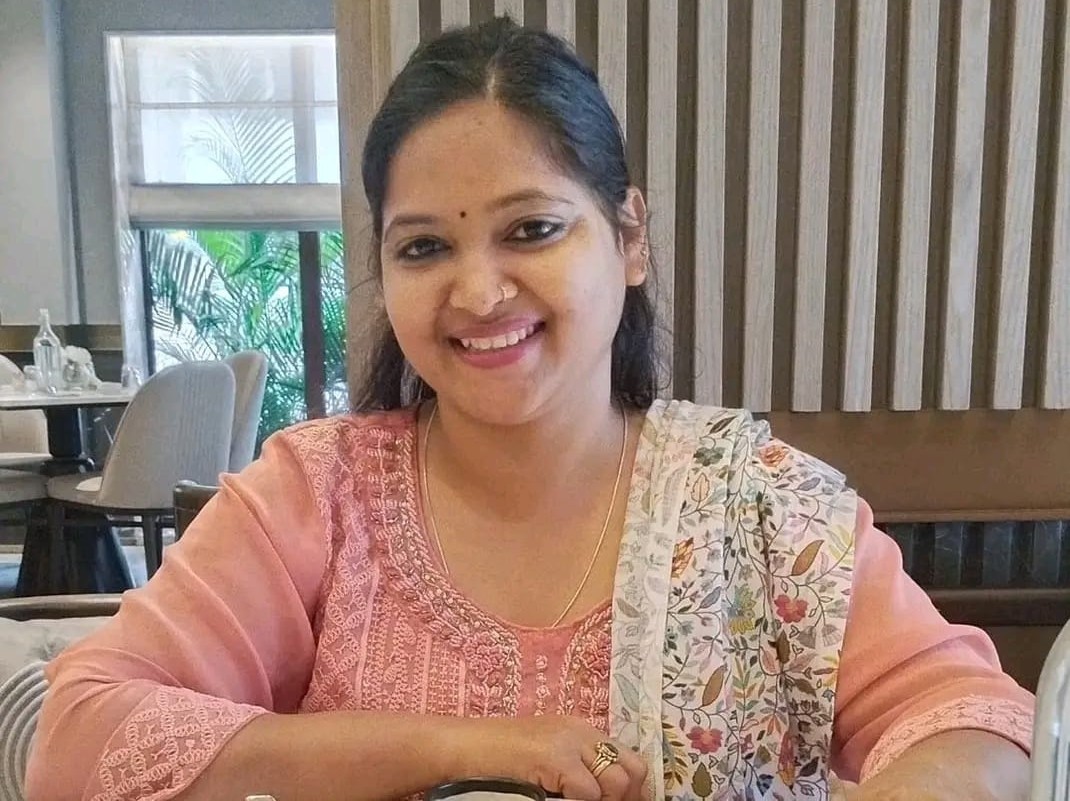
Twelve years ago, in Ranipur, a small village in Ghazipur, Uttar Pradesh, Deepmala stood in the sarpanch’s courtyard and asked a question that no one had dared to ask before. The sarpanch was a woman, but real power lay with her husband, a policeman. Inside their home, they had built a pit latrine that was emptied manually by someone else because the women of that household were not allowed to step outside. During a meeting in their courtyard, Deepmala discovered that her own mausi was being forced to clean the latrine.
She protested, but the sarpanch accused her of creating unnecessary trouble. Undeterred, Deepmala said, “If what you are doing is right, then write it down and give it to the police. Tell them that this practice of ours is justified.” The sarpanch’s family dismissed her words, and their son threatened her, warning her never to return to the village.
This struggle was not new to Deepmala. Born in Mohammadabad into a community that had been forced for generations into manual scavenging, she had long questioned the practice. As a child, she wondered, “Why only us? Why this work? Why must we always be untouchable?” These questions guided her path and eventually brought her to the sarpanch’s courtyard.
Two months later, Deepmala learned that the toilet had been rebuilt so that no one had to clean it by hand. Though a small structure, the change it represented was far greater than the bricks. The incident strengthened her courage and inspired her to question people further, talking to them and listening to their perspectives. Many resisted, saying, “If we stop, what will we feed our children?” But she persisted, asking, “If others can survive through different work, why should our children inherit this?”
Her fight against caste discrimination led her to confront other challenges as well. She realized how deeply caste and gender were entangled. In her basti, girls were not allowed to cross the chauraha, the main village square. Families feared harassment, abduction, and shame. Even girls with degrees often could not read a paragraph; education was considered only a ticket to marriage, not independence. Deepmala used her own story to challenge this mindset, sharing how her father had sent her all the way to Allahabad to study. If she could, why not others? Her questions made people pause and reflect.
Deepmala’s determination planted seeds of change. Families began to declare that they would be the last generation to do scavenging and that their children would not inherit this life. Girls, once hidden away, began stepping out. Today, daughters from her basti are studying in Banaras, Lucknow, and Allahabad, enrolling in colleges, preparing for competitive exams, and dreaming of futures their mothers could never imagine.
Her work has grown beyond her own community. Deepmala now collaborates with Global Champions for Dalit Women. She has also worked independently and with various groups. During her time as a Disom Fellow, she attended a capacity-building training with We The People Abhiyan, where she learned to turn conversations into structured discussions using training modules and explaining constitutional rights in ways people could understand. These tools amplified her impact. With young people, she also started an Ambedkar Social Café, a space for debate, learning, and imagining equality.
The story of change in Deepmala’s community is neither simple nor linear. It is a loop of threats and courage, resistance and hope, slow progress and sudden breakthroughs. Sometimes her own people opposed her. Sometimes organizations refused to support her. But she held on to one belief: change is possible.