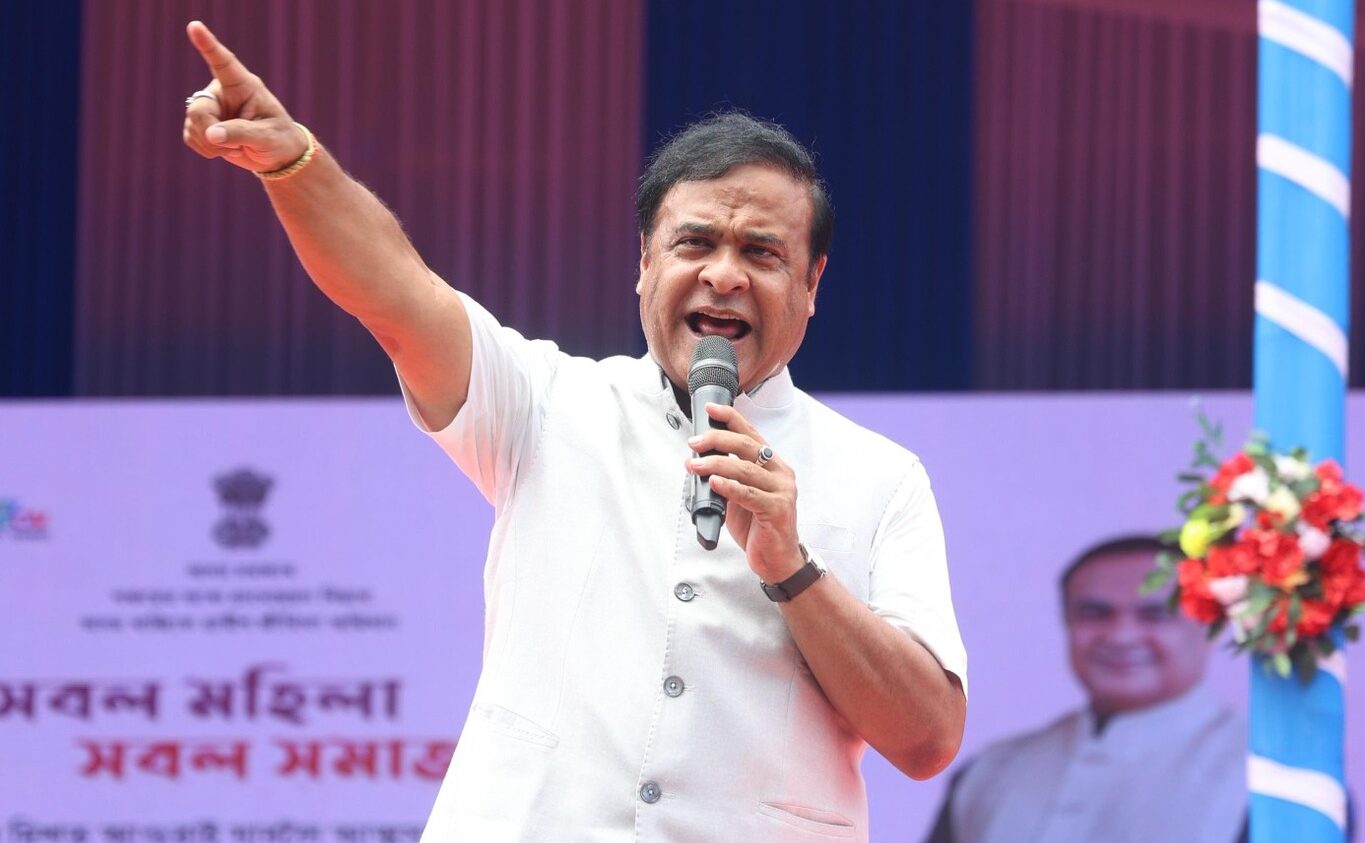
“Should I ask for their votes? As of now, we are not thinking of taking those votes. That is why I have not even campaigned in 25 constituencies where immigrant Bengali speaking Muslims have a large influence. If they vote voluntarily, that’s a different issue,” said Sarma, in his recent interview with The Economic Times.
A Chief Minister who governs over a state where Muslims constitute 34 percent of the population has announced, without shame or hesitation, that he has not bothered to campaign in 25 constituencies where they live in significant numbers. He does not want their mandate. He does not seek their consent. And by extension, he does not consider himself accountable to them — not as voters, not as citizens, not as human beings with constitutional rights equal to anyone else in this republic.
These are not the words of any fringe political leader or an anonymous troll on social media. These are the words of Himanta Biswa Sarma — the sitting Chief Minister of Assam — spoken openly, on record, with the casual confidence of a man who knows that in the India of 2026, publicly declaring an entire religious community beneath your electoral consideration is not a scandal. It is a strategy.
He is now also confident that his BJP-led alliance will sweep between 95 and 102 of Assam’s 126 Assembly seats when the state votes on April 9.
And in the same breath, he claims to be manufacturing a “nationalist feeling” among the very Muslim community his government has relentlessly persecuted.

What “Nationalist Feeling” Actually Looks Like
When Sarma speaks of cultivating “nationalist feeling” among Indian Muslims, he means something very specific: the coerced compliance of a community that has been beaten into exhaustion.
Between May 2021, when Sarma became Chief Minister, and early 2026, more than 22,000 structures were demolished and over 20,000 Muslim families evicted — the overwhelming majority being Bengali-speaking Muslims. These are not statistics. These are hundreds of thousands of human beings — mothers, children, the elderly — who had their homes and livelihoods destroyed by bulldozers deployed by the state while Sarma’s supporters cheered.
Since May 2025 alone, over 300 Bengali-speaking Muslims have been arbitrarily detained or expelled to Bangladesh, including Indian citizens. And the Chief Minister calls the survivors “nationalists.”
The UN Committee on Elimination of Racial Discrimination wrote to India’s Permanent Representative to the United Nations in Geneva in January 2026, stating that Bengali-speaking Muslims in Assam are facing racial discrimination, resulting in forced evictions, and excessive use of force by law enforcement agencies.
The Man Who Wanted Assam to Be “Explosive”
It is worth revisiting exactly who Himanta Biswa Sarma is and what he has said, because the mainstream Indian press — forever chasing the next news cycle — has developed a dangerous amnesia about the record of this man.
In March 2026, Sarma said at a media event what would have been unthinkable from any sitting Chief Minister: he would repost a video showing himself firing at skull-capped men. The original, shared by the BJP’s Assam unit on February 7, had merged real footage of Sarma handling rifles with AI-generated images of Muslims as targets. It was deleted after Congress and the All India Majlis-e-Ittehadul Muslimeen filed police complaints, the Communist Party of India and CPI(Marxist) went to the Supreme Court, and even the BJP’s own Assam unit president called it “unauthorised” and “immature.”
And what was Sarma’s response to this universal condemnation? He announced the video’s return from his personal account, saying: “So that Bangladeshis don’t infiltrate into Assam, the Assam chief minister will have to shoot at them, symbolically.”
Symbolically. A word doing a great deal of work for a Chief Minister whose state recorded mob lynchings of Muslims in Nagaon in 2017, in Morigaon in 2023, and again — just two days ago — in Nagaon once more, where three Muslims named Saifullah, Ajibur and Enamul were beaten to death while the state arrived, as always, too late.
Sarma also directed BJP members to file Form 7 applications — the form used to seek deletion of names from electoral rolls — specifically targeting Miya voters, claiming four to five lakh Miya voters would be removed. “There is nothing to hide about this,” he said. “This will keep the Miyas under continuous pressure.”
The 25 Constituencies He Did Not Visit
Those 25 constituencies Sarma proudly skipped are not abstractions on a map. They are home to hundreds of thousands of Bengali-speaking Muslim families — the Miya community, descendants of early 20th-century migrants from then-East Bengal districts, settled by the British in the Brahmaputra Valley to cultivate “waste lands,” riverine char areas, and low-lying flood-prone tracts that many local cultivators avoided. Over generations, they became integral to Assam’s agricultural economy.
These are the families that built the fields Assam’s economy stood on. Sarma could not find the time to visit them before asking for their trust. He was too busy, campaigning in constituencies where his message of exclusion plays better, where telling voters that the Muslim next door is an infiltrator, a demographic threat, an enemy of Assamese identity, wins more applause than any development promise ever could