Parliamentarians and scholars on Saturday expressed concern over what they described as attempts to portray India’s history mainly through conflict, urging a more balanced view that recognises the country’s shared cultural heritage.
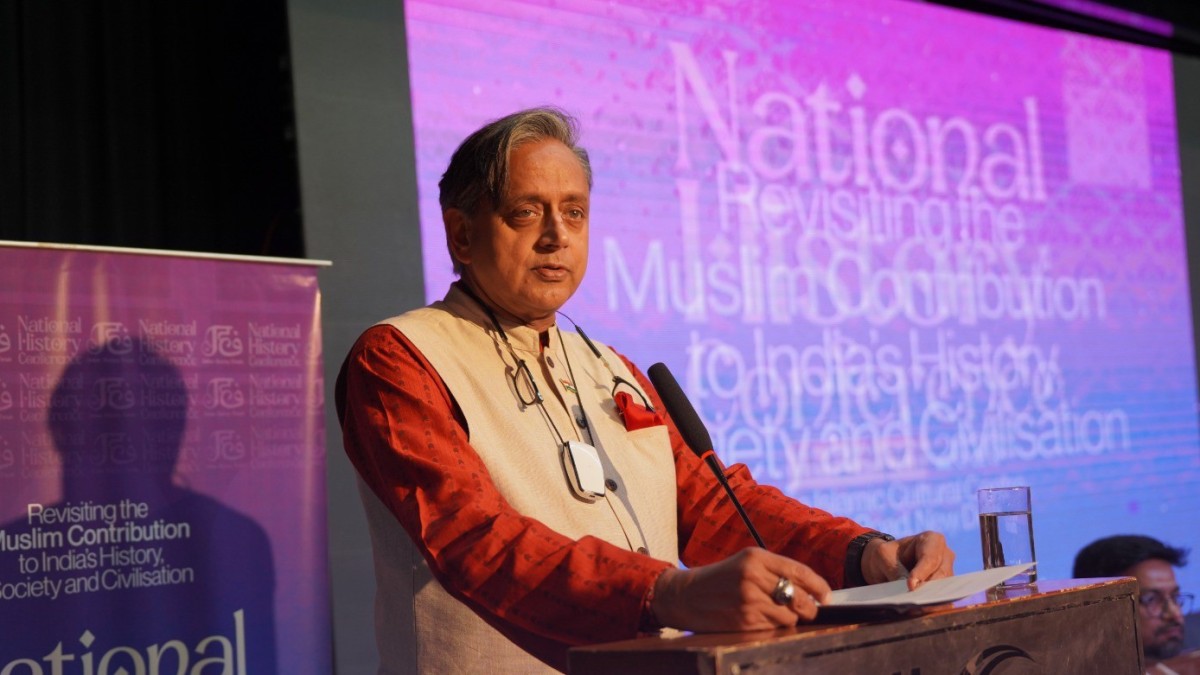
Speaking at a seminar titled “Revisiting the Muslim contribution to India’s history, society and civilisation”, organised by the Indian History Forum, speakers highlighted India’s long tradition of cultural exchange and coexistence.
“India’s history is not a single narrative”
Congress MP Shashi Tharoor said India has never had a monolithic culture and its history reflects continuous interaction between communities.
“The architectures stand as examples of synthesis. The Qutb Complex, Humayun’s Tomb, Taj Mahal provide evidence of a civilisation in conversation with itself,” he said.
He cautioned against reducing history to conflict. “To view the entire past through conflict is to miss the actual history. The complexity of civilisation is reduced to isolated incidents,” Tharoor added.
Concerns over textbooks and narratives
Scholar Shadab Moosa said that many current history textbooks contain “misinterpreted” or incomplete accounts, particularly regarding medieval India.
He pointed to sections in school books that describe Muslims largely as invaders and emphasise religious conflict, arguing that such portrayals ignore broader contributions.
Other speakers, including Manoj Jha and S. Sadatullah Husaini, echoed similar concerns about what they see as attempts to marginalise Muslim contributions to India’s past.
“Syncretic culture not highlighted enough”
Author Ashok Kumar Pandey said that the media has not adequately highlighted India’s syncretic traditions, leading to misconceptions about communities and regions such as Kashmir.
Former MP Mohammed Adeeb also stressed the need to recognise the role of Muslims in shaping India’s economy, trade, education, and culture over centuries.
Husaini argued that Muslims did not merely arrive as invaders but settled in India and contributed to building institutions and integrating diverse regions.
Warning on social fabric and misinformation
Manoj Jha warned that India’s social fabric has weakened in recent years and may take time to rebuild.
He said the present environment makes it difficult to produce leaders like Mahatma Gandhi and Jawaharlal Nehru, who upheld secular values and a shared vision of history.
Congress leader Gurdeep Singh Sappal pointed to the role of social media in amplifying misinformation.
He urged users to actively counter false narratives by sharing accurate historical information.