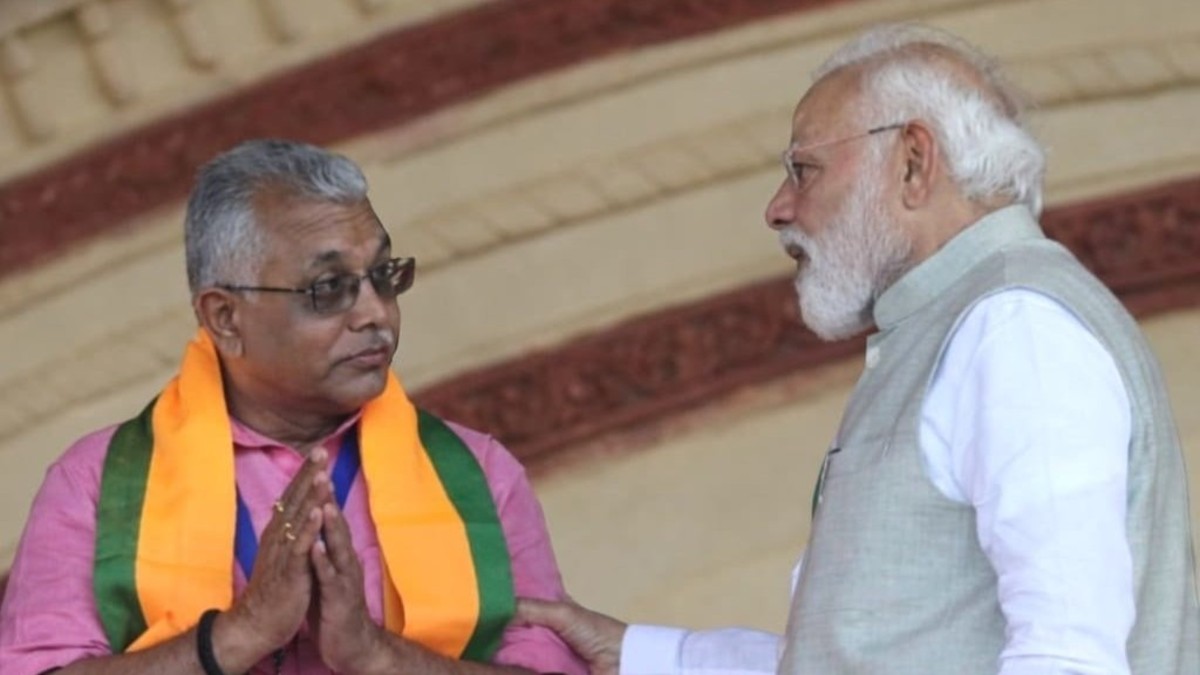
Senior BJP leader Dilip Ghosh has stirred controversy by stating that his party does not need to seek votes from the Muslim community in West Bengal, arguing that the community does not traditionally support the BJP.
In an interview, Ghosh said there was little political value in reaching out to voters who are unlikely to back his party. “Why should we seek votes from someone who does not vote for us?” he remarked, adding a sharp analogy to underline his point. “If I know you will not attend my daughter’s wedding, why should I invite you?” he said.
His comments come at a time when political parties are actively strategising ahead of the upcoming assembly elections in the state, where Muslims make up a significant portion of the electorate.
Remarks on Muslim Representation
Ghosh also linked the question of political representation to voting patterns. He said the BJP would consider nominating Muslim candidates only when the community begins supporting the party electorally.
The remarks have triggered debate, with critics saying such statements risk deepening political and social divides, especially in a diverse state like West Bengal.
Focus on Hindu Vote Consolidation
The BJP has been focusing on consolidating Hindu votes in the state over recent election cycles. According to Ghosh, the party’s priority remains expanding its support base within the Hindu population.
He acknowledged that while the BJP has made gains, it has not yet secured enough votes to decisively win power. “Last time we got around 55 percent of Hindu votes. We need to increase that by another 10 percent,” he said.
Ghosh also pointed out that voting patterns are not uniform, noting that not all Muslims vote for one party and citing instances where smaller parties have attracted sections of Muslim voters.