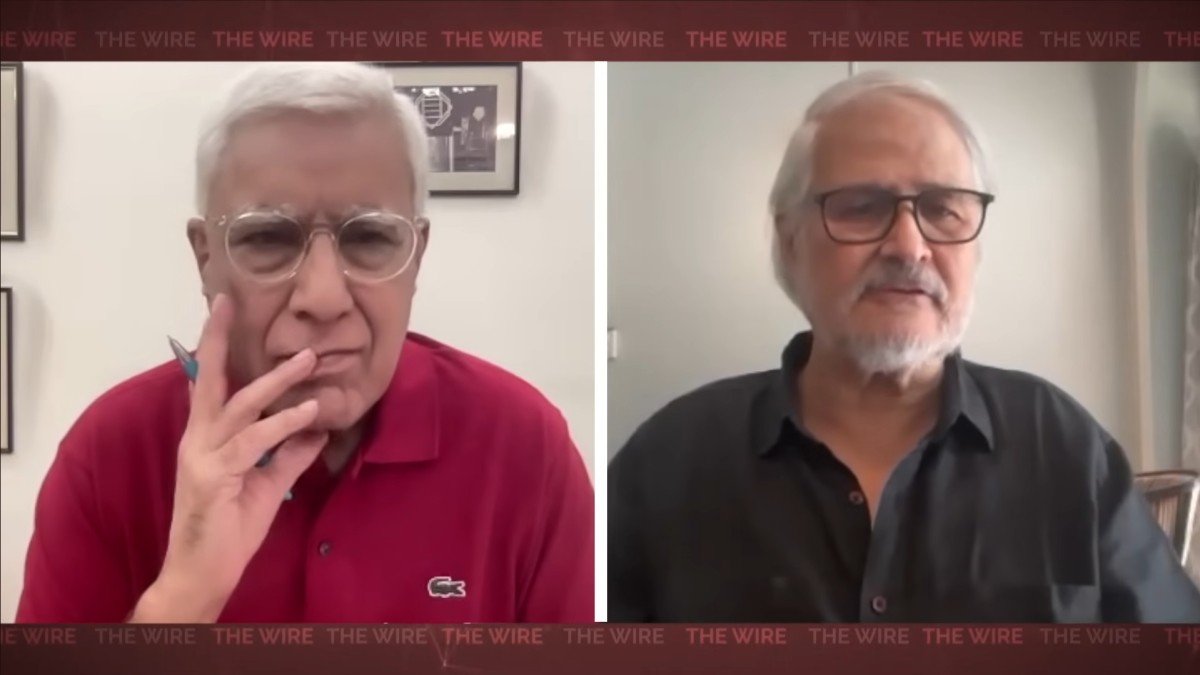
Former Delhi Lieutenant Governor and ex-vice chancellor of Jamia Millia Islamia, Najeeb Jung, has expressed serious concern over the condition of Muslims in India, saying the community is “knocking on the doors of being second-class citizens.”
Speaking in an interview with journalist Karan Thapar for The Wire, Jung said Muslims today feel increasingly pushed to the margins and excluded from mainstream public life.
“They are in a very, very grave situation,” Jung said during the interview. “By the way they’re being treated by the state, yes, I think they will be in deep trouble. That is on the anvil.”
He added that many Muslims feel they are being “pushed into the backyard — ill-treated and not finding a place in the Indian horizon.”
‘It Requires Introspection From Everyone’
Jung said the growing sense of alienation among Muslims should concern the entire country and not only liberal sections of society.
“It’s hurting,” he said. “Where it will go, I cannot say. But it requires introspection from everyone. Right now, it is only liberal sections of society that are concerned about it, and that is going to be disastrous for us.”
The former bureaucrat and academic pointed to the declining political and institutional representation of Muslims across India.
Concerns Over Political Representation
Referring to recent elections in West Bengal and Assam, Jung noted that despite Muslims forming nearly 27 percent of West Bengal’s population and around 34 percent of Assam’s population, the Bharatiya Janata Party did not field a single Muslim candidate.
He also said that, for the first time since Independence, there is no Muslim minister in the Union government and the BJP has no elected Muslim Member of Parliament.
“Muslims make up around 15 percent of India’s population — roughly 200 million people,” Jung said. “How do they view a situation where their votes do not matter to the ruling party, their participation in public life has sharply reduced, and they are increasingly relegated to the margins?”

Declining Presence in Institutions
Jung recalled that India previously had Muslim Presidents, Vice Presidents and senior ministers handling important portfolios such as Home and External Affairs.
“Today, no Indian state has a Muslim Chief Minister; several don’t even have Muslim ministers,” he said. “We have just one Muslim Governor, one Muslim Secretary in the central government out of around 100, and one Muslim Supreme Court judge out of 32.”
He said representation of Muslims in the bureaucracy, judiciary and other key institutions has significantly declined over the years.
Jung also remarked that even opposition parties often hesitate to strongly raise Muslim issues because of fears of losing Hindu votes.