Iranian Foreign Minister Abbas Araghchi arrived in New Delhi on Wednesday for a three-day official visit as tensions continue to rise in the Middle East following the ongoing US-Israel conflict with Iran. The visit marks Tehran’s first major diplomatic outreach to India since the war began over two months ago.
Araghchi is visiting India mainly to attend the BRICS Foreign Ministers’ Meeting, but he is also expected to hold detailed bilateral talks with External Affairs Minister S. Jaishankar on regional security, energy concerns, and the growing instability in West Asia.
Welcoming the Iranian minister, External Affairs Ministry spokesperson Randhir Jaiswal wrote on X, “A very warm welcome to the foreign minister of Iran, Seyed Abbas Araghchi, on his arrival in New Delhi for the BRICS Foreign Ministers’ Meeting.”
Strait of Hormuz Crisis Likely to Dominate Discussions
One of the key issues expected to dominate the talks is the situation around the Strait of Hormuz, the crucial shipping route through which nearly 20 percent of the world’s oil supply passes.
According to reports, India is likely to raise concerns over the safe movement of merchant ships and energy supplies through the route, especially after Iran reportedly moved to restrict traffic amid the conflict.

The worsening crisis has already pushed global oil and gas prices higher, creating concerns for major energy-importing countries like India.
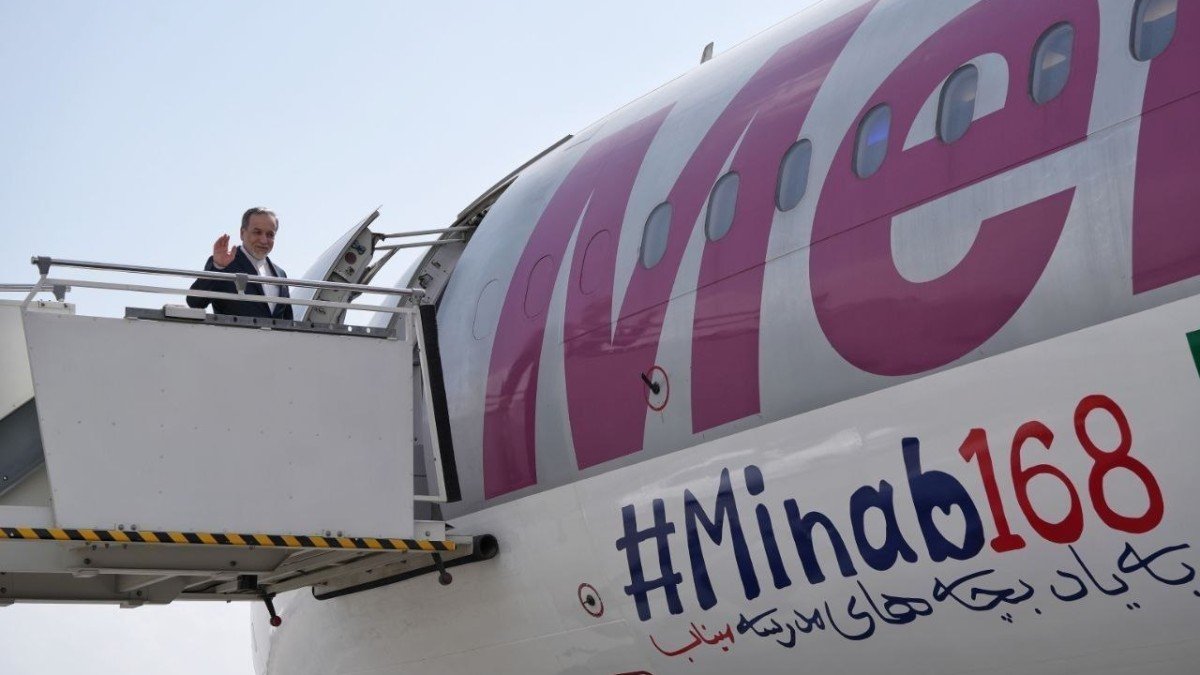
Araghchi arrived aboard an aircraft named “Minab168,” reportedly referring to 168 girls who were killed in a missile strike on a school in Iran’s Minab city during the early days of the conflict.
BRICS Meeting Focused on Global South and Energy Security
Foreign ministers from BRICS nations are also scheduled to meet Prime Minister Narendra Modi during the summit in New Delhi.
The BRICS meeting is expected to focus heavily on the Middle East conflict, global energy security, and economic cooperation among developing nations.
Iranian Deputy Foreign Minister Kazem Gharibabadi, who is also attending the meeting, said Iran sees BRICS as an important platform for “genuine multilateralism” and reducing dependence on Western-led systems.

“The BRICS foreign ministers’ meeting in New Delhi can be an important opportunity for dialogue on the future of Global South cooperation,” Gharibabadi said. He also stressed the need to oppose what he called America’s “unilateral coercive measures.”
Differences Within BRICS Over Iran Conflict
India, which currently chairs BRICS, is preparing for the group’s annual summit later this year. However, sharp differences among member countries over the US-Israel conflict with Iran have reportedly made it difficult to build a common position.
Last month, BRICS deputy foreign ministers failed to issue a joint statement on the crisis due to disagreements between Iran and the United Arab Emirates over recent attacks on energy infrastructure.
BRICS was originally formed by Brazil, Russia, India, China, and South Africa. The bloc later expanded to include Iran, Egypt, Ethiopia, the UAE, and Indonesia.
Iran has recently urged India to use its position as BRICS chair to help stop the ongoing hostilities in the Middle East.