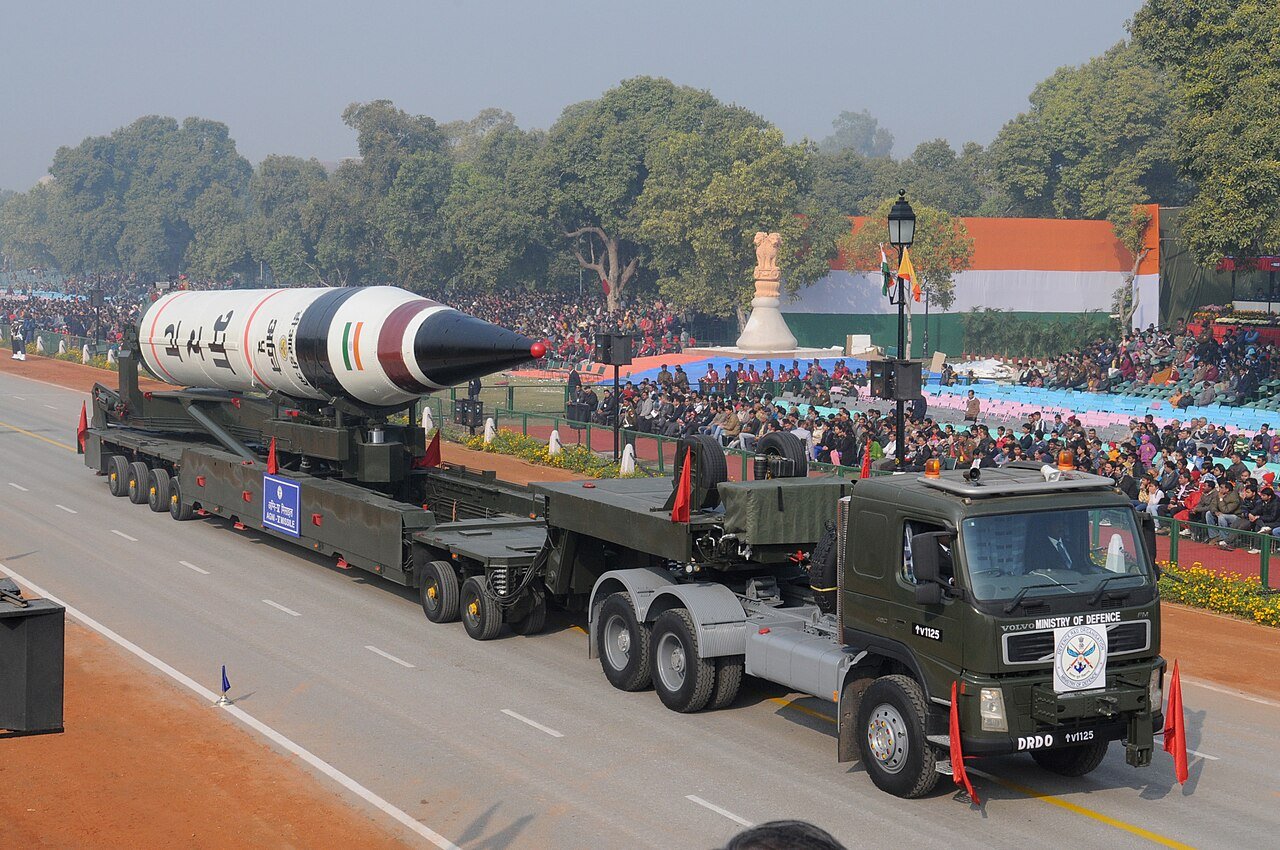
India has reportedly deployed 12 nuclear warheads for the first time, marking a major change in its nuclear policy, according to the latest report by the Stockholm International Peace Research Institute (SIPRI). The report, released on Monday, says India’s nuclear stockpile has grown to around 190 warheads as of January 2026, up from 180 last year.
This is the first time SIPRI has classified a part of India’s nuclear arsenal as “operationally deployed” instead of being fully stockpiled. The report suggests that India may have started placing some nuclear warheads alongside delivery systems, such as missiles and submarines, during peacetime.
India May Have Shifted from Earlier Nuclear Practice
For decades, India was believed to keep nuclear warheads and launch systems stored separately during peacetime. However, SIPRI now says recent developments point towards a possible change in that approach.
“It has long been assumed that India stores its nuclear warheads separate from its deployed launchers during peacetime,” SIPRI said in the report. “However, the country’s recent moves towards placing missiles in canisters and conducting sea-based deterrence patrols suggest that India could be shifting in the direction of mating some of its warheads with their launchers in peacetime.”
According to the report, India may have deployed a small number of warheads on a nuclear-powered ballistic missile submarine (SSBN) that carries out occasional deterrence patrols.

India’s Nuclear Arsenal Reaches 190 Warheads
SIPRI estimates that India now possesses around 190 nuclear warheads. The country’s nuclear force is supported by what experts describe as a growing “nuclear triad” — aircraft, land-based missiles, and submarine-based systems.
The report states, “India was estimated to have a growing stockpile of about 190 nuclear weapons as of January 2026 — a small increase from the previous year.”
India has strengthened its sea-based deterrence in recent years, especially after operationalising nuclear-powered ballistic missile submarines capable of carrying nuclear weapons.
India Maintains ‘No First Use’ Policy
Despite the reported deployment, India continues to follow its long-standing “No First Use” nuclear doctrine. Under this policy, India has maintained that it will not launch a nuclear strike first and would only use nuclear weapons in retaliation against a nuclear attack.
India has repeatedly said its nuclear programme is aimed at deterrence and national security rather than engaging in an arms race.

China and Pakistan Also Expanding Nuclear Capabilities
The SIPRI report notes that China and Pakistan are also modernising their nuclear capabilities. China’s nuclear arsenal reportedly increased from 600 to around 620 warheads in 2025. SIPRI said China may also be deploying a small number of warheads during peacetime exercises.
Pakistan, meanwhile, is estimated to possess around 170 nuclear warheads. While its land and air nuclear systems are already established, sea-based capabilities are still under development.
SIPRI observed that India’s nuclear modernisation is increasingly focused on long-range systems capable of reaching targets across China, although its strategic planning continues to be influenced by its rivalry with Pakistan.
Global Nuclear Risks Increasing
Globally, SIPRI warned that nuclear arsenals are expanding after years of decline. The institute estimates that the world had around 12,187 nuclear warheads at the start of 2026, with nearly 9,745 considered potentially operational.
SIPRI Director Karim Haggag warned against growing dependence on nuclear weapons. “Making national defence and security strategies dependent — or more dependent — on nuclear weapons could significantly increase nuclear risks,” he said.

The report also raised concerns over increasing geopolitical tensions and weakening global arms control systems, warning that countries are increasingly relying on nuclear deterrence amid rising conflicts and military competition.