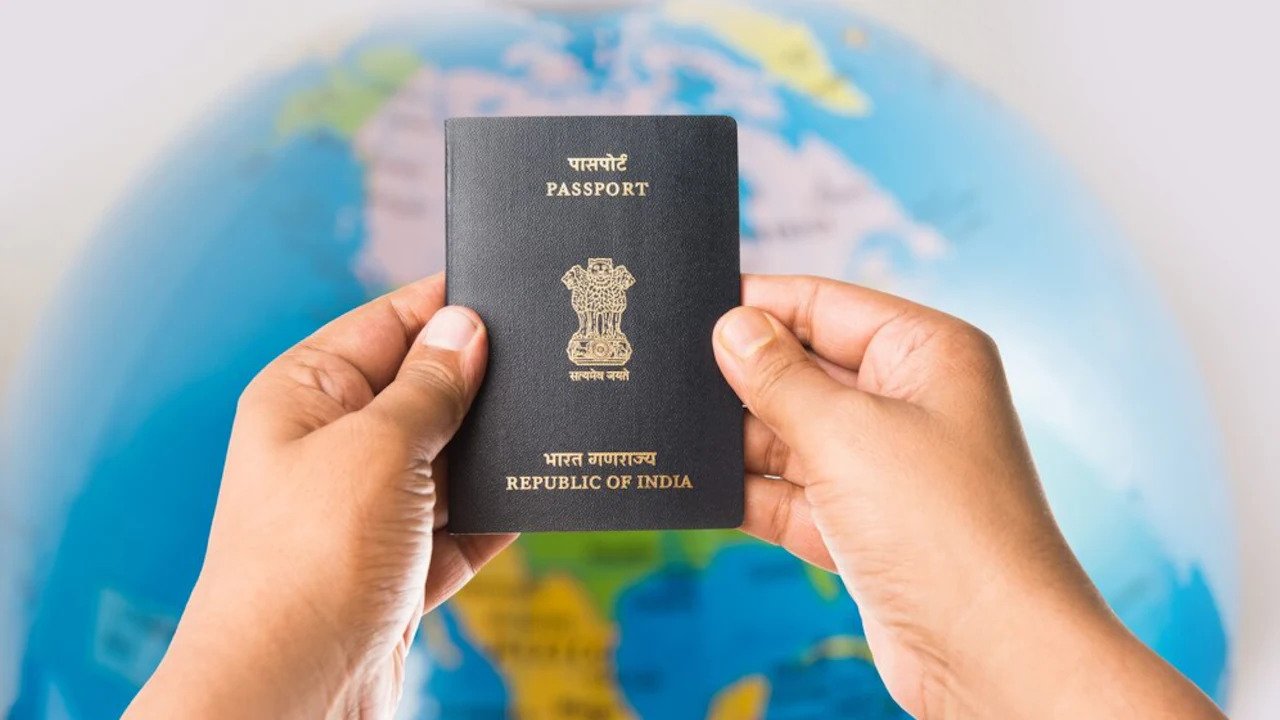
A fresh debate has broken out after the Ministry of External Affairs (MEA) clarified that an Indian passport is primarily a travel document and not a legal proof of citizenship.
The clarification came during an event on Passport Seva Divas, where a senior MEA official said, “Passport is a travel document, not a document of citizenship. Even though while travelling abroad, passport attests to your nationality, it is not a document of your citizenship.”
The statement has triggered confusion and criticism, especially at a time when questions around citizenship verification have become more sensitive.
Why Is a Passport Not Considered Citizenship Proof?
The government’s explanation is based on the Passports Act, 1967 and the Citizenship Act, 1955.
Under the Passports Act, a passport is issued mainly to allow international travel and verify nationality abroad. Officials say citizenship itself is governed separately under the Citizenship Act.

Government sources pointed out that under certain circumstances, travel documents can also be issued to non-citizens in the “public interest”, which means a passport alone cannot be treated as final legal proof of citizenship.
Former diplomat Nirupama Menon Rao explained the distinction, saying, “One law regulates the document; the other regulates the legal status.”
Opposition Leaders Raise Questions
The clarification quickly sparked sharp reactions from opposition leaders and public figures.
Veteran lyricist Javed Akhtar called the government’s stand “absurd”.
He questioned, “If a passport is not proof of citizenship, then is the government issuing passports without being sure the person is Indian?”

Aaditya Thackeray also criticized the statement, asking whether such remarks could affect how foreign countries view Indian passports.
Former Congress leader Kapil Sibal raised another important question: “If passport, Aadhaar and voter ID are not enough, then what is proof of citizenship?”
What About Aadhaar and Voter ID?
This is not the first time identity documents have been questioned.
The Supreme Court has already ruled that Unique Identification Authority of India Aadhaar is only proof of identity and residence, not citizenship.
Similarly, a voter ID card proves voting eligibility but may not be conclusive in citizenship disputes.
This has led to growing confusion among many Indians about what exactly establishes their legal citizenship.
So, What Is Proof of Indian Citizenship?
Legally, there is no single universal citizenship card in India.
For most Indians, citizenship is established through a combination of documents under the Citizenship Act:
A birth certificate remains the most important document, especially for those born in India.
For people born after July 1, 1987, proof that at least one parent was an Indian citizen is also required.

For those born after December 3, 2004, proof related to both parents may be needed, depending on their status.
For naturalised citizens, the official citizenship certificate is the strongest proof.
Why the Debate Matters
The issue has gained attention because of ongoing voter list revisions and citizenship verification exercises in several states.
Critics argue that India lacks a simple and clear system for proving citizenship, forcing people to depend on multiple linked documents.