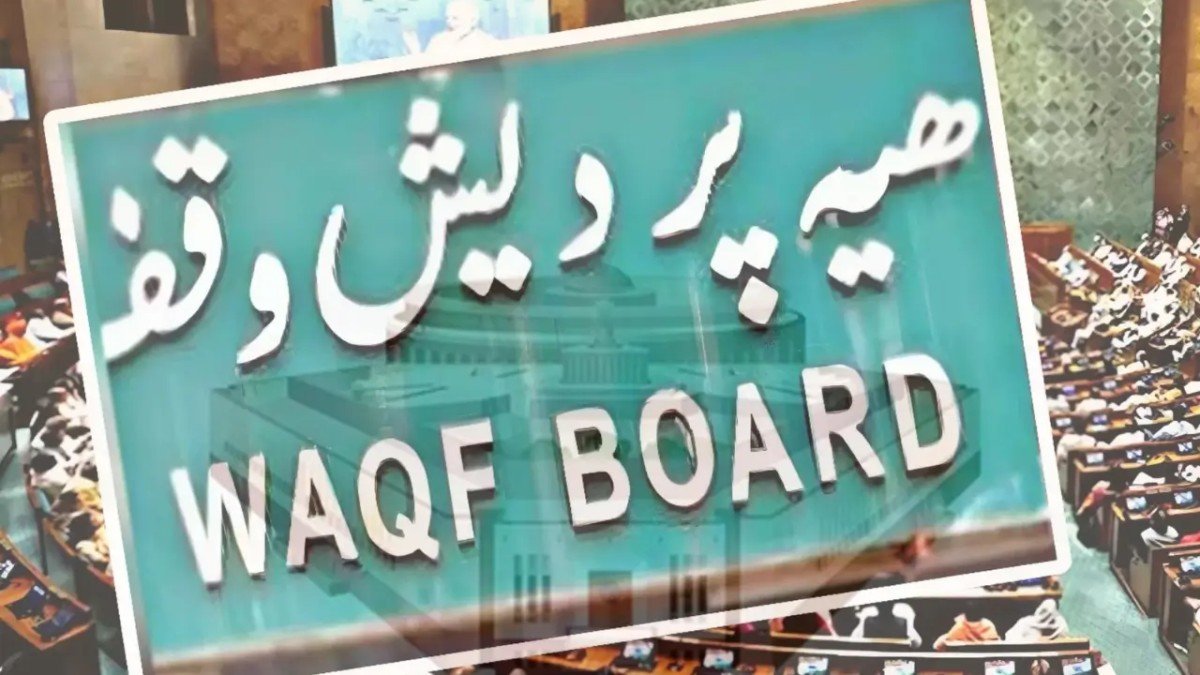
The Uttar Pradesh government is preparing to constitute a new Sunni Waqf Board that is expected to include non-Muslim members, Muslim women and representatives from the Pasmanda Muslim community under the provisions of the Waqf (Amendment) Act, 2025.
The move comes after Madhya Pradesh recently formed a new Waqf Board that included non-Muslim members for the first time, triggering criticism from several Muslim organisations and religious scholars.
According to reports, the proposed Uttar Pradesh Sunni Waqf Board will have 11 members, including a chairperson. The board is expected to include two non-Muslim members, two Muslim women and at least one representative from the Pasmanda Muslim community. The tenure of the current Sunni Waqf Board ended in March, while the Shia Waqf Board’s term is set to expire in October.
Government says move will improve transparency
Government officials have said the proposed changes are aimed at making the administration of waqf properties more transparent, accountable and inclusive.
BJP Minority Morcha president Danish Ansari supported the model adopted in Madhya Pradesh and suggested that Uttar Pradesh should follow a similar approach.

“Representation of different sections of society will strengthen transparency and improve the management of waqf properties,” he said.
Official figures show that Uttar Pradesh has 232,547 waqf properties. Of these, around 217,161 fall under the Sunni Waqf Board, while about 15,386 are managed by the Shia Waqf Board. More than 92,000 waqf properties have already been registered on the government’s Umeed portal.
Pasmanda organisation welcomes proposal
The proposal has received support from the All India Pasmanda Muslim Mahaz.
The organisation’s National Vice President, Wasim Rain, said waqf properties have largely remained under the control of the Ashraf community, while poorer Pasmanda Muslims have not received their due benefits.
“Prime Minister Narendra Modi and Chief Minister Yogi Adityanath want the benefits of waqf properties to reach the real beneficiaries,” Rain said.

Welcoming the inclusion of Muslim women and non-Muslim members, he added, “This will increase equal participation and transparency. We hope the Pasmanda community will finally receive its rightful representation.”
Rain also accused opposition parties, including the Samajwadi Party, Congress, Bahujan Samaj Party and Trinamool Congress, of using the Pasmanda community only for electoral politics, while claiming that the Modi government has provided greater representation to Pasmanda Muslims in public positions.
Debate continues over non-Muslim representation
The proposed changes have sparked debate among religious leaders and Muslim organisations.
Supporters argue that broader representation could improve oversight, accountability and governance of waqf institutions.
However, critics maintain that waqf properties are religious endowments established by Muslims and should remain under the administration of members of the Muslim community. Several scholars have argued that decisions relating to religious endowments should be taken by people familiar with Islamic religious practices.

The discussion has intensified after Madhya Pradesh constituted its 2025-26 Waqf Board with two non-Muslim members under the Waqf Amendment Act, 2025. The board continues to be headed by Sanwar Patel and also includes Muslim members such as Najma Heptulla, Atif Aqeel, Fatima Chaudhary, Shaista Sultan and Shabana Khan.