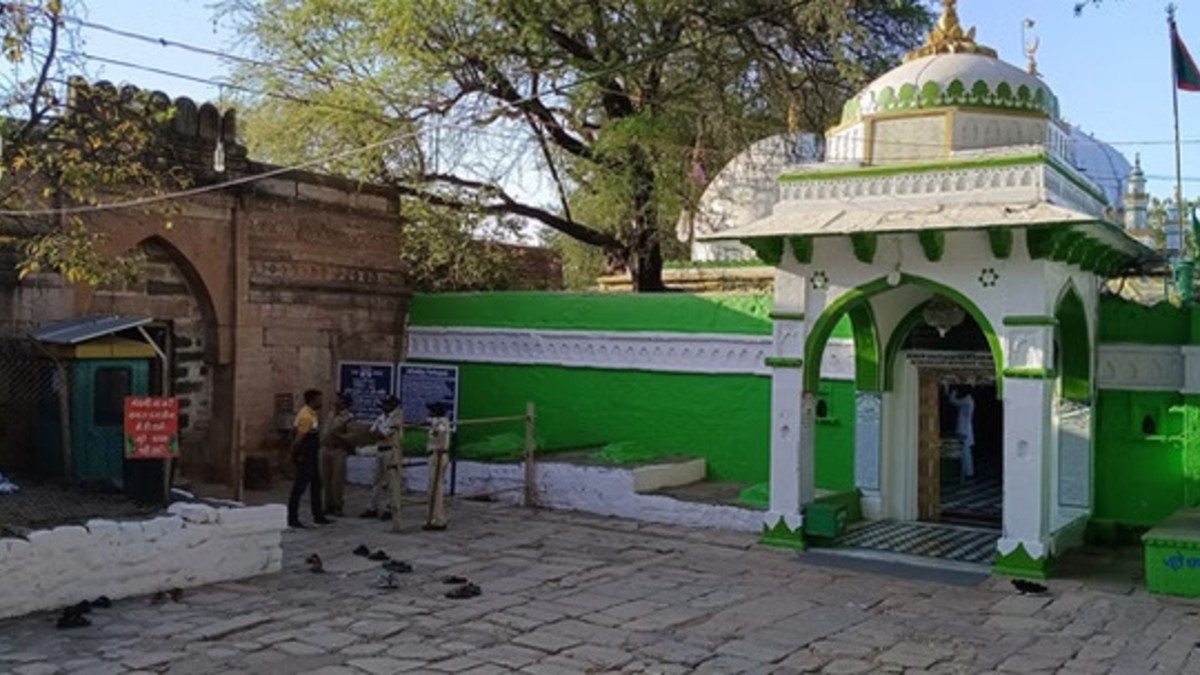
The Supreme Court on Tuesday directed the Madhya Pradesh government to provide an open space near the Bhojshala-Kamal Maula Mosque complex in Dhar for Muslims to offer Friday prayers, while refusing to restore the earlier arrangement under which namaz was held inside the disputed site.
A Bench comprising Chief Justice of India Surya Kant and Justices Joymalya Bagchi and V. Mohana said Muslims may offer Friday prayers in the designated open space between 1 pm and 3 pm. The court clarified that the arrangement is temporary and will remain subject to the final outcome of the case.
Court Bars Structural Changes at Disputed Site
The Supreme Court also directed the Archaeological Survey of India (ASI) not to make any structural changes to the Bhojshala-Kamal Maula Mosque complex without its prior permission.
The directions came while hearing appeals challenging the Madhya Pradesh High Court’s May 15 judgment, which declared the Bhojshala-Kamal Maula complex a temple dedicated to Goddess Saraswati and set aside an earlier ASI order that had allowed Muslims to offer Friday namaz at the site.
‘Let Us Not Pass Any Order That Creates Tension’
During the hearing, Chief Justice Surya Kant said the dispute was highly sensitive and urged both communities to exercise patience.
“Let us not pass any order which creates tension. We are ready to hear the case on a day-to-day basis and resolve the issue. We request both sides to have patience. It is only a matter of a few days,” the Chief Justice observed.
The Bench also noted that statements made during court proceedings should not be misinterpreted outside, given the sensitive nature of the dispute.
Muslim Side Sought Restoration of Earlier Practice
Senior advocate A.M. Singhvi, appearing for the Muslim appellants, argued that the court should restore the earlier arrangement until the matter is finally decided.
Referring to the Places of Worship (Special Provisions) Act, 1991, Singhvi said, “The 1991 Act was meant to stop this eye-for-an-eye… Ayodhya was a one-time exception.”
Senior advocate Huzefa Ahmadi submitted that the High Court had relied on disputed facts and ASI reports whose authors were never cross-examined. He argued that the site had functioned as a mosque for centuries and that maintaining the earlier status quo would be appropriate.

Senior advocate Meenakshi Arora also questioned why Friday prayers should stop if they had been offered for centuries.
“If namaz has been offered for the past 800 years, why should it be stopped now? If parties have been worshipping jointly since a settlement arrived at in 1995, why cannot it be continued till Your Lordships decide?” she submitted.
Government Says Peace Has Been Maintained
Appearing for the Centre and the Madhya Pradesh government, Solicitor General Tushar Mehta said the High Court judgment had been delivered in May and the appeals were filed nearly two months later.
“We have ensured that both communities keep calm,” Mehta told the court.
Background of the Dispute
The Bhojshala-Kamal Maula complex in Dhar is a protected monument under the ASI. The Hindu community considers it a temple dedicated to Goddess Saraswati, while the Muslim community regards it as the Kamal Maula Mosque.
The Supreme Court has issued notice to the Centre and the Madhya Pradesh government and indicated that it is prepared to hear the matter on a day-to-day basis to reach a final resolution.