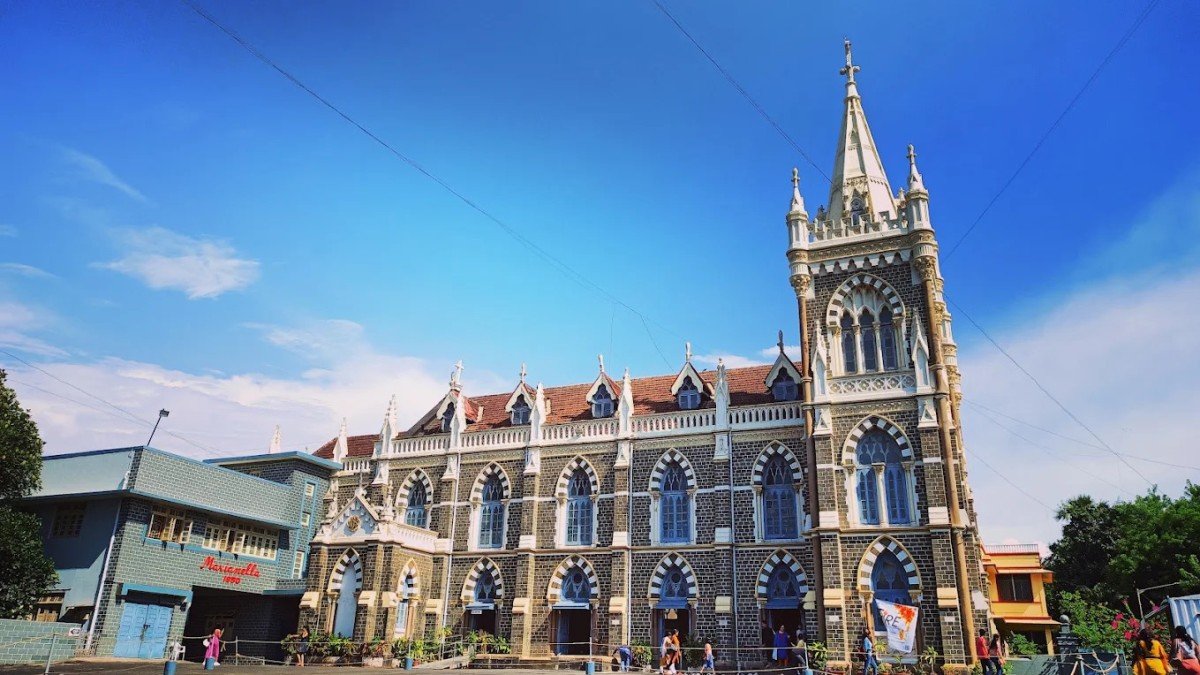
Churches across the Mumbai Metropolitan Region (MMR) have started asking worshippers to sign self-declaration forms stating that they attend prayer meetings voluntarily, ahead of the Maharashtra anti-conversion law coming into force on August 28.
According to reports by The Indian Express and National Herald, the forms are being circulated among worshippers in Mumbai, Thane, Vasai-Virar, Palghar and Mira-Bhayandar. Church leaders said the measure is a precaution against allegations of forced religious conversion.
Worshippers Asked to Confirm Voluntary Attendance
The forms state that the person attending the prayer meeting faces “no pressure, inducement, temptation, lure, or threat of any kind” and is attending the church of their own choice.
Worshippers are also asked to provide details such as their PAN or Aadhaar number, a passport-size photograph and, in some cases, witness details.
One declaration states, “I hereby confirm that attending the church, participating in prayers, religious meetings, and other gatherings is part of my religious freedom and right, guaranteed under Articles 25 to 28 of the Constitution of India.”
The forms are reportedly available in English, Marathi and Hindi. Churches plan to keep the signed declarations and produce them before authorities if allegations are made against the worshippers or churches.
Churches Cite Disruptions to Prayer Meetings
Church leaders said the forms were introduced after a series of disruptions at Sunday prayer meetings in the MMR.
Pastor Steven Rozario of New Hope Church in Virar said worshippers were being asked to carry the declarations as a precaution.
“This is a self-declaration form. I want all of you to fill it out, attach a passport-size photograph, and bring it with you next Sunday when we meet for prayer,” Rozario said.
He added, “Considering the continuous disruptions and attacks during prayer meetings, we are keeping these forms with us so that if someone questions us in the future and claims that we forced or compelled you to attend the prayer meeting, we can show this as proof.”

According to The Indian Express, nine FIRs were registered in connection with disruptions to prayer meetings between April and July. Seven of these cases were reportedly filed against prayer organisers or worshippers, while two were against Bajrang Dal workers.
Christians Say Forms Are a Security Measure
Pastor Sam Mathai from Vasai said some churches had been collecting such declarations for the past two to three months. He said some churches were asking only people who were not born Christian to sign them, while others were asking all worshippers to do so.
Mathai described the measure as being for the “self-safety” of churches and worshippers.
Devdan Tribhuvan, president of the Maharashtra Christian Development Association, said the forms were not government documents.
“It is purely for security purposes,” Tribhuvan said. “The forms are not government documents; they are signed by the person and kept with the pastor.”
A 55-year-old worshipper, Anita Patel, said it was the first time in her 16 years of practising Christianity that she had been asked to prove in writing that she was attending a church voluntarily.
“Earlier, there was a freedom to choose and believe what we wanted to follow, and nobody questioned us about why we were following a particular faith,” she said.
Bajrang Dal Defends Its Actions
Bajrang Dal regional co-convenor Gautam Ravariya said the organisation operates within the law and claimed its members intervene when they suspect forced conversions.
“If our workers are attacked, they will defend themselves,” Ravariya said. “We are not going there either to get beaten or to beat anyone, but self-defence is everyone’s right.”
Church leaders, however, have alleged that prayer meetings have been disrupted by groups accusing them of conducting forced conversions.
Anti-Conversion Law Raises Concerns
The Maharashtra Freedom of Religion Act, 2026, was notified in July and is set to come into force on August 28. The law provides penalties for conversions allegedly carried out through force, fraud, coercion, inducement, threats, undue influence or promises of marriage.
It also requires a person intending to convert to another religion to inform the district magistrate 60 days in advance. Violations of the prescribed procedure can attract imprisonment of up to seven years.
The self-declaration forms being collected by churches do not record religious conversions. Church leaders say they are intended to establish that people attending prayer services are doing so of their own free will.