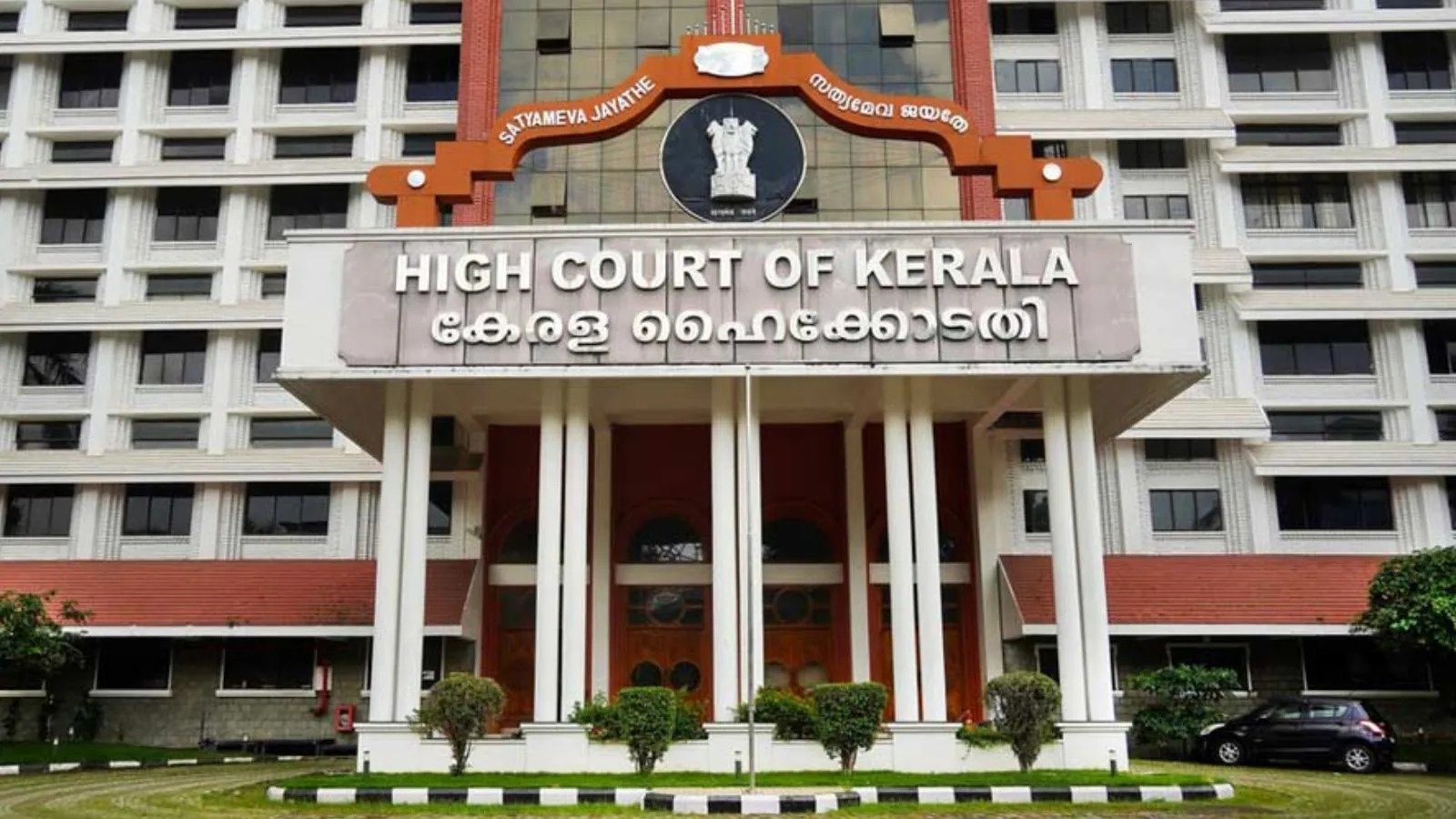
The Kerala High Court has refused to quash criminal proceedings against a man accused of repeatedly raping a 17-year-old girl, ruling that an alleged marriage under Muslim religious rites cannot protect him from prosecution under the Protection of Children from Sexual Offences (POCSO) Act.
Justice Jobin Sebastian dismissed a petition filed by the first accused in a case registered at Mannarkkad Police Station. The case is pending before the Fast Track Special Court, Pattambi.
POCSO Applies to Minors
The court referred to the Supreme Court’s judgment in Independent Thought v. Union of India, which held that sexual intercourse with a girl below 18 years of age can attract the offence of rape even if she is the accused’s wife.
The accused had relied on Exception 2 to Section 375 of the Indian Penal Code and argued that he could not be prosecuted because the girl was his legally wedded wife.
The High Court rejected the argument, saying the accused could not use the marital relationship to escape prosecution under the POCSO Act.
“Therefore, in the case at hand, the accused cannot escape prosecution with the aid of Exception 2 to Section 375 IPC,” the court said in its August 19 order.
The court noted that under Section 2(1)(d) of the POCSO Act, anyone below 18 years of age is considered a child. It also referred to Section 42A, which gives the POCSO Act overriding effect in case of any inconsistency with other laws.
Court Questions Marriage Claim
The accused’s lawyer argued that the girl was his legally wedded wife and that they had married when she was 17 years and one month old according to Islamic religious rites and ceremonies.
The court said that even assuming such a marriage had taken place, it would not remove the accused’s criminal liability.
“Even assuming for the sake of argument that a marriage was solemnised as per Muslim religious rites and ceremonies, the same will not salvage the petitioner’s criminal liability, particularly since the girl was 17 years old at the time of the alleged marriage and subsequent sexual acts,” the court said.

It added that POCSO applies when one of the parties to a marriage is a minor, irrespective of whether the marriage is considered valid under personal law.
The court also said that whether a valid marriage actually took place would have to be decided during the trial. It noted that there was no documentary evidence establishing the alleged marriage.
Alleged Sexual Assault Between October 23 and 26
According to the prosecution, the accused allegedly took the girl to his residence in a car on October 23, 2021, after telling her that he would buy her clothes.
The prosecution alleged that she was taken to his house at Thottara and was made to stay there. The girl allegedly told police that the accused forcibly had sexual intercourse with her on the night of October 23 and repeated the act over the following days.
The second and third accused allegedly helped facilitate the offence.

The prosecution also alleged that the girl’s parents were aware of the alleged offence but did not take her back or report the matter to the authorities.
Trial Court to Decide Allegations
The accused had approached the High Court under Section 528 of the Bharatiya Nagarik Suraksha Sanhita (BNSS), 2023, seeking quashing of the final report and further proceedings.
Opposing the petition, the prosecution argued that the girl was below 18 and therefore a child under the POCSO Act. It submitted that sexual intercourse with her would constitute an offence regardless of the alleged marriage.
The High Court said the allegations in the First Information Statement, if taken at face value, prima facie disclosed the commission of the alleged offences.
However, the court clarified that the truthfulness of the allegations would have to be examined during a full-fledged trial.

“It is manifestly clear that sexual intercourse with a girl below eighteen years of age attracts the offences under the POCSO Act, and in such a situation, whether the child is the wife of the accused or not is of little consequence,” the court said.
The court also clarified that its observations were made only while deciding the petition to quash the proceedings and should not influence the trial court while deciding the case on its merits.