The Supreme Court has refused to reconstitute the High Powered Enquiry Committee (HPEC) investigating allegations of violence during student protests, including the alleged use of pellet guns and excessive force by police.
A three-judge bench comprising Chief Justice of India Surya Kant, Justice Joymalya Bagchi and Justice V Mohana said objections to the committee were premature and based on “conjectures and preconceived notions”.
Court Rejects Objections to Committee Members
The court had constituted the HPEC on August 20 to examine allegations of police action and violence during protests. Some petitioners later sought changes to its composition, including replacing its head with a former Chief Justice of India.
The petitioners said they were not alleging bias but argued that the committee should inspire confidence among protesters and other stakeholders.
During the hearing, Advocate Prashant Bhushan, supported by Senior Advocates Gopal Sankaranarayanan and A M Singhvi, raised concerns about the independence of one committee member.
In its order, the court said it was “constrained to observe, with some measure of disquiet, that aspersions have been cast upon the HPEC in a manner that is both premature and precipitate”.
The Bench said there was no basis to change the committee merely because of assumptions about its members.
“The HPEC is not created to espouse the causes of one or the other party before us,” the court said.
Panel to Examine Pellet Gun Use and Violence
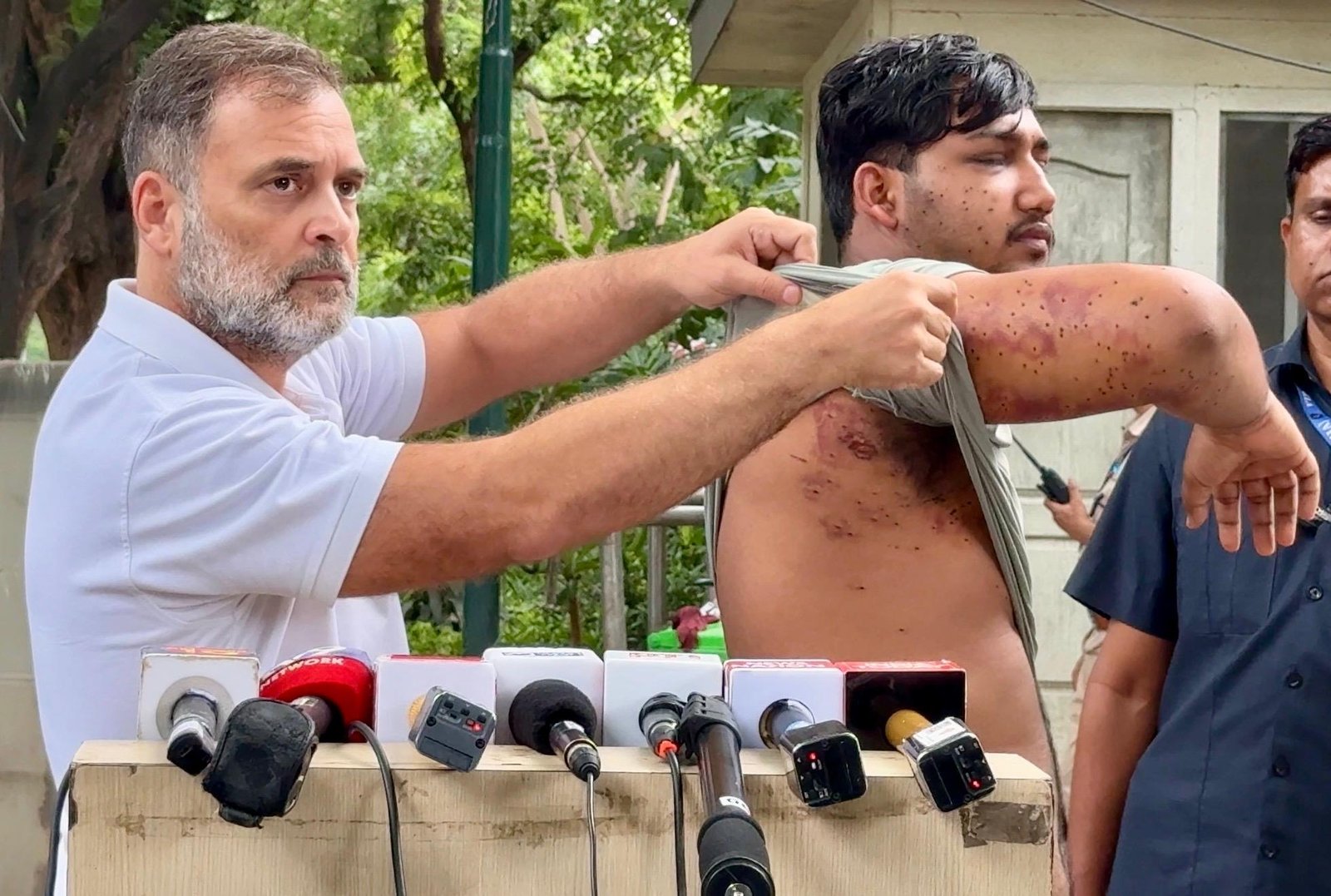
The court directed the committee to begin its inquiry into allegations involving the use of pellet guns, targeted violence and harassment of female protesters, and excessive violence and destruction of property by either side.
The HPEC is headed by former Supreme Court judge Justice R Subhash Reddy. Its other members include former Punjab and Haryana High Court Chief Justice Ravi Shankar Jha, former Delhi High Court judge Justice Shalinder Kaur, former Central Bureau of Investigation director Rishi Kumar Shukla and retired Meghalaya Director General of Police L R Bishnoi.
The court said the committee was established to assist it and was expected to maintain the highest standards of fairness, transparency and impartiality.
Online Portal for Vulnerable Witnesses
The Bench directed the creation of a separate online portal through which witnesses and other stakeholders can confidentially submit statements, documents and other evidence to the committee.
It also asked the HPEC to protect the identities of vulnerable witnesses and ensure that their participation remains confidential. The court noted that some witnesses could be unwilling to testify openly because of safety concerns or fear of reprisals.
The court also directed the Delhi Police to assess the threat perception of a 14 year old female protester and her family, who had allegedly received threats. Police were asked to provide necessary protection and investigate the allegations of harassment.
Senior Advocate Monika Gusain and Advocate on Record C Solomon were appointed amici curiae to assist the court and act as independent intermediaries between the parties.
Broader Constitutional Issues to Be Examined Later
The Supreme Court said broader constitutional questions arising from the matter would be considered at an appropriate stage.
These include allegations concerning the use of facial recognition technology to monitor people at protest sites and claims that collected data was stored with private entities.
The HPEC has been asked to submit its first report at the earliest. The matter will next be heard on October 9, 2026.