Tasaduq Parsa
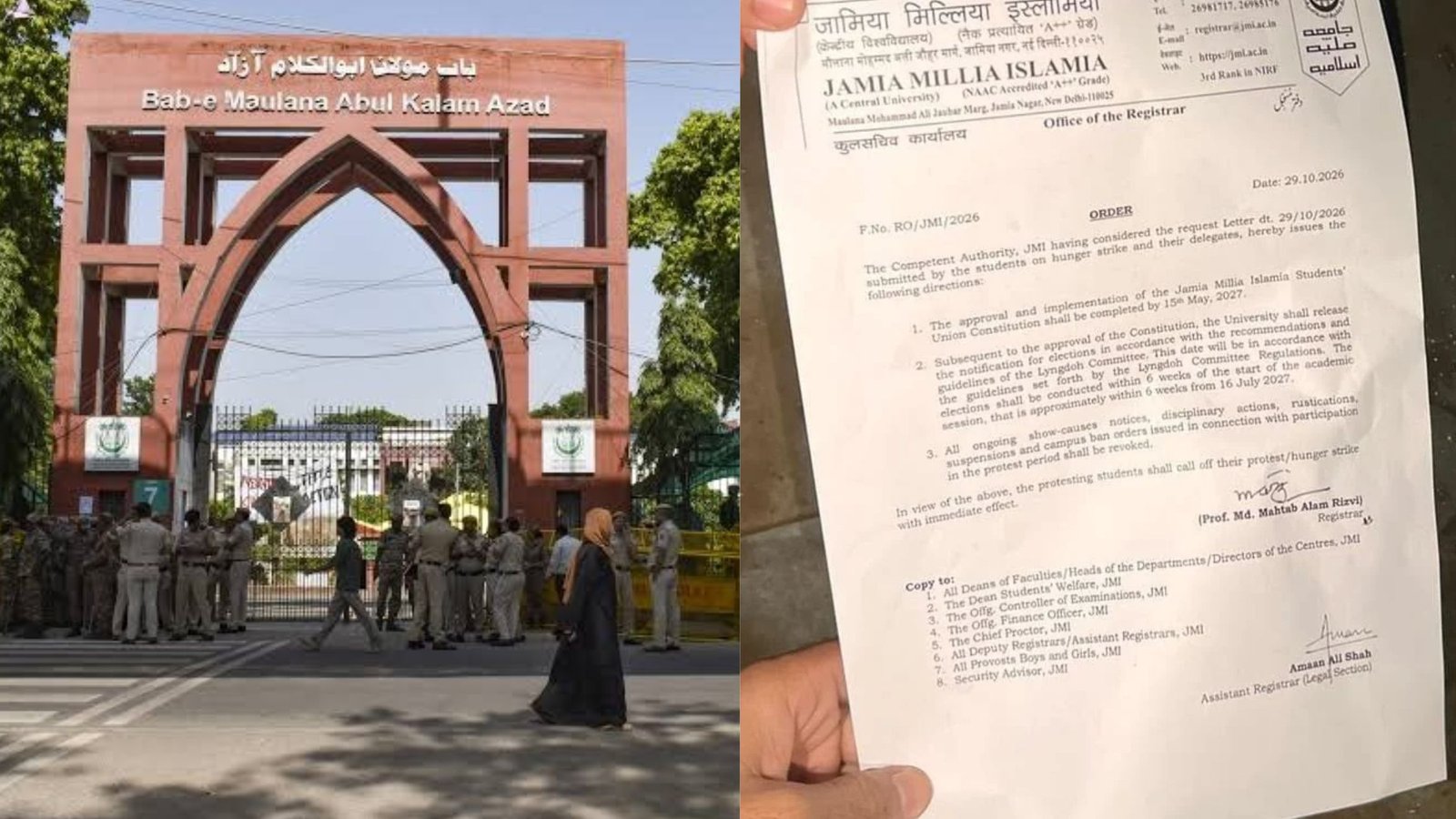
Jamia Millia Islamia turned 106 today, and it does so behind barricades and restrictions on campus life. The university was founded as an act of refusal. So it is fair to ask what its entrances say when they speak louder than its prospectus.
A campus is more than a set of buildings. Open lawns, shared canteens and spaces anyone can walk into give students a sense of belonging. When those spaces are restricted, the relationship between an institution and its community changes. A closed gate is a physical barrier, but it also works as a sign. Through it, we can read questions about access, belonging and who holds authority.
John Locke argued that legitimate authority rests on consent and remains answerable to the people it governs. A university is not a state, but the idea carries over. Authority depends on the power to regulate, but just as much on the trust it has earned. In a university, that trust means hearing disagreement, explaining decisions and treating students as participants in the institution’s life. Consent needs a channel, a way for those who live under rules to speak about them and be heard. Restrictions can control who enters. They cannot make anyone feel they belong.
So whose university is this? I am not denying that administration and order are necessary. The question is how they fit with the purpose of a university, which is to build independent thought and encourage inquiry, including questions that challenge settled assumptions. Section 163 orders and tighter security make us ask where the balance lies between order and the openness academic life requires. Nobody is saying every student demand must be accepted. The real test is whether disagreement receives an answer based on reason or is treated as a disturbance.
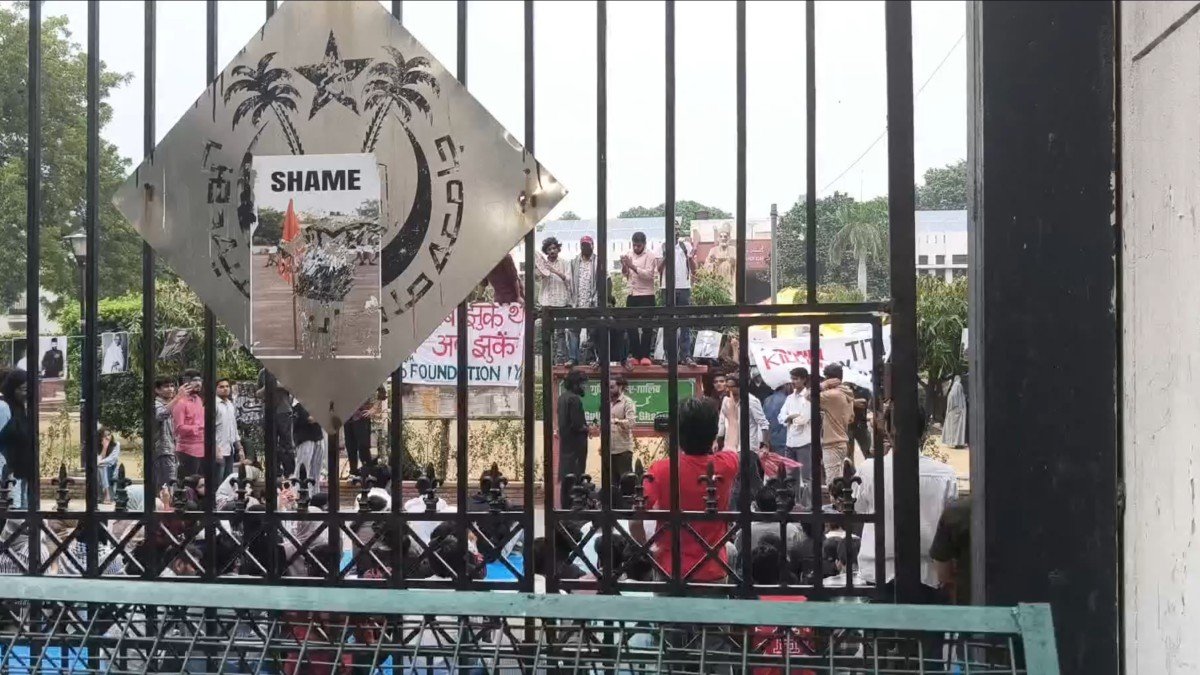
106th foundation day #jamiamilliaislamia pic.twitter.com/I3TM4jJEp9
— khadija (@Khadijanasrinn) October 29, 2026
The effects reach beyond the gates. Classes and examinations have moved online. That keeps teaching and assessment going, but academic continuity is not the same as university life. A university is also a shared intellectual space, made up of encounters, arguments and the exchange of ideas outside the classroom. When campus life is already restricted, the shift raises another question: what happens to academic freedom when the places where it is practised keep shrinking? Technology is not the concern. The concern is what happens when it starts standing in for an institution’s collective life.
How order is maintained matters just as much. Force against students cannot be justified in the name of discipline, and brutality does not become acceptable because it is carried out in the name of order. A university is not a barracks. Its intellectual authority is not the authority of command. Students are members of the academic community, with dignity and rights. They are not threats to be neutralised. Where force or intimidation has been used, there must be accountability. Silence or administrative justification is no substitute for a serious examination of what took place. Defending the university’s integrity also means insisting that the people inside it are never treated as expendable.
There is a longer-term worry, too. Measures introduced for a particular moment tend to stay. What starts as an exception changes what people expect of ordinary campus life. Students get used to the restrictions, and opportunities for meaningful engagement shrink. Disagreement does not vanish when it becomes difficult to express. It loses the constructive channels through which it could be heard. A university that makes room for dissent does not give up its authority. It shows that its authority can stand up to scrutiny.
Jamia’s history gives these questions extra weight. It was established in 1920, in the middle of the anti-colonial movement, by people seeking an education independent of institutions tied to colonial rule. From the start, its educational project was linked to a wider demand for intellectual and political freedom. That history does not settle every present-day difficulty. It does, however, give us a standard against which to measure the present. An institution born of refusal has particular reason to ask how dissent, accountability and independence shape its practices today.

At 106, commemorating the founding is the easy part. The harder part is asking whether its ideals still shape everyday life.
The closed gate is a question. A university cannot depend on the absence of disagreement, and its authority cannot rest only on its ability to contain it. It has to retain the capacity to engage with questions raised inside its own walls. For an institution born out of a demand for educational independence, preserving that capacity is no departure from its history. It is one way of taking that history seriously.
Tasaduq Parsa is an MA student in English Literature at Jamia Millia Islamia (JMI).
The information presented in this article represents the personal viewpoints of the author and does not necessarily reflect the opinions of The Observer Post.