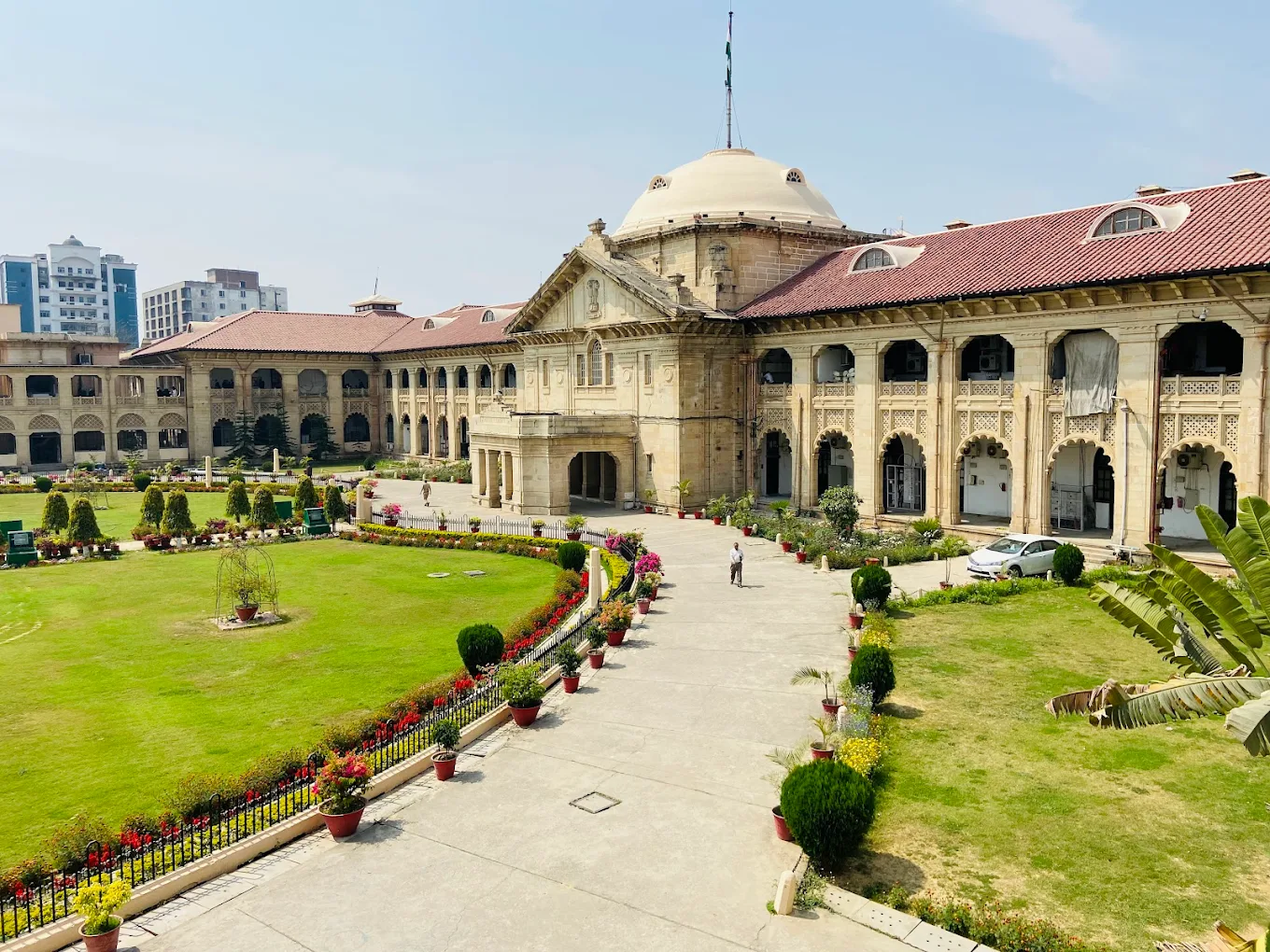
The Allahabad High Court has dismissed a petition challenging the proposed demolition of parts of six historic mosques in Varanasi’s Dalmandi area, holding that the Places of Worship (Special Provisions) Act, 1991, does not stop the government from acquiring land for public infrastructure projects.
The case concerns an ongoing road widening and beautification project in Dalmandi, a densely populated commercial locality in Varanasi. The redevelopment plan involves the demolition of several buildings, including portions of six mosques, affecting residents, shopkeepers and businesses in the area.
The petition was filed by Syed Rashid Ali and six other shopkeepers, who are tenants in the affected locality. They challenged both their eviction and the planned demolition of parts of Anjuman Intizamia Masjid, Masjid Rangeele Shah, Masjid Ali Raza Khan, Masjid Karimullah Beg, Masjid Nisaran and Masjid Sangmarmar.
The petitioners argued that these mosques existed before August 15, 1947, and were protected under the Places of Worship Act, which preserves the religious character of places of worship. They also said the demolition would affect the community’s right to worship and leave many traders and families without their source of livelihood.
A Division Bench of Justice J.J. Munir and Justice Arun Kumar rejected the plea, observing that the law protects the religious character of places of worship but does not prohibit the government from acquiring land for genuine public purposes.

“The Places of Worship Act does not create a bar on land acquisition for public infrastructure projects such as road widening,” the court said, adding that such acquisition is legally permissible when carried out for public interest.
The Bench also noted that the petitioners were tenants and not owners of the properties in question. As a result, the court said their legal right to challenge the acquisition proceedings was limited.
According to the judgment, the petitioners’ primary concern appeared to be the protection of their businesses and livelihoods rather than asserting ownership rights over the land. The court found several of their legal arguments to be without merit and held that they were not entitled to the relief sought.
With the dismissal of the petition, authorities can now proceed with the road widening project, including the demolition of those portions of the six mosques that fall within the project’s alignment.
The ruling comes amid concerns raised by local residents over the impact of redevelopment projects on Varanasi’s historic neighbourhoods. Members of the Muslim community have argued that while infrastructure development is necessary, it should be carried out in a way that protects religious heritage and minimises the displacement of families, traders and places of worship.