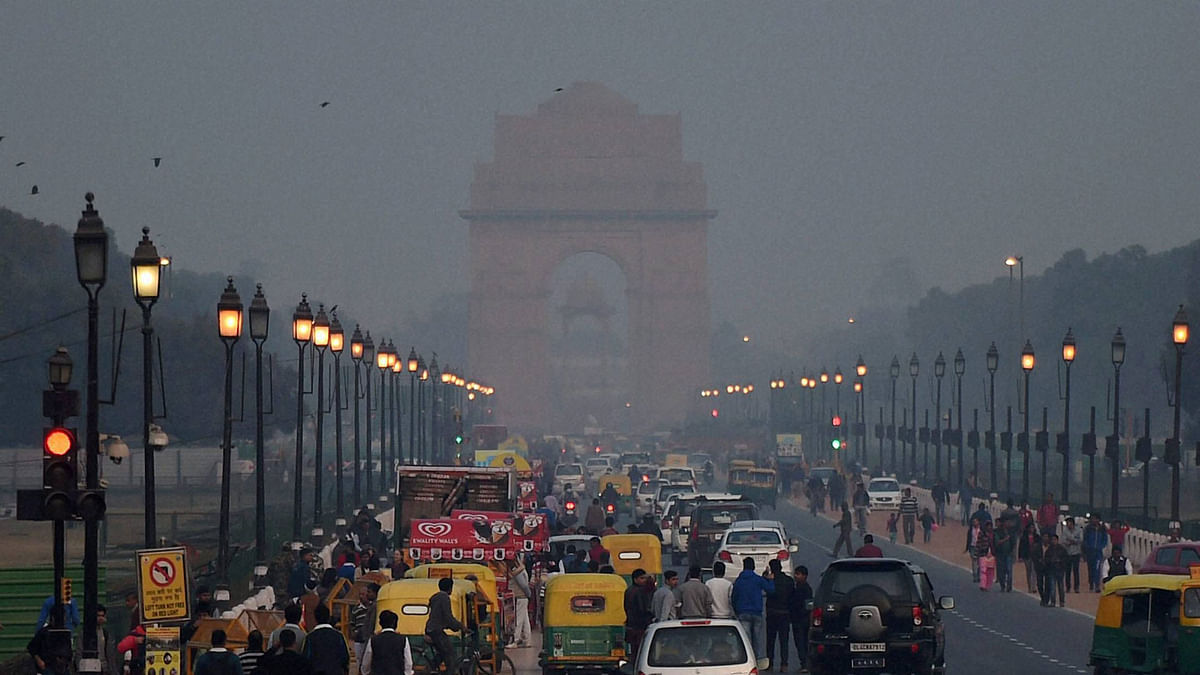
Delhi’s air quality worsened sharply on Friday, November 6, and moved close to the “severe” category, two days before Diwali. The overall Air Quality Index (AQI) was 391 at 9 am, up from 389 an hour earlier.
A thick layer of smog hung over the capital. Of the city’s 59 monitoring stations, 30 recorded severe air quality at 9 am, and the other stations were in the “very poor” category. Rohini had the worst reading, at 475, followed by IIT Delhi at 472.
The Air Quality Early Warning System said Delhi was likely to record its first severe air quality day of the season on Friday, and that the situation was expected to last until November 8, the day of Diwali. The forecast comes during the peak stubble-burning period in the National Capital Region. Emissions from firecrackers during the festival could add to the pollution.
Weather experts said several hotspots in the city could record AQI levels above 450, mainly because of the festivities and stubble burning.
Under the Central Pollution Control Board’s scale, an AQI between 301 and 400 is “very poor”, and a reading from 401 to 500 is “severe”. The scale rates 0 to 50 as “good”, 51 to 100 as “satisfactory”, 101 to 200 as “moderate” and 201 to 300 as “poor”.

The minimum temperature at Safdarjung, Delhi’s base weather station, was 17.2 degrees Celsius, 1.9 notches above normal for the season. The India Meteorological Department forecast a maximum of about 30 degrees Celsius, with shallow fog in the morning that is expected to persist until November 9.