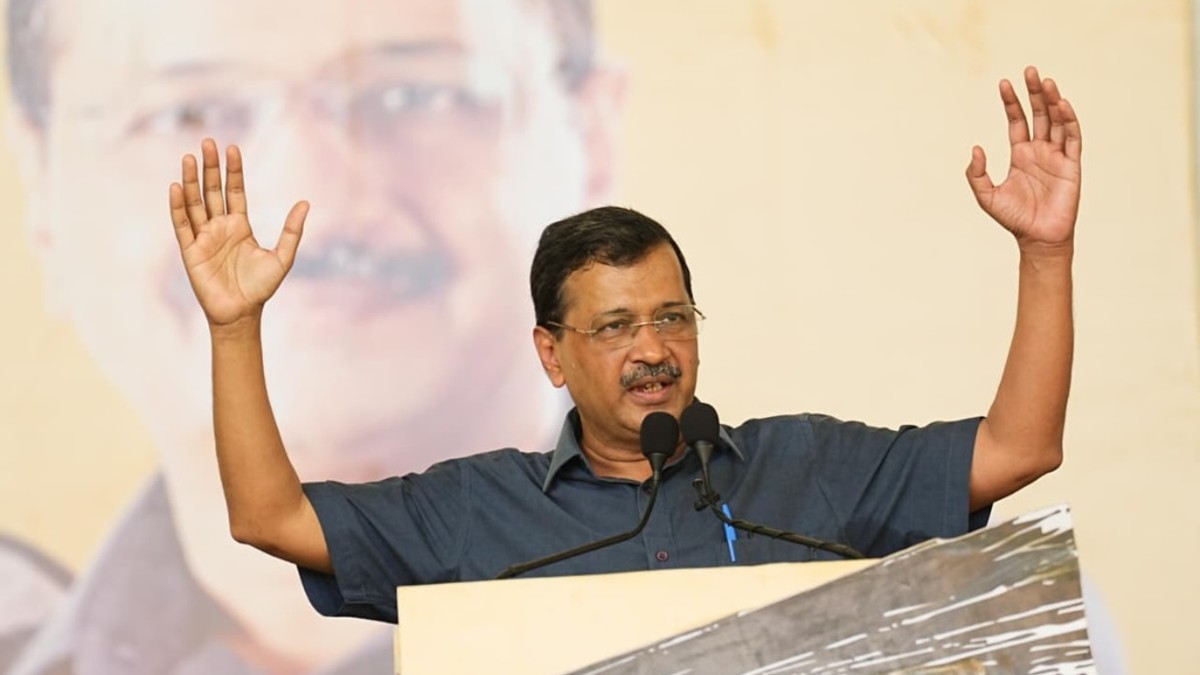
The Delhi High Court has directed Delhi Police to remove and take down videos showing former Delhi Chief Minister Arvind Kejriwal arguing in court during the excise policy case. The court said that recording and sharing court proceedings without permission is not allowed under its rules.
According to court officials, the matter has been taken seriously as such recordings violate the High Court’s guidelines for online hearings. The court has also instructed action against people sharing the video across social media platforms.
An official said steps are being taken “against everyone on all social media platforms” who recorded and circulated the footage. The High Court also noted that it has acted in similar cases earlier and continues to monitor such violations.
Kejriwal’s court appearance and excise policy case
Arvind Kejriwal had personally appeared before the Delhi High Court on April 13 in connection with the CBI’s appeal in the Delhi excise policy case. He argued his plea seeking the recusal of Justice Swarana Kanta Sharma from hearing the matter.
During the hearing, Kejriwal spoke for over an hour, after which Solicitor General Tushar Mehta opposed his arguments. Soon after the hearing, clips of Kejriwal arguing in court went viral on social media, which triggered the court’s action.
The excise policy case relates to allegations of irregularities in the Delhi government’s liquor policy of 2021–22. The Central Bureau of Investigation (CBI) has alleged manipulation of the policy, while the Enforcement Directorate (ED) is also probing related money laundering charges.
Kejriwal’s remarks linking case to RSS-BJP ideological body
During his argument, Kejriwal raised concerns about judicial neutrality and alleged ideological bias, referring to an organisation linked to the RSS and BJP.
He specifically mentioned a lawyers’ group and questioned the judge’s past association with it. Kejriwal said:
“There’s a lawyer’s body, Adhivakta Parishad. It is an ideological body of the BJP and RSS. Your honour has attended its events four times. The ideology they follow is something we strongly oppose and we oppose it openly. This case is political,”
He made these remarks while arguing that there was a “reasonable apprehension of bias” and said he feared that the case may not be heard impartially.
Justice Swarana Kanta Sharma responded during the hearing, clarifying that the court would only consider legal arguments and record submissions made before it.
Court rules against recording and circulation of hearing videos
The High Court has reiterated that court proceedings cannot be recorded or published without permission. Officials said the circulation of such videos undermines court procedures and violates established rules governing virtual and physical hearings.
The court has asked authorities to remove all copies of the viral video from social media platforms and take necessary action against those responsible for uploading and sharing it.
Background of the legal dispute
The excise policy case began in 2022 after the CBI filed an FIR based on allegations of corruption and cartelisation in Delhi’s liquor trade policy. The ED later registered a separate money laundering case under the Prevention of Money Laundering Act.
While a trial court had discharged Kejriwal and other accused earlier, the CBI challenged that order in the High Court. The matter is currently under judicial consideration.
During earlier hearings, Kejriwal and other accused had also sought the judge’s recusal, citing concerns over impartiality and fairness.