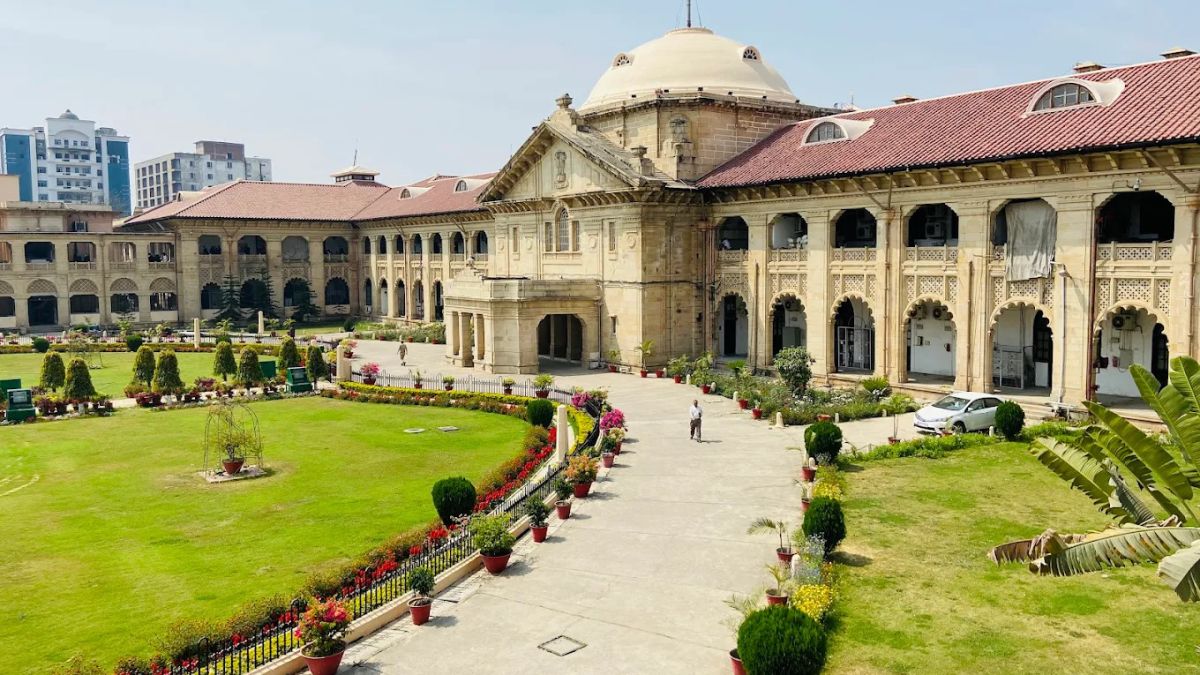
The Allahabad High Court has given legal recognition to the religious conversion and name change of a CMP Degree College professor, formerly known as Mohammad Ahsan, who now identifies as Anil Pandit after embracing Hinduism. The court upheld the administrative approval granted under Uttar Pradesh’s anti-conversion law, bringing an end to a legal dispute over the validity of his “homecoming” to Sanatan Dharma.
Court Backs Administrative Approval of Conversion
A division bench of the High Court comprising Justice Ajit Kumar and Justice Indrajeet Shukla disposed of the petition after being informed that the Prayagraj administration had finally accepted the conversion application.
The Additional District Magistrate (ADM), acting on court directions, issued a formal order on May 14, 2026, approving the application under the Uttar Pradesh Prohibition of Unlawful Conversion of Religion Act, 2021.
During the hearing, state officials confirmed that the applicant had complied with all procedural requirements and that there was no legal objection remaining. The court then directed that all consequential changes in official records, including educational and personal documents, must be completed.
Interfaith Marriage and Conversion at the Centre of Case
The case dates back to 2022 when Mohammad Ahsan, a PhD scholar from Allahabad University and a college professor, publicly declared his intention to convert to Hinduism. He later performed the conversion ceremony at an Arya Samaj temple, adopting the name Anil Pandit.
According to court records, the petitioner stated that he had been drawn to Hindu philosophy and traditions since his student days and voluntarily decided to embrace Sanatan Dharma without any pressure or inducement.
He also informed authorities on January 12, 2022, about his intent to convert. The formal ceremony was conducted on March 14, 2022, under priest Satya Prakash, who later notified the district magistrate as required by law.
Love Marriage and Family Dispute
The case also involved his marriage to a Hindu woman, Aparna Bajpai, whom he met during his PhD studies in the English Department of Allahabad University.
Aparna Bajpai told the court that she married Anil Pandit of her own free will according to Hindu rituals, though her father opposed the relationship. She is currently working as an English teacher in Ballia and is seven months pregnant, according to court submissions.
The relationship led to family opposition and later legal complications, including an FIR filed by the woman’s father after the marriage.
Police Reports Support Voluntary Conversion
Multiple police investigations were conducted during the process. Initial reports submitted to the ADM concluded that the conversion was voluntary and not influenced by coercion or inducement.
A later investigation in October 2023 also supported the same conclusion, stating that the petitioner was not forced or illegally persuaded to adopt Hinduism.
One of the key arguments raised by the petitioner’s legal team was that all legal requirements under the Uttar Pradesh anti-conversion law were fully complied with, including prior declaration before the district magistrate.
High Court Questions Administrative Delay
The court had earlier criticized the administrative approach after the conversion application was initially rejected despite supporting police reports. The ADM had cited concerns about alleged inducement linked to marriage and a financial transaction, but the High Court found these grounds insufficient.
The bench observed that repeated investigations despite clear findings were unnecessary and not legally justified.
Court Orders Updates in Official Records
While closing the matter, the High Court directed the petitioner to ensure that all official records, including academic certificates and identity documents, reflect his new name and religious identity.
The court also noted that the conversion had been carried out following due process under the 2021 anti-conversion law, which requires formal declaration and verification before a magistrate.