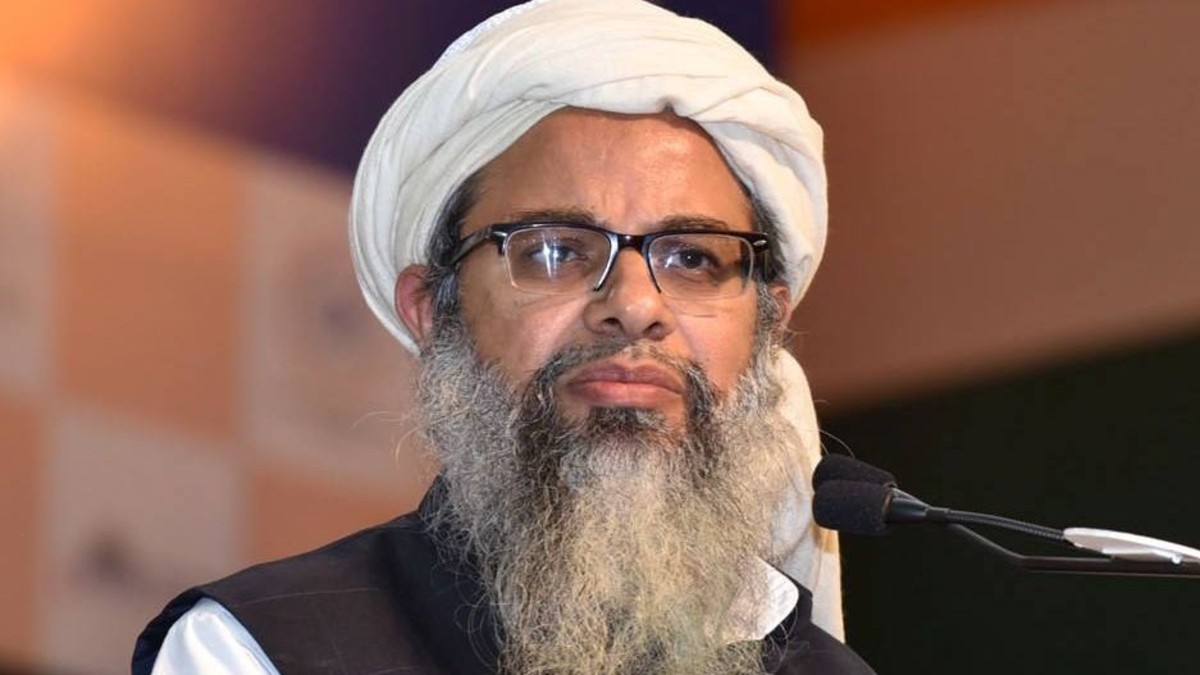
Jamiat Ulama-i-Hind president Maulana Mahmood Madani has expressed serious concern over the enactment of the Maharashtra Freedom of Religion Act, 2026, saying several provisions could affect the constitutional guarantees of freedom of conscience, religious liberty, privacy and individual autonomy.
Madani said India’s strength lies in its religious and cultural diversity and argued that the freedom to choose and practise one’s faith is protected under Article 25 of the Constitution.
“If a person is not free to choose his or her religion, Article 25 of the Constitution loses its meaning,” he said in a statement.
Concerns over ‘allurement’ and ‘fraudulent’ conversion
Madani said Maharashtra had adopted an approach similar to anti-conversion laws in Uttar Pradesh, Gujarat and Madhya Pradesh, which Jamiat Ulama-i-Hind has already challenged before the Supreme Court.
He particularly questioned the use of terms such as “allurement” and “fraudulent”, arguing that their broad or unclear definitions could expose legitimate religious propagation to criminal proceedings.

Madani said religious teachings concerning salvation, the hereafter and spiritual rewards are integral to many faiths and should not automatically be treated as inducements.
“If religious teaching itself is brought within the scope of ‘allurement’, it directly raises questions about the constitutionally protected right to propagate religion under Article 25,” he said.
Questions state intervention in religious choices
Madani also raised concerns over provisions requiring declarations, police inquiries and disclosure of personal information in cases involving religious conversion.
He said such requirements could place an unnecessary burden on individual liberty and argued that the state should not become the “final arbiter” of a citizen’s private conscience or religious choice.
According to Madani, experiences with anti-conversion laws in other states have shown the potential for their misuse, including the initiation of criminal proceedings and arrests.

He called on courts and democratic institutions to examine not only the stated purpose of the Maharashtra law but also its legal framework, safeguards and potential for misuse.
“A law must be judged not merely by what it says it intends to achieve, but also by the powers it creates and the consequences those powers can produce,” he said.
Jamiat not opposed to preventing forced conversion
Madani clarified that Jamiat Ulama-i-Hind does not oppose genuine measures against coercion, fraud or forced conversion.
However, he said a law intended to protect religious freedom should not itself become a mechanism for restricting that freedom or targeting a particular community.
“Any genuine effort to prevent coercion, fraud or forced conversion is legitimate,” Madani said. “But a law enacted in the name of protecting religious freedom cannot itself become a means of restricting that freedom.”