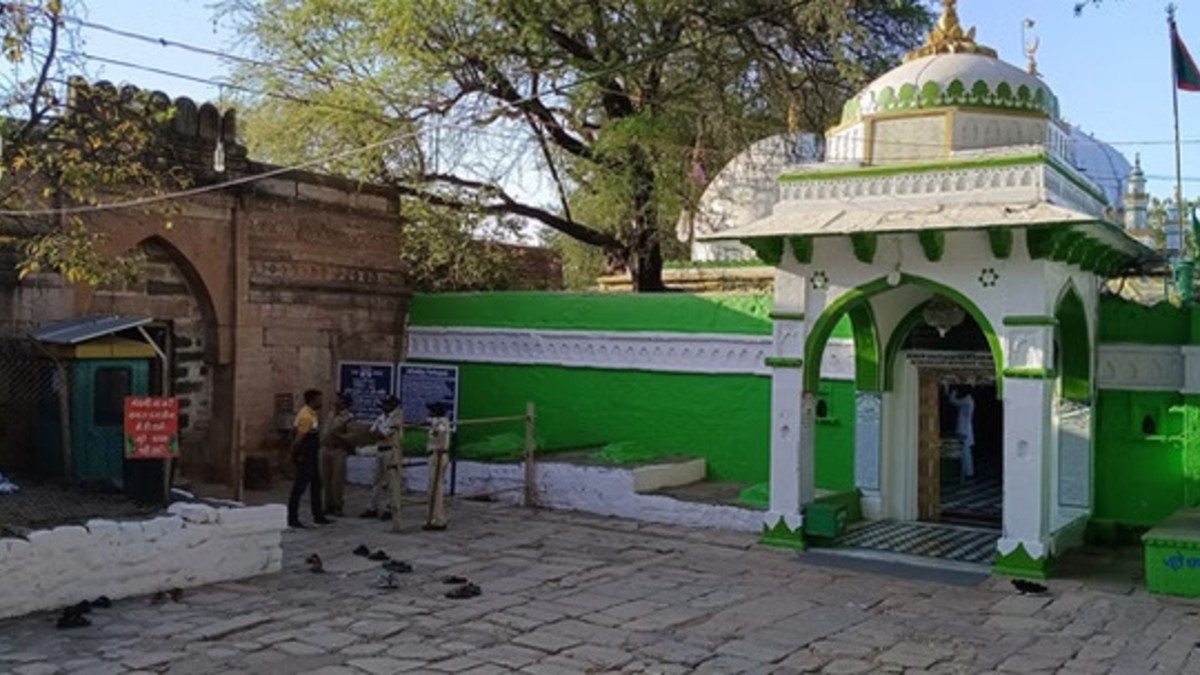
The legal battle over worship and prayer rights at the historic Bhojshala-Kamal Maula Complex has reached a crucial stage, with the High Court reserving its judgment after hearing final arguments from both Hindu and Muslim sides.
During the last day of hearings, detailed arguments were presented regarding the report prepared by the Archaeological Survey of India and the scientific methods used during the survey of the disputed structure.
Hindu Side Rejects Allegations of Bias
Advocate Vishnu Jain, appearing for the Hindu side, strongly rejected allegations that the ASI report was biased or discriminatory.
He argued before the court that the survey process was transparent and included representatives from all concerned parties. Jain also said that three Muslim members were part of the survey team, leaving “no scope for allegations of partiality.”
According to the Hindu side, the ASI report was prepared through a scientific and monitored process under the supervision of the court.
Muslim Side Questions Scientific Process
The Muslim side, represented by the Maulana Kamaluddin Welfare Society, questioned the methods used by the ASI to determine the age and nature of the structure.
Senior advocate Salman Khurshid argued that carbon dating was not conducted during the survey, raising doubts about the conclusions drawn in the report.
In response, the ASI clarified that carbon dating can only be used on biological materials and not on stone structures. The agency told the court that experts instead relied on methods such as paleography and stylistic analysis to determine the age and architectural history of the structure.
Debate Over Water Tank and Excavation Findings
One of the major points of dispute during the hearing was a water tank located inside the complex.
Salman Khurshid reportedly described the structure as a “wuzu tank” used for Islamic ablution before prayers. However, the ASI presented photographs before the court and argued that the tank was built above ground level, unlike traditional wuzu tanks generally found in mosques.
The ASI also responded to allegations that a plastic bottle found during excavation had been concealed from records. Officials told the court that the bottle was properly documented and recovered from the upper debris layer during excavation work.