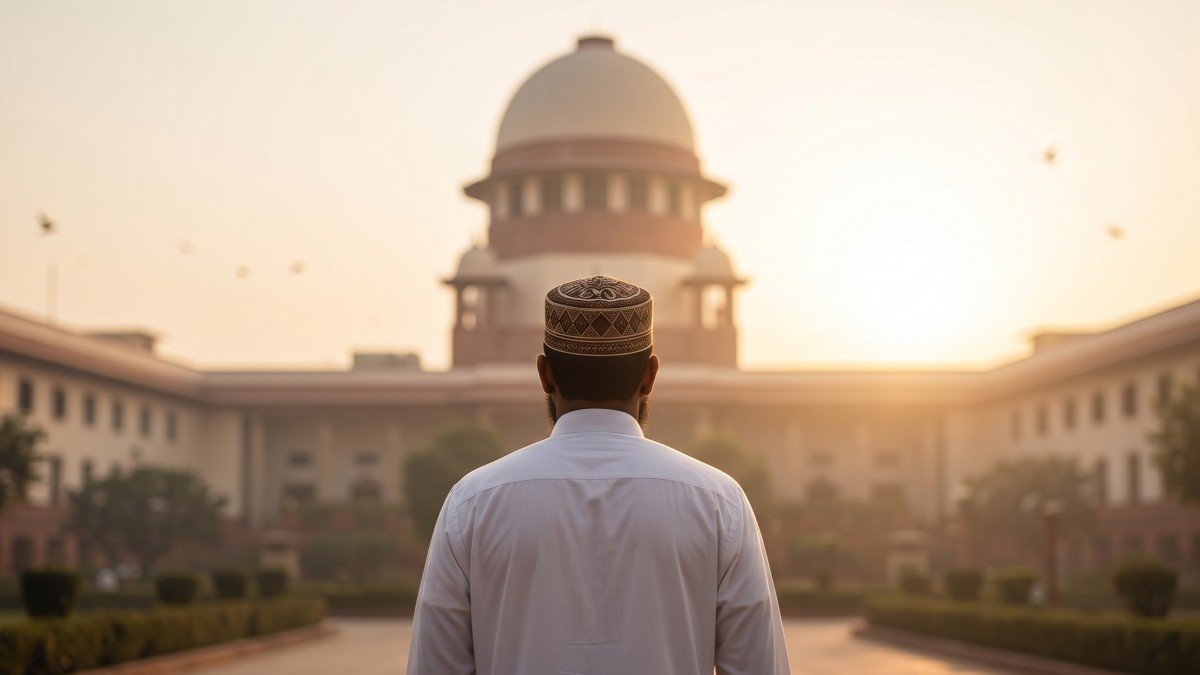
The Supreme Court on Monday expressed serious concern over the extremely low conviction rates in cases registered under the Unlawful Activities (Prevention) Act (UAPA), especially in Jammu and Kashmir, while granting bail to a Kashmir resident accused in a narco-terror case.
A bench of Justices B. V. Nagarathna and Ujjal Bhuyan granted bail to Syed Iftikhar Andrabi, who had remained in jail for more than five years in a case investigated by the National Investigation Agency (NIA).
Referring to data from the National Crime Records Bureau (NCRB) presented in Parliament by the Union Home Ministry, the Court observed that conviction rates in UAPA cases across India ranged between two and six per cent from 2019 to 2023.
“In other words, there is a 94 per cent to 98 per cent possibility of acquittal in such cases in the country,” the bench observed.
The Court noted that the situation in Jammu and Kashmir was even more concerning.

“In so far as the Union Territory of Jammu and Kashmir is concerned, the annual rate of conviction is always less than one per cent. It means that at the end of the trial, there is a 99 per cent possibility of acquittal in such cases,” the Court said.
‘Bail Is the Rule, Jail the Exception’
Questioning prolonged incarceration under anti-terror laws, the bench asked whether people should remain in detention for years simply because charges are serious, especially when conviction rates remain so low.
“With such statistics staring at our face, the question is, should we continue the detention of the appellant or defer the consideration to a later stage, simply because the charges are serious?” the Court observed.
Reaffirming the principle laid down in the Union of India v. K. A. Najeeb case, the Supreme Court said that even in UAPA matters, “bail is the rule and jail is the exception,” adding that stringent provisions under Section 43D(5) of the law cannot be used to justify indefinite imprisonment before trial.
The Court also noted that no cash or contraband had been recovered from Andrabi personally or from his home and workplace.

It further observed that statements implicating him were allegedly made before police authorities, which may attract restrictions under the Indian Evidence Act on the admissibility of confessions made to police.
“The appellant has no prior antecedents of being connected with narcotic trade or terrorist activities,” the Court said.
The bench also recorded that Andrabi was described as “an ardent advocate of the constitutional, federal and democratic set-up of India” and a supporter of the Jammu and Kashmir People’s Conference, a mainstream political party.
Trial Moving Slowly Despite Over 320 Witnesses
The case dates back to June 2020, when police allegedly recovered ₹20.01 lakh in cash and two kilograms of heroin from another accused during a vehicle check in Handwara. The NIA later accused Andrabi and others of involvement in cross-border heroin smuggling linked to militant funding.
However, the Supreme Court took note of the slow pace of the trial, observing that more than 320 witnesses had been listed but only a small number had been examined so far.
The Court directed Andrabi’s release on bail with conditions, including surrendering his passport and marking attendance at Handwara police station once every two weeks.
In a significant observation, the bench also expressed “serious reservations” over aspects of the judgment in the Gulfisha Fatima v. State case, where bail had been denied to activists including Umar Khalid and Sharjeel Imam in the Delhi riots conspiracy matter.