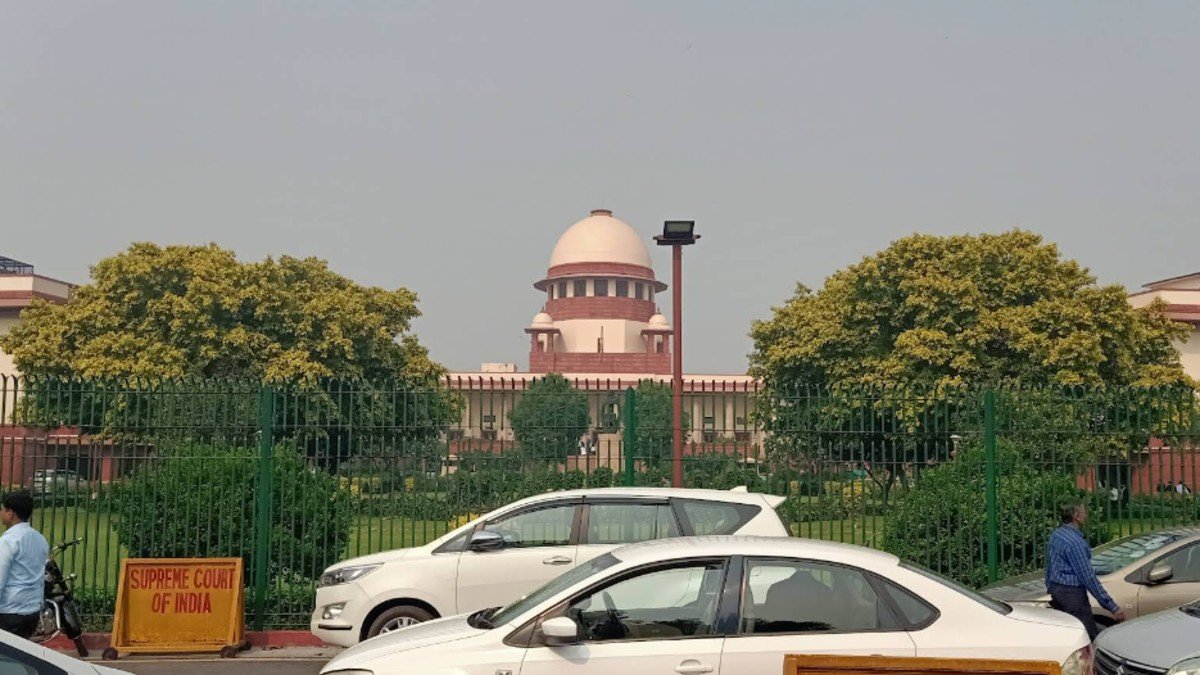
The Supreme Court of India on Thursday said that while it respects the views of eminent thinkers and authors, it cannot accept information sourced from what it termed “WhatsApp University”.
The remark came during the ongoing hearing of petitions related to women’s entry into religious places, including the Sabarimala Temple, and broader questions around religious freedom.
Court stresses limits of personal opinions
A nine-judge Constitution bench headed by Chief Justice Surya Kant made it clear that personal opinions, even from respected public figures, cannot be treated as binding in judicial proceedings.
During the hearing, senior advocate Neeraj Kishan Kaul referred to an article by Congress leader Shashi Tharoor on judicial restraint in matters of religion.
Responding to this, the Chief Justice said, “We respect all eminent persons and jurists, but personal opinion is personal opinion,” underlining that such views do not carry legal authority in court.

“But not from WhatsApp University”
As the discussion continued on whether knowledge should be accepted from all sources, Justice B.V. Nagarathna made a light-hearted but pointed remark: “But not from WhatsApp University.”
The comment drew attention to concerns over misinformation and unverified claims often circulated on social media platforms.
Kaul, however, maintained that knowledge should be welcomed from all credible sources, stating that “wherever knowledge and wisdom come from, they must be accepted.”
Key issue: religious practices and women’s rights
The bench is currently examining complex constitutional questions related to religious practices and gender equality, including the scope of Articles 25 and 26 of the Constitution.
The case is linked to the landmark 2018 verdict, where a five-judge bench allowed women of all age groups to enter the Sabarimala Temple, striking down the earlier ban as unconstitutional.

During recent hearings, the court also noted the difficulty in defining what constitutes “essential religious practices,” a key issue in such cases.
Debate on morality and reform
The hearing also saw arguments around the concept of “morality” in religious freedom. While Kaul argued against expanding it to “constitutional morality,” the bench indicated that rights of religious denominations are subject to public order, health, and social reform.
Justice Nagarathna pointed out that laws aimed at social welfare and reform can override certain religious practices if required.