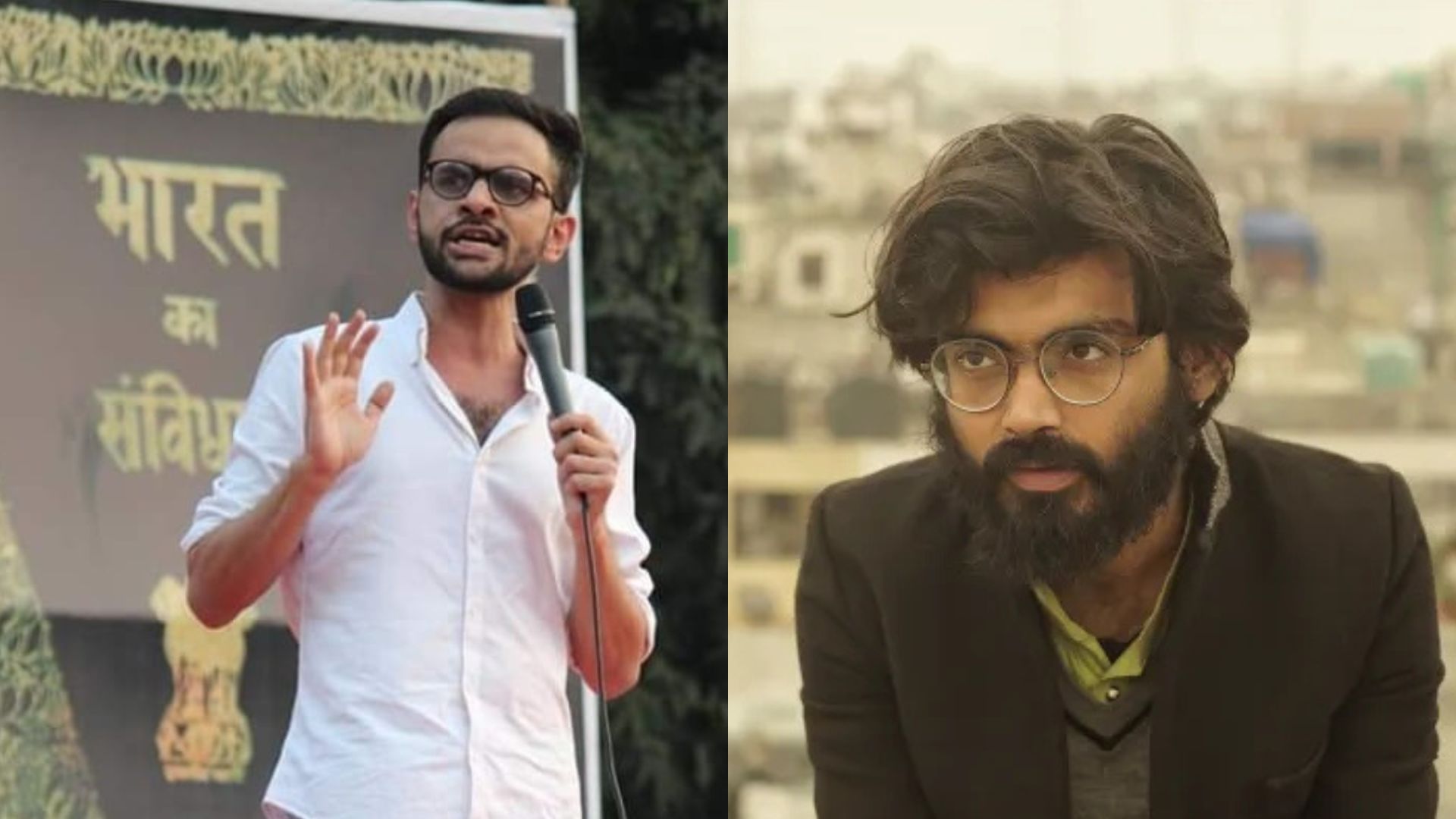
The Supreme Court on Monday expressed serious reservations about an earlier judgment that denied bail to former student activists Umar Khalid and Sharjeel Imam in the 2020 Delhi riots conspiracy case under the Unlawful Activities (Prevention) Act (UAPA).
A bench of Justices B.V. Nagarathna and Ujjal Bhuyan observed that the January 2026 ruling in the case titled Gulfisha Fatima v State appeared to depart from an important Supreme Court precedent that protects personal liberty and recognises prolonged incarceration as a valid ground for bail in UAPA cases.
The observations came while the apex court granted bail to Syed Iftikhar Andrabi, a Jammu and Kashmir resident arrested in a narco-terrorism case by the National Investigation Agency (NIA) and jailed since June 2020.
“We have serious reservations about the judgment in Gulfisha Fatima,” the bench said, adding that the earlier ruling seemed to treat the 2021 KA Najeeb judgment as an exceptional departure from the strict bail conditions under UAPA.
Court Reaffirms KA Najeeb Judgment on Delay in Trial
The bench underlined that the three-judge ruling in Union of India v KA Najeeb remains binding law and clearly established that prolonged delays in trial can justify bail, even in cases under the anti-terror law.
The Supreme Court said the right to a speedy trial under Article 21 of the Constitution applies equally to those accused under UAPA.
“The mere passage of time, if it arises from all surrounding circumstances, mechanically entitles an accused to release,” Justice Ujjal Bhuyan observed in the judgment.
The court stressed that smaller benches are legally bound to follow decisions of larger benches and cannot dilute or ignore them.
“A judgment rendered by a bench of lesser strength is bound by the law declared by a bench of greater strength. Judicial discipline mandates that such a binding precedent must either be followed or, in case of doubt, be referred to a larger bench,” the court said.
Earlier Bench Had Denied Bail to Umar Khalid, Sharjeel Imam
In January 2026, a two-judge bench led by Justice Aravind Kumar denied bail to Umar Khalid and Sharjeel Imam, holding that both occupied a “qualitatively different footing” compared to other accused in the Delhi riots conspiracy case.

The court had said there was material suggesting their involvement in the “planning, mobilisation and strategic direction” of the 2020 riots, making them key conspirators.
While granting bail to five other accused, the bench denied relief to Khalid and Imam but allowed them to file fresh bail pleas after one year or after the examination of protected witnesses.
‘Bail Is Rule, Jail Exception’ Even Under UAPA
Reiterating an important constitutional principle, the Supreme Court said strict provisions under Section 43D(5) of the UAPA cannot override fundamental rights guaranteed under Articles 21 and 22.
“The statutory embargo of Section 43D(5) UAPA must remain a circumscribed restriction,” the bench said.
“Therefore, we have no manner of doubt in stating that even under the UAPA, bail is the rule and jail is the exception. Of course, in an appropriate case, bail can be denied having regard to the facts of that particular case,” the court added.
The judges warned against a growing trend of smaller benches weakening larger bench rulings without openly disagreeing with them.
“It is this hollowing out of the import of the observations in Najeeb that we are concerned with,” the bench observed.
SC Flags Low Conviction Rates in UAPA Cases
The Supreme Court also referred to low conviction rates in UAPA cases across India while granting bail to Andrabi.
Citing data from the National Crime Records Bureau (NCRB), the court noted that UAPA conviction rates ranged between 2% and 6% nationally from 2019 to 2023, while in Jammu and Kashmir, conviction rates remained below 1%.
“It means that at the end of the trial, there is a 99% possibility of acquittal in such cases” in Jammu and Kashmir, the court observed.
The judgment is likely to influence future bail hearings in long-pending UAPA cases, including those involving undertrials facing extended incarceration without the completion of trial.