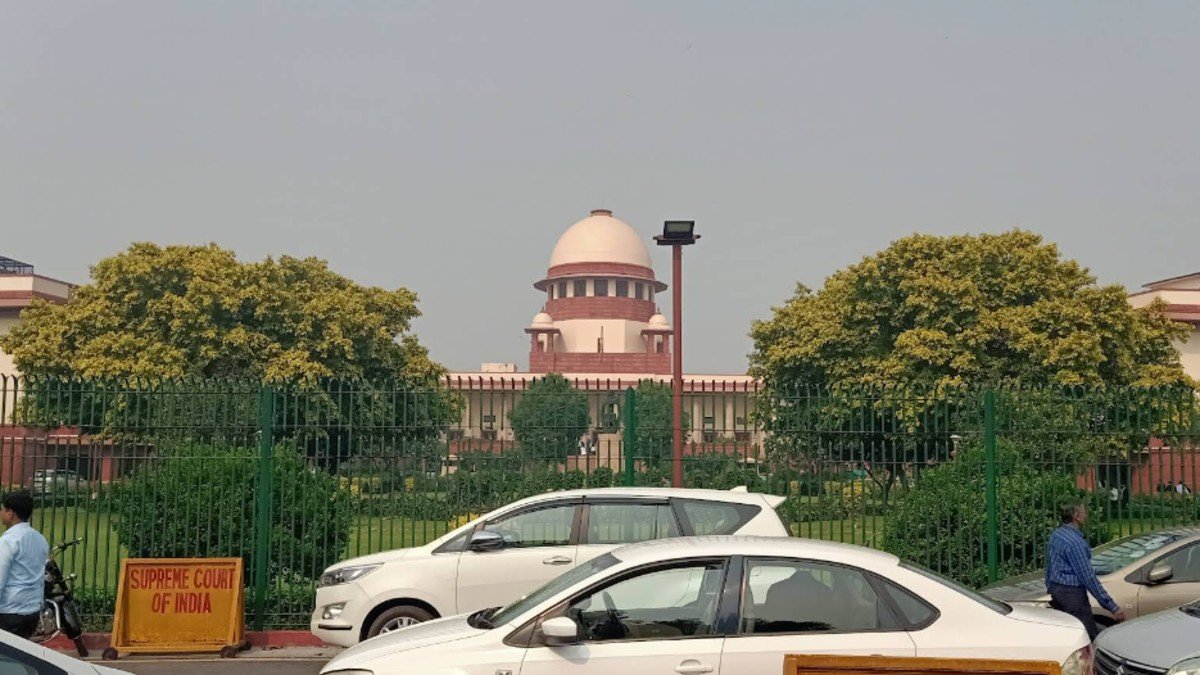
The Supreme Court on Monday said that the right to be on the electoral roll and to vote in one’s own country is not just a constitutional right but also a “sentimental” one, while hearing a case related to large-scale voter exclusions in West Bengal ahead of the Assembly elections.
The court was hearing petitions challenging the Election Commission’s Special Intensive Revision (SIR) exercise, which led to the removal of lakhs of names from the voter list due to what the Commission called “logical discrepancies”.
Justice Joymalya Bagchi said, “The right to remain on the electoral roll, the right to vote in the country you are born in is not only constitutional but sentimental. It is the biggest expression of nationality and patriotism.”
34 Lakh Appeals Filed After Voter Deletions
The court noted that around 34 lakh appeals have already been filed by voters whose names were removed from the electoral rolls. These appeals are being heard by 19 appellate tribunals set up in West Bengal.
According to the court, over one lakh cases are pending before each tribunal, raising concerns about delay in resolving voter disputes. The Election Commission has frozen the final electoral roll on April 9, just days before the West Bengal Assembly elections scheduled for April 23 and April 29.
Court Questions “Logical Discrepancy” Category
The Supreme Court raised concerns about the Election Commission’s use of the term “logical discrepancy” to remove voters.
Justice Bagchi said, “We are not bothered about West Bengal ‘standing out’. But no other State has a category called ‘logical discrepancy’.”
He added that in other states like Bihar, no such category was found, questioning the fairness of the process. The court also noted that the SIR guidelines originally stated that voters listed in the 2002 electoral roll would not be disturbed, but later changes appeared to introduce additional conditions.
EC Defends Process, Cites Verification Exercise
Senior advocate Dama Seshadri Naidu, appearing for the Election Commission, defended the process and said the exclusions were part of a verification exercise to ensure only genuine voters remained on the list.
He argued that voters with mismatched or inconsistent details were asked to submit documents for verification and those who proved their identity were retained.

However, the court pointed out that earlier submissions by the EC in similar cases, including Bihar, suggested that voters in the 2002 list would not need to submit additional documents, raising concerns about consistency in the Commission’s stand.
Court Stresses Fairness Before Elections
The bench, headed by Chief Justice of India Surya Kant, said the court’s priority is to ensure fairness and protect voters from being caught in procedural confusion just before elections.
Justice Bagchi observed, “The appellate process must be robust… somewhere we are getting blinded by the dust and fury of an impending election.”
The court also said that the verification process had become complicated because it was conducted close to the election date, creating uncertainty for voters whose names were deleted.
No Interim Voting Rights for Pending Appeals
The Supreme Court refused to grant interim voting rights to those whose names were removed but whose appeals are still pending.
Chief Justice Surya Kant said allowing such a request would not be feasible, stating, “If we were to permit this, then the voting rights of the individuals involved would have to be suspended.”
The court also dismissed a petition from a group of voters as “premature” and asked them to approach the appellate tribunals instead.
Tribunals to Decide Appeals
The court directed that appeals must be decided through the designated tribunals and warned against rushing the process. It emphasized that due process must be followed so that voters are not unfairly excluded.
Justice Bagchi said, “The voter should not be sandwiched between two constitutional authorities,” referring to the Election Commission and the appellate system.
The case will continue as tribunals hear millions of appeals, even as West Bengal heads into a closely watched Assembly election.