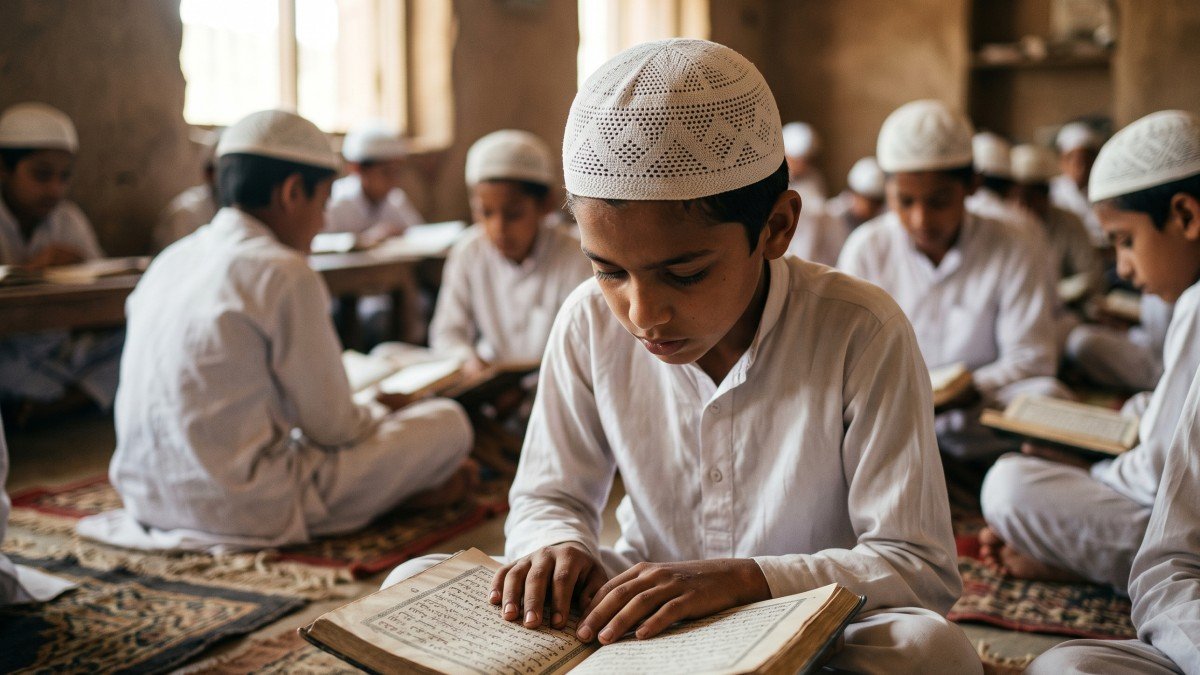
The Supreme Court on Monday dismissed a batch of petitions filed by more than 350 teachers and non-teaching staff who sought recognition of their appointments and salary benefits in various recognised madrasas in West Bengal.
A Bench of Justice Dipankar Datta and Justice Augustine George Masih held that the petitions had no merit after examining a sample of the cases presented before the court.
Delivering the judgment, the Bench said, “Pursuant to our earlier order, particulars of 13 petitioners out of more than 350 were scrutinised and placed before us. We proceeded on the basis that if even one of these petitioners could persuade us, we would examine the claims of the remaining petitioners. Unfortunately, none of the 13 petitioners could persuade us. All the writ petitions are without merit and are accordingly dismissed.”
Dispute Over Appointments
The case involved over 40 petitions filed by around 361 teachers and non-teaching employees who claimed they had been validly appointed in recognised madrasas after the Calcutta High Court declared the West Bengal Madrasah Service Commission Act, 2008 unconstitutional.
The petitioners argued that their appointments were regular and that they should receive salaries under the West Bengal government’s grant-in-aid scheme.
However, the legal position changed in 2020 when the Supreme Court, in the Sk. Md. Rafique case, upheld the constitutional validity of the 2008 Act, reversing the Calcutta High Court’s earlier decision.
Committee Had Rejected Claims
Following the Supreme Court’s 2020 verdict, a contempt petition led the apex court to constitute a committee in February 2023 to examine appointments made after the High Court judgment but before the Supreme Court restored the law.
The committee concluded that the appointments were invalid. The affected employees challenged the committee’s findings before the Supreme Court through petitions filed under Article 32 of the Constitution.
During the hearings, the court directed the petitioners to identify a small number of representative cases for detailed examination. It also sought answers on whether the concerned madrasas were officially recognised and whether their managing committees were legally constituted at the time of the appointments.
After reviewing 13 representative cases, the Bench found no grounds to interfere with the committee’s findings.
Interim Relief During Proceedings
During the pendency of the case, the Supreme Court had granted interim protection to the petitioners’ services in August 2024. In May 2025, it also directed the West Bengal government to continue paying salaries to those petitioners who were actively performing teaching duties, subject to the final outcome of the case.
With Monday’s judgment, the court has rejected not only the claims of the 13 representative petitioners but also those of all the remaining petitioners, bringing the long-running dispute over the madrasa appointments to an end.