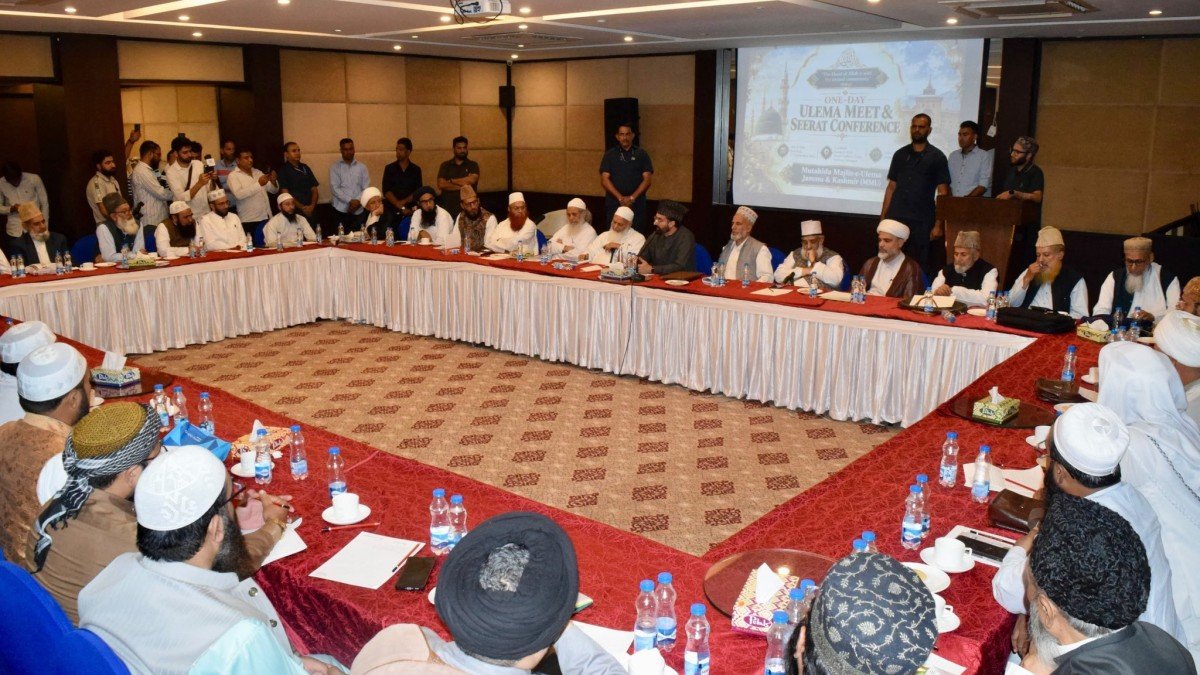
The Mutahida Majlis-e-Ulama (MMU) on Wednesday objected to the playing of Vande Mataram at a Waqf Day ceremony organised by the Jammu and Kashmir Waqf Board, saying the song’s invocation of the motherland was contrary to the Islamic principle of Tawheed.
The MMU, an umbrella body of religious organisations and institutions representing different schools of Islamic thought, said Tawheed, a fundamental principle of Islam, prohibits associating partners with Allah or attributing divinity to any person, object, land or creation.
It said Islam encourages love for one’s homeland but maintains a distinction between patriotism and worship.
“Any expression or practice that attributes divinity to the motherland is contrary to the fundamental Islamic belief of Tawheed and is, therefore, un-Islamic and impermissible for Muslims,” the organisation said in a statement.
The MMU also referred to the All India Muslim Personal Law Board (AIMPLB), saying it had clarified the Islamic position on Vande Mataram and opposed its compulsory rendition on religious and constitutional grounds.
Calling the playing of the song at the Waqf Board’s own function “highly regrettable and unacceptable”, the MMU said the institution was entrusted with protecting Muslim religious endowments and their sanctity.
“There was no legal obligation to play Vande Mataram simply because it was an official function, and playing it was optional. Yet the Waqf Board went ahead with it with utter disregard for the fundamental religious beliefs and sensitivities of Kashmiri Muslims, which has caused deep hurt and anguish among people,” it said.
MMU Raises Concern Over Use at Government Functions
The organisation also expressed concern over what it described as the increasingly routine inclusion of Vande Mataram at official government functions across Muslim-majority Jammu and Kashmir.
It said such practices disregarded the religious convictions and constitutional rights of Muslims and risked deepening distrust and alienation.
The MMU said it was considering seeking legal advice on the matter and would submit a formal representation to the concerned authorities, seeking an end to what it termed the forcible imposition of Vande Mataram at government functions, educational institutions and other public events in Jammu and Kashmir.

It urged authorities to respect the constitutionally guaranteed freedom of faith and conscience.