
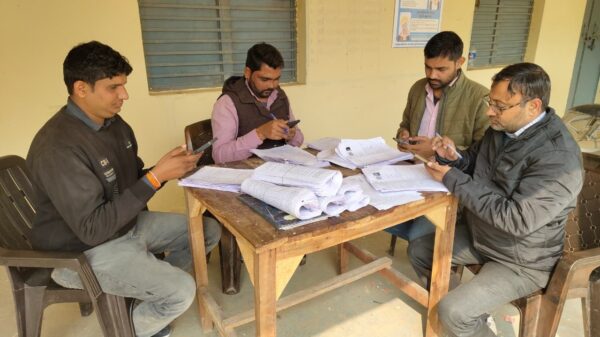


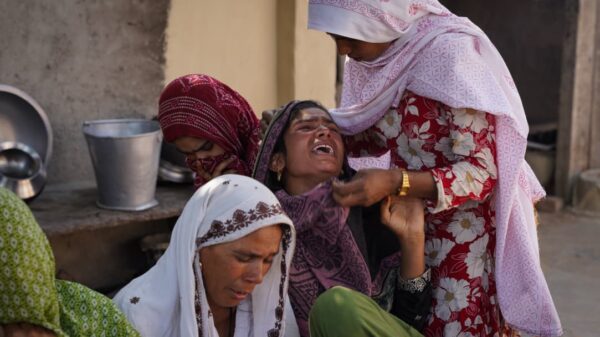

















A massive political storm has erupted in West Bengal following the midnight release of the first supplementary list of “Under Adjudication” (SIR) voters by the Election Commission. An analysis of the data reveals a startling trend: the vast majority of voters excluded from the rolls belong to the minority community, with women being the most affected demographic.
Exclusion: Malda and Murshidabad
Districts such as Malda and Murshidabad have emerged as the worst affected. In Sujapur (Malda), the number of excluded women voters is over 21 percent higher than men. In Mothabari, nearly 67.4 percent of those marked under adjudication and subsequently excluded are women, most of them from the Muslim community.
Murshidabad presents an equally stark picture. In Raghunathganj Assembly constituency, out of 1,15,087 voters listed under adjudication, around 25,000 names have been excluded in the first phase. Booth-level data reveals a clear gender disparity—at one booth alone, 48 out of 56 excluded voters were women. Similarly, in the Ullapara Primary School booth under the Suti Assembly constituency, all 137 excluded voters belong to minority communities, including 78 women.
Basirhat: BLO names deleted
In Raiganj, one booth reported the exclusion of 115 Muslim voters out of 116. North 24 Parganas’ Basirhat has drawn particular attention, where all 340 voters from a single booth in Boro Gobra (Basirhat-II block) were removed from the supplementary list—each of them belonging to the Muslim community. Notably, even the Booth Level Officer (BLO), Shafiul Alam, along with his family members, found their names deleted. Shafiul claimed his father’s name has been on the rolls since 2002 and remains there today, yet the second generation was deemed ineligible.
Soumen Mondal, President of the Basirhat 2 Panchayat Samiti, slammed the move: “People living here since before Independence are being deprived due to a conspiracy between the BJP and the Election Commission.”
Systematic Patterns Across the State
Across the state, similar patterns have been reported. In Nandigram (Purba Medinipur), 79 Muslim voters—including 33 women—were excluded from a single booth. In Kolkata’s Entally, 54 out of 84 excluded voters are women. In Ketugram, 368 names have been struck off in a minority-dominated booth, while Nakashipara and Hasnabad have also reported large-scale deletions, predominantly affecting minority voters.
The Election Commission has so far remained silent on the matter, even 24 hours after the list’s release, raising questions about transparency and intent. Observers note that despite the scale of exclusions, there has been no official clarification regarding the criteria or process followed.
According to reports, the supplementary list published on March 23 had already excluded nearly 63 lakh voters across Bengal, while another 60 lakh were marked ‘under adjudication’. Following a Supreme Court directive, judicial officers were assigned to verify the eligibility of these voters. So far, around 29 lakh cases have been resolved, with approximately 31 lakh still pending.
EC Special Observer Comment
Opposition voices have echoed similar concerns, accusing the Election Commission of acting under political influence. Hindustan Times quoted Election Commission Special Observer Subrata Gupta, who stated, “Those who conducted the verification process would be better positioned to respond to these questions.”
“Targeting Minorities”: Mamata Strikes Back
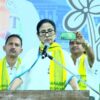
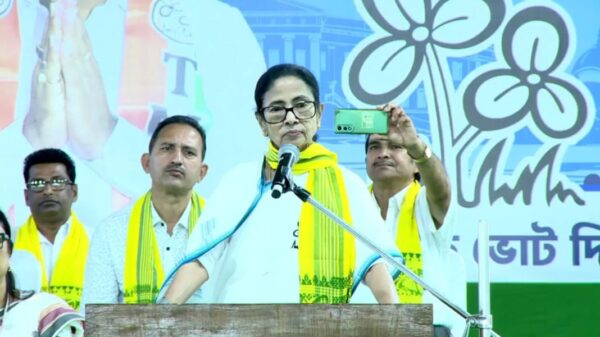
The Trinamool Congress (TMC) has long alleged that the SIR (Special Intensive Revision) process is a tool to target minority vote banks in areas where the ruling party is strong. Speaking at a public rally in Maynaguri on Wednesday (March 25), Chief Minister Mamata Banerjee launched a scathing attack.
She said, “They brought independence at midnight, and today, they are stealing voting rights at midnight. First, they put people in SIR lines, then they will talk about NRC and detention camps. I will not allow this as long as I am alive. They are snatching the rights of Rajbanshis and minorities, forcing citizens to prove their identity. Tomorrow they will say NRC, detention camps—we will not allow this.”
Banerjee further alleged that both minority communities and Rajbanshis were being selectively targeted, adding that many citizens are now being forced to prove their citizenship.