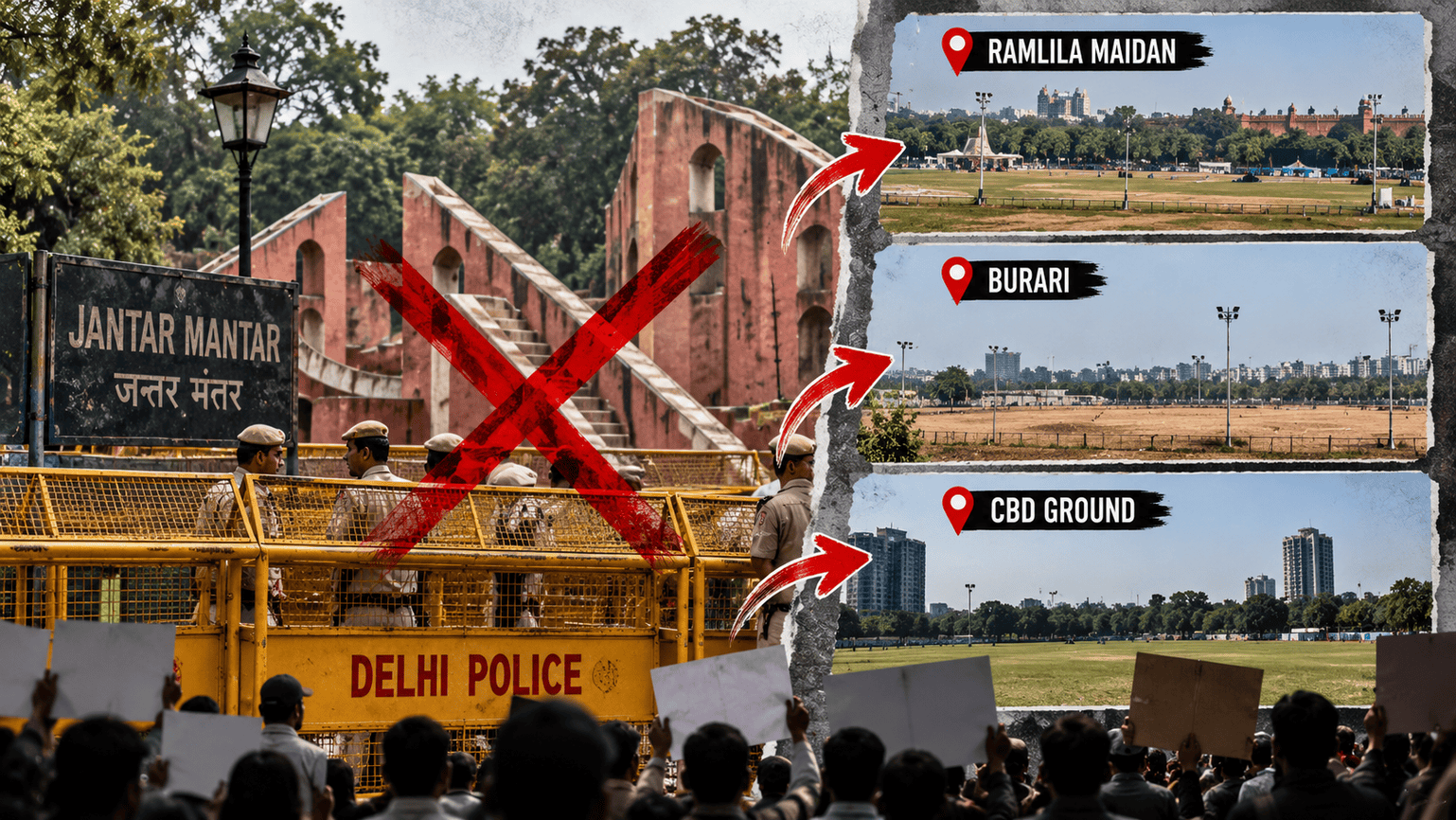
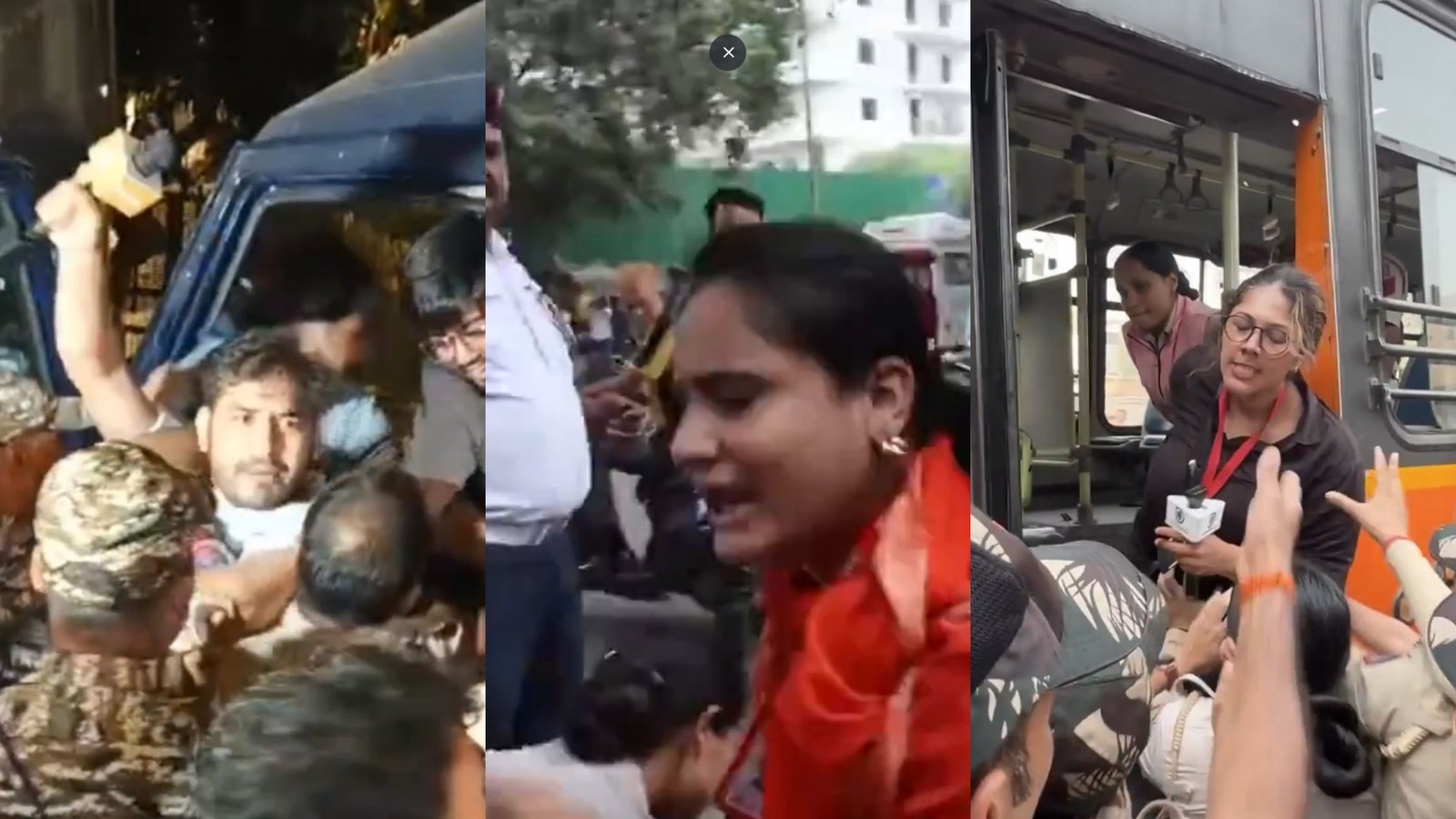
The Delhi High Court on Monday questioned the Delhi Police over allegations that its personnel confined Nadeem Khan, national secretary of the Association for Protection of Civil Rights (APCR), at his residence and office for around eight hours, allegedly preventing him from attending a planned protest at Jantar Mantar.
A Division Bench of Acting Chief Justice Nitin Wasudeo Sambre and Justice Sanjay Sharma issued notice to the respondents and directed the police to file a status report within two weeks.
“How can you enter the house of this man? You have the right to conduct duty, but how can you do it in such a way? Where is your cause to confine him?” the Bench asked during the hearing.
The court questioned the legal basis for restricting Khan’s movement, observing that although the police could deny permission for a protest, it needed to explain the authority under which it could confine someone.
“Denying permission is your right. Show us where it is in law,” the Bench observed.

Nadeem Khan Alleges Eight-Hour Confinement
According to Khan’s petition, police personnel from Shaheen Bagh police station entered the Jamaat-e-Islami Hind headquarters in Abul Fazal Enclave, where his residence and office are located, on September 29.
Khan alleged that the officers prevented him from leaving the premises between approximately 9.30 am and 5.30 pm, stopping him from attending a planned demonstration at Jantar Mantar.
The proposed protest was intended to raise concerns over attacks on places of worship and the exclusion of citizens through the Special Intensive Revision (SIR) of electoral rolls.
Appearing for Khan, advocate Shahrukh Alam told the court that police personnel remained at the premises for several hours without showing a written order or notice. She also alleged that Khan faced continued surveillance and received calls from police personnel enquiring about his movements.
The petition states that Khan was neither formally arrested nor given written grounds for his alleged detention. It further claims that he was not produced before a magistrate and that his relatives were not informed.

Khan has challenged the alleged confinement, surveillance and harassment as unlawful and unconstitutional.
Delhi Police Denies Detention
The Delhi Police disputed Khan’s allegations, telling the court that its personnel had visited the premises only to make enquiries and had not detained him.
According to the police counsel, officers received information that Khan might attend the proposed protest despite permission having been denied. The counsel said the officers left the premises around 5.30 pm.
The Bench questioned the justification for the police action and expressed displeasure that the authorities had not prepared a status report despite receiving an advance copy of the petition.
The police sought time to file its response. The court subsequently directed the respondents to submit the status report within two weeks.

During the hearing, Khan’s counsel also raised concerns about repeated phone calls from police personnel. The court recorded an assurance from the police counsel, given on the instructions of the station house officer, that no further calls would be made to Khan.
The court noted that Khan was currently in Kolkata for personal reasons and that, according to the police, no restrictions were being imposed on his movement at present.
The High Court has not delivered a final ruling on the allegations and will consider the matter after receiving the police response.
Petition Challenges Restrictions on Protests
Khan has also challenged an undated prohibitory order restricting gatherings of five or more people, demonstrations, sit-ins, speeches and the display of banners or placards across the New Delhi district, including Jantar Mantar, without prior written permission.
According to the petition, an application seeking permission for the proposed demonstration was submitted to the Parliament Street police station on September 19. Khan alleged that the organisers received no response and that he later learnt through an anonymous phone call that permission had been denied. He said his subsequent attempt to seek clarification from the station house officer also went unanswered.
The petition argues that the restrictions violate constitutional guarantees of freedom of speech and expression, peaceful assembly, equality and personal liberty under Articles 19, 14 and 21 of the Constitution.
Khan has sought relief against the alleged confinement and surveillance, along with a declaration that the police action was unconstitutional. The petition also seeks compensation and a time-bound inquiry into the conduct of the officers involved.
Court Had Earlier Declined Urgent Hearing
On October 9, the High Court had declined to hear Khan’s plea urgently and listed the matter for October 12.
During that hearing, his counsel said Khan feared further detention or house arrest after receiving an oral communication from the police. She argued that the matter concerned personal liberty and required urgent intervention.
The Bench questioned the need for immediate judicial intervention in the absence of a written order restricting Khan’s movement.