Anusreeta Dutta & Pratyusha
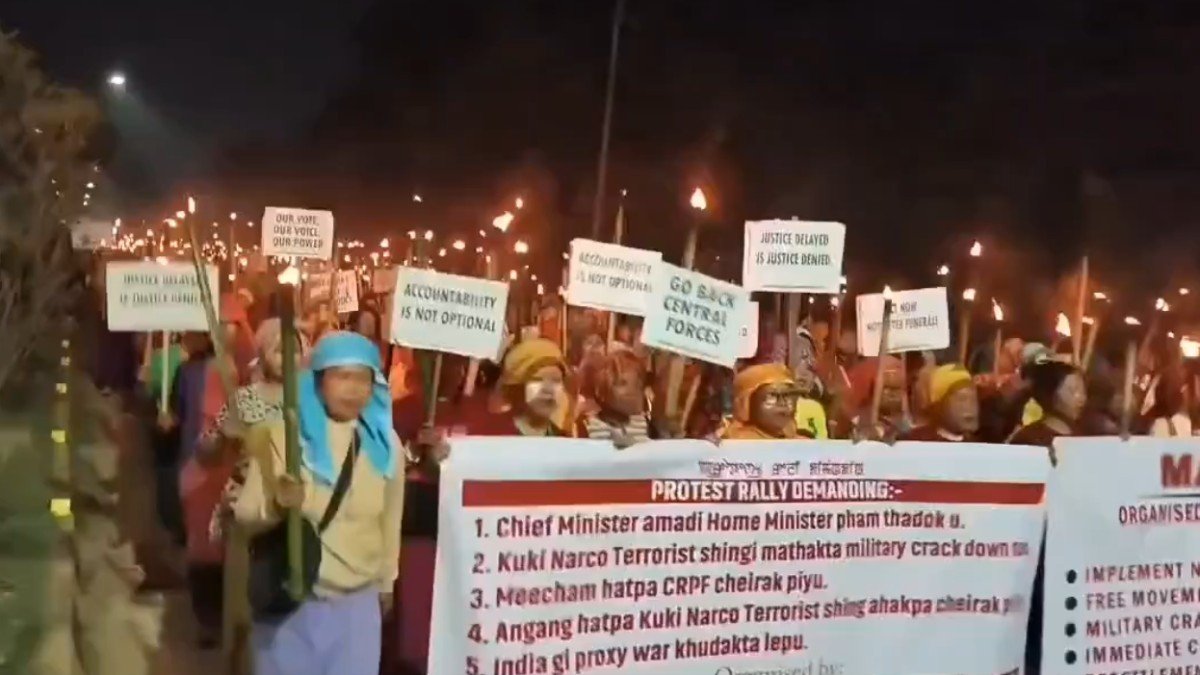
More than three years after ethnic violence erupted in Manipur in May 2023, the state continues to see sporadic flashpoints that reignite fears of a broader conflict. Repeated incidents—security operations, protests, isolated attacks, or political disagreements—are a reminder of how fragile peace is, even if the violence is not as intense as in the early months of the crisis. Every new episode hammers home a terrible fact: the conflict has not been fully resolved. Instead, it has entered a long phase in which the absence of large-scale violence is at times mistaken for enduring calm.
To understand why Manipur is still susceptible to further turmoil, we need to look beyond specific occurrences. The state’s present instability is rooted in historical grievances that go back decades, conflicting political aspirations, unresolved identity issues, and institutional frailties. These structural issues need to be addressed in tandem with security concerns; otherwise, every new flashpoint is likely to become a new chapter in an unfinished conflict.
A Conflict with Deep Historic Roots
The violence in May 2023 grabbed national and international headlines, but tensions among Manipur’s communities did not develop overnight. The social and political landscape of the state has been moulded by its history of conflicts over land ownership, administrative autonomy, representation, and constitutional safeguards. The valley is inhabited by the Meitei people, and the surrounding hill tracts by the Kuki-Zo and Naga tribes. Constitutional land tenure rules, independent administrative procedures, and conflicting political demands have too often bred mistrust rather than unity within the governance system.
Even before 2023, the political situation was already tense due to a host of developments, such as disputes over the Scheduled Tribe status of the Meitei population, land rights, illegal immigration, forest eviction drives, and aspirations for greater autonomy. So, the violence that followed was not a separate event but the product of many unresolved disputes.
The Human Impact of the Conflict
The violence of 2023 led to significant loss of life, mass displacement, and extensive destruction of residential, commercial, religious, and civic infrastructure. Thousands of families had to live in relief camps, and many villages became geographically bifurcated as security concerns prevented residents from returning to their neighbourhood homes.
Relocation is still a concern, though in some parts of the state, things are looking up. For many families, returning home is complicated not just by physical destruction but also by ongoing concerns about security and future coexistence. Children’s education has been interrupted, healthcare access in some districts has been limited, and local businesses remain economically uncertain. Such effects illustrate how the humanitarian impact of conflict can endure for years, even when violence becomes less frequent.
Security measures contain the crisis; they do not resolve it. Central security personnel and coordinated police and administrative actions have helped reduce the scale of violence since the initial outbreak. Earlier this year, President’s Rule was imposed with a view to tightening administrative control and improving coordination in restoring law and order. Security forces have managed to foil a number of potentially dangerous situations and have recovered a large quantity of looted weapons. But security measures alone will not remove the root causes of repeated instability. Much of the affected area remains under tight security. This could reduce immediate violence, but it does nothing to restore trust between groups that now often live in isolated areas with little interaction.
Peace, if it is sustained only by security arrangements, is inherently fragile if larger political and socio-economic questions are not resolved.
Why Every New Flashpoint Escalates Quickly
What is remarkable about the present situation in Manipur is the speed with which localized incidents can escalate into wider tensions. There are various reasons for this trend.
First, deep mistrust still shapes opinions among communities. Rumours and misinformation matter particularly because incidents are usually understood in the context of previous violence.
Second, displacement has altered the social geography of the state. Communities that once shared economic spaces and educational institutions are increasingly splintering. Less day-to-day interaction means fewer opportunities to rebuild confidence.
Third, the large flow of weapons in the wake of the violence in 2023 remains a concern, even as efforts are underway to retrieve them. The presence of weapons means that even small fights can escalate.
Finally, competing political narratives can often intensify existing differences. Different groups continue to see the conflict through the prism of their own history, making it difficult to find consensus on responsibility, justice, and the future of governance.
Justice and Accountability Remain Essential
The healing process in Manipur has largely taken place through the judicial process. The Supreme Court has been keeping an eye on certain aspects of the legal response, underlining the need for speedy investigations and effective prosecution. The violence is still being investigated by several agencies.
For survivors from different communities, justice has different meanings. Some want accountability for those responsible for violence against civilians; others highlight the need for the safe return of displaced families or institutional reforms to prevent future threats. Balancing these expectations is a huge challenge. Delays in investigations and differing legal outcomes may well give rise to perceptions of inequitable treatment, whether or not these perceptions are grounded in institutional facts.
A credible legal process thus serves not only the purpose of accountability but also the broader objective of restoring public trust in state institutions.
Political Dialogue Cannot Be Postponed
Conflict management is not conflict resolution. Security deployments can contain immediate violence, but lasting peace necessitates continuous political dialogue among various stakeholders. These include representatives of all ethnic communities, civil society organizations, women’s groups, student organizations, religious leaders, and constitutional experts in Manipur.
Dialogue doesn’t necessarily mean everyone will agree immediately, but it does provide a means to work out differences before they escalate into conflict. Importantly, discussions should move from crisis response to long-term governance issues. This requires a sustained institutional focus on administrative systems, resource allocation, representation, rehabilitation, and development policies.
International experience from areas that have experienced long-term ethnic conflict shows that reconciliation generally depends on a process of ongoing confidence-building, underpinned by transparent institutions, rather than on a single political agreement.
The Role of the Media in a Long-Term Conflict
Media coverage is also vital during prolonged periods of instability. The need to report on violent situations as they happen is clear, but so too is the need for sustained journalism that explores rehabilitation, governance, education, healthcare, economic recovery, and the lived experiences of displaced communities.
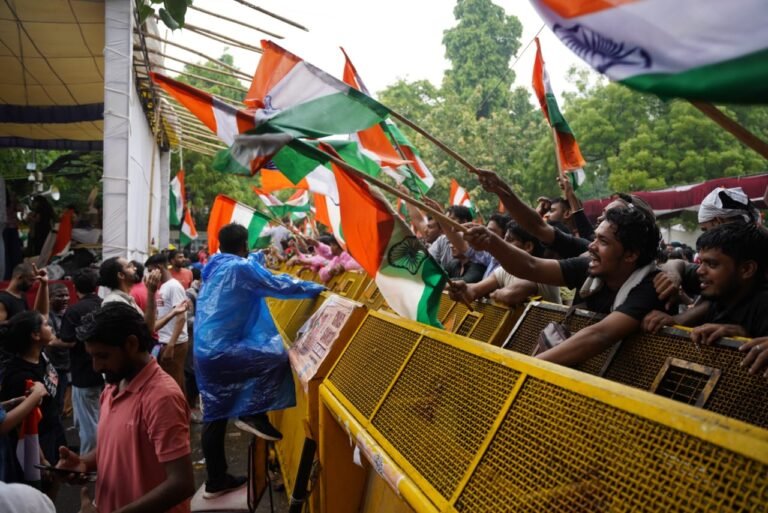
Balanced reporting means reporting verified information without propagating myths that scapegoat entire communities. Misinformation is rife during conflict, and proper sourcing and contextual reporting are critical defences against further division.
The challenge for journalism is not only to document violence but also to help audiences understand the structural conditions that allow conflict to persist.
Beyond the Next Flashpoint
It would be easy to mistake each spell of relative calm for evidence that Manipur has moved beyond the crisis. Yet such occasional disturbances suggest that stability is contingent rather than permanent. Security deployments and administrative measures alone will not be sufficient for long-term peace. It will require rebuilding confidence between divided communities, delivering credible justice, supporting rehabilitation, strengthening public institutions, and developing political mechanisms capable of addressing long-standing concerns democratically.
Manipur’s experience offers a larger lesson for conflict resolution in diverse societies: violence seldom ends when the headlines do. Reconciliation should not be confused with the absence of large-scale conflict. Every new flashpoint is a reminder of how unresolved disputes continue to affect public life long after the immediate crisis seems to be over.
Going forward will require patience, institutional credibility, and a strong commitment to dialogue. Only then can temporary stability be translated into lasting peace—one based not only on containing violence but also on the gradual rebuilding of trust between citizens and the institutions mandated to protect them.
Anusreeta Dutta is a columnist and climate researcher with experience in political research analysis, ESG research, and energy policy.
Pratyusha is an independent journalist and editor from Kolkata whose work focuses on film, literature, culture, and politics, with a particular interest in how they intersect in everyday life. She holds an MPhil in Modern and Contemporary Literary Studies from Trinity College Dublin. Her work has appeared in publications in India and abroad.