Amzad Ali, Petitioner’s Question
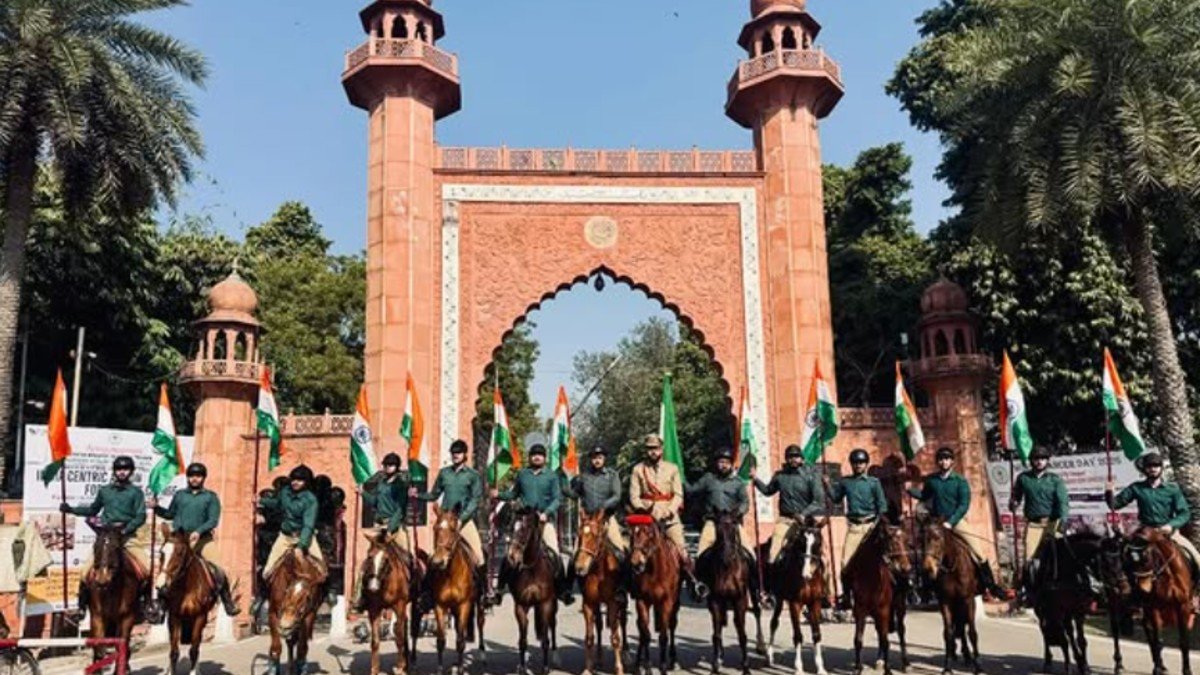
The Allahabad High Court’s observations in the Aligarh Muslim University Riding Club land dispute raise a fundamental question: if AMU possesses what the Court described as the “best of the best” legal resources and legal advice to defend its property rights, why did the University itself not approach the Court to protect the disputed land?
The question becomes even more significant when the chronology of the dispute is examined closely.
On 30 April 2025, the Aligarh Municipal Corporation took possession of approximately 41 bighas of land associated with the AMU Riding Club and placed a board claiming the property. AMU disputed the municipal claim and maintained that the land belonged to the University. The dispute subsequently reached the Allahabad High Court through a PIL filed by Kaif Hasan and 23 other students of Aligarh Muslim University.
The students approached the Court because the University itself had not initiated the particular proceedings seeking protection of the land. Their intervention raises a basic institutional question: why did students have to become the litigants in a dispute concerning property that AMU itself claims to own?
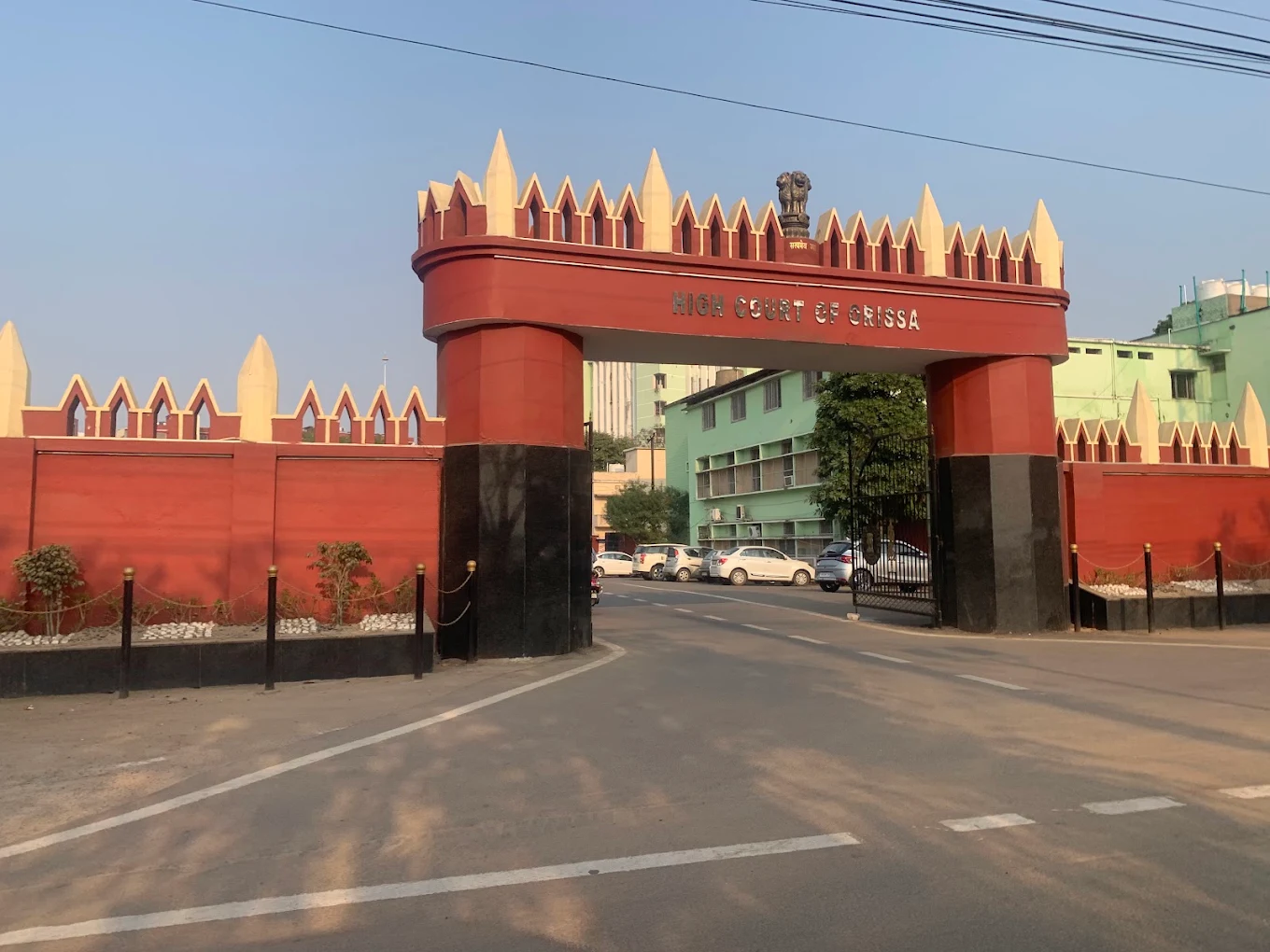
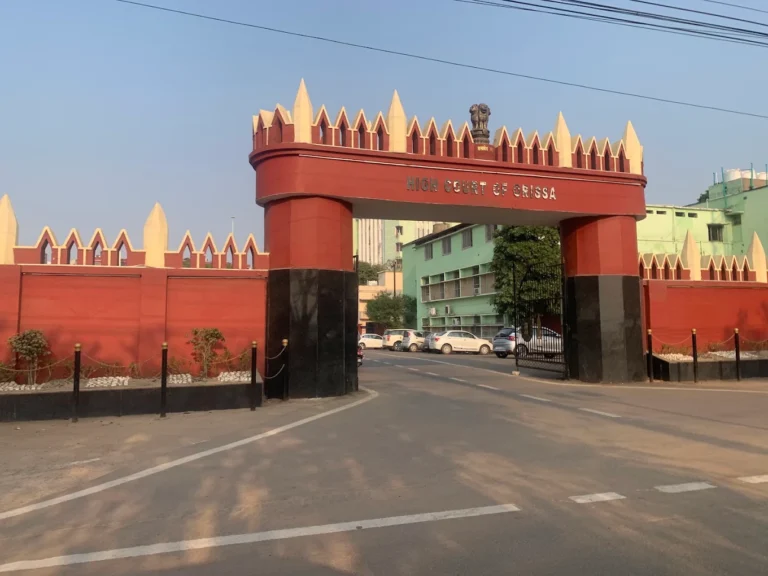
The High Court, in its order dated 21 May 2025, did not decide the title in favour of either side. The Court specifically clarified that dismissal of the PIL should not be treated as an expression of opinion regarding the title of Nagar Nigam or AMU. The Court also noted that AMU is a juristic person and has at its disposal substantial legal advice and resources to defend its property rights. The PIL was dismissed, among other reasons, because the petition did not contain sufficiently specific pleadings identifying the disputed land.

That distinction is important. The Court did not say that Nagar Nigam had established ownership. Nor did it say that AMU had lost title. The ownership question remained open. Yet the Court’s observation about AMU’s legal capacity inevitably raises questions about the University’s institutional response.
- If the land belonged to AMU, why did the University itself not approach the Court at the earliest stage?
- If AMU possessed the relevant title documents, why were those documents not placed before a competent court through proceedings initiated by the University itself?
- If the University had legal experts and resources, why did students have to take the initiative?
These questions become even more significant because the dispute did not disappear after the dismissal of the student PIL. Instead, the ownership controversy continued.
According to the University’s position reported in The Indian Express on August 22, 2026, AMU claims that the land was acquired under the Land Acquisition Act, 1894, with the University’s claimed title dating back to 13 June 1925. AMU has also relied upon a purported 19 November 1940 order by the Governor of the United Provinces reserving the land for the University.
At the same time, the Municipal Corporation relies upon revenue records in which the land was recorded as “banjar bhumi” from 1992. The Municipal Corporation has therefore asserted its authority over the property on the basis of the existing revenue position.
AMU, on the other hand, alleges that the revenue records were altered or tampered with in 1992 without lawful authority. The University says it became aware of the alleged alteration in 2003 and subsequently pursued correction of the records. It further claims that it submitted its claim before the competent authority on 29 March 2025.

This chronology raises another question.
If AMU had been pursuing correction of the revenue records for years, what concrete legal or administrative steps did the University take to secure the University’s claimed title and possession before the municipal action of April 2025?
The question is particularly relevant because the Municipal Corporation’s action was not hidden. It became a public dispute, the students approached the High Court, and the issue received considerable attention.
The students’ unanswered question:
The principal petitioner, Kaif Hasan, has repeatedly questioned why the students were left to fight a battle concerning what the University itself describes as its property.
His central argument is straightforward: when students stepped forward to protect AMU’s alleged property rights, why did the University administration not provide meaningful institutional and legal support to them?

According to the petitioners, they did not receive the level of substantive institutional assistance they expected from the University administration. They were students pursuing their academic programmes, yet they found themselves approaching the High Court over a property dispute involving one of India’s historic central universities.
That raises an uncomfortable institutional question: was the University’s response merely passive, or did the situation reflect a deeper failure of institutional decision-making?
It would be premature and irresponsible to allege collusion without evidence. But asking questions about administrative accountability is entirely legitimate.
- What legal advice did the University obtain after the Municipal Corporation took possession?
- What decision was taken by the competent University authorities?
- Was the University’s legal team instructed to initiate proceedings?
If not, why not?
- Were notices exchanged with the Municipal Corporation and district administration?
- Was the University’s alleged title formally placed before the competent authority?
- Who authorised the University’s response to the municipal action?
And perhaps most importantly:
- Why were students required to approach the High Court before the University itself initiated appropriate proceedings to protect the property it claims to own?
The Vice-Chancellor’s position raises further questions:
The latest developments make these questions even more relevant. AMU Vice-Chancellor Naima Khatoon has now publicly stated that the University is prepared to approach the Supreme Court and recover possession of the land. She has also described the municipal board placed on the property as wrong and termed the municipal action unfortunate.
If the University is now prepared to pursue the matter before the higher judiciary, the obvious question is:
Why now?
If the University’s title documents are as strong as the administration claims, why was a similar urgency not visible when the dispute first emerged in April 2025? The question is not whether the University has a right to litigate now. It clearly has the right to pursue whatever legal remedies are available to it. The question is one of timing, institutional responsibility and preparedness. If the University believed that its property had been unlawfully taken in April 2025, why did the University itself not immediately seek an appropriate judicial remedy? Why did the students become the first visible litigants? Why did the University not make its legal position publicly clear through a comprehensive official chronology? Why was the University’s claimed title not placed before the appropriate forum in a manner that could lead to a definitive determination?
The Chief Minister meeting: another unanswered question:
The issue becomes even more significant in light of the Vice-Chancellor’s reported statement that she met Uttar Pradesh Chief Minister Yogi Adityanath in Lucknow regarding the disputed land.
If such a meeting took place, an obvious question arises: why was this important development not proactively communicated by the University’s Public Relations Office as part of its official communication on the land dispute?

If the Vice-Chancellor was personally taking up the matter with the highest political authority in the state, the AMU community would reasonably expect an official account of that engagement.
- When was the meeting held?
- What was discussed?
- What documents were presented?
- What response was received?
- Was any written communication issued following the meeting?
- Was the University’s legal team involved?
- Was the district administration informed of the University’s position?
These are not accusations. They are basic questions of institutional transparency when a major property dispute involving a central university is being pursued at the highest administrative level.
Why was possession not protected?
The latest dispute also raises a practical question. If AMU genuinely believed that the property belonged to the University, what steps did it take to protect the physical status of the land?
The University’s position is that the land was historically used as a riding field and remained associated with the University. If so, what measures were taken to preserve the University’s possession and boundaries?
- Were boundary records maintained?
- Was the property demarcated?
- Were relevant land records periodically verified?
- Were objections filed whenever the alleged 1992 revenue entry remained uncorrected?
- Was any injunction or other protective order sought?
- Were the district authorities formally notified that AMU disputed the revenue entry?
And if AMU had been pursuing correction since 2003, why did the controversy still reach a stage where municipal authorities could physically move onto the property?

Again, these questions do not establish negligence or wrongdoing by themselves. But they demand answers if the University wants the public to understand how a property it claims to have owned since the 1920s could become the subject of such a prolonged ownership dispute.
The 2026 confrontation changes the context:
The latest events have made the issue more serious. On 20 August 2026, according to the latest media report, municipal officials deployed earthmoving machinery and began levelling the land and erecting fencing. The Vice-Chancellor reached the site and objected. The following day, District Magistrate Avinash ordered status quo, directing the parties to pursue the matter before the SDM. This is significant because the current administrative position is not a declaration that the Municipal Corporation owns the land. Nor is it a final declaration that AMU owns it.
Instead, the competing claims remain to be examined. That makes the University’s earlier conduct an even more relevant subject of public scrutiny. The present question is not simply “Who owns the land?”It is also:
“What did AMU do to establish and protect its claimed ownership before the dispute reached this stage?”
The Honourable High Court order:
There is another important aspect that needs to be made absolutely clear. The May 21, 2025 High Court order cannot properly be used to claim that the Court recognised Nagar Nigam’s ownership. It did not. The Court expressly stated that dismissal of the PIL should not be understood as an opinion regarding the title of Nagar Nigam or AMU.

The Court’s decision was therefore not a final title judgment. This is particularly important because the University’s critics and supporters may otherwise interpret the dismissal differently.
The students did not lose because the Court declared that the Municipal Corporation owned the land. They lost the PIL because the Court declined to entertain the proceeding in the form presented, including concerns regarding the specificity of the land description, and because AMU itself, as a juristic person with legal resources, was considered capable of defending its property rights.The title question was expressly left open.
The institutional accountability question:
The controversy therefore goes beyond AMU versus Nagar Nigam.It concerns the functioning of a major public institution.When valuable institutional property is disputed, the administration is expected to maintain records, monitor revenue entries, obtain appropriate legal advice, take timely action and communicate major developments transparently. The AMU administration now has an opportunity to answer these questions with documents rather than statements.It could place in the public domain the complete chronology of its actions since 1992—or at least since 2003 when it says it became aware of the disputed revenue entry.
It could disclose, subject to applicable legal and privacy restrictions, the dates of representations made to the revenue authorities, the legal opinions obtained, correspondence with the district administration, proceedings initiated, decisions taken by competent University authorities and the University’s response to the April 30, 2025 municipal action. It could also explain the circumstances in which the student petitioners approached the High Court and what assistance, if any, was provided to them. That would answer the central questions far more effectively than any political statement.
The five questions the administration must answer:
The entire controversy can ultimately be reduced to five straightforward questions:
- First: If AMU possessed the documents establishing its title, why did the University itself not initiate appropriate judicial proceedings when the Municipal Corporation first took possession?
- Second: If the University had access to extensive legal expertise, why were students required to become the principal litigants challenging the municipal action?
- Third: If AMU had been pursuing correction of the disputed revenue records since it allegedly discovered the issue in 2003, why was the matter still unresolved when the municipal authorities acted in 2025?
- Fourth: If the Vice-Chancellor was engaging directly with the Uttar Pradesh Chief Minister regarding the land, why was that engagement not clearly and proactively communicated to the AMU community?
- Fifth: If the University now intends to approach the High Court or Supreme Court, what explains the apparent difference between the University’s present urgency and its response when the dispute first emerged?
These questions do not presume the answers. They demand them.
No allegation of collusion, only demand for accountability:
Indeed, the more valuable the property and the more important the institution, the greater the need for transparency. The issue involves competing claims over approximately 3.863 hectares, reportedly corresponding to 41 bighas, with the latest media reports placing the land’s estimated value at around Rs 500 crore. This is not a minor administrative dispute. It concerns public institutions, historical records, government land records, alleged acquisition documents, revenue entries and physical possession. The public therefore deserves a complete account.
Conclusion:
The Riding Club land dispute is ultimately not merely a question of title or possession; it is also a question of institutional responsibility and accountability. The legal proceedings before different authorities and courts may determine the competing claims on the basis of historical records, revenue documents, acquisition papers and evidence of possession, but they cannot by themselves answer why the University administration did not assert its claim more actively when the dispute first emerged. The intervention of students and their PIL in May 2025 brought the issue into judicial focus at a crucial stage, raising legitimate questions about the role of the University’s own legal and administrative machinery. If AMU maintains that the land unquestionably belongs to the University, it should place the relevant documentary record, administrative decisions and legal actions before the appropriate authorities and, where permissible, the public. Ultimately, the credibility of the institution will depend not merely on asserting ownership, but on demonstrating that its property interests were protected with diligence, preparedness and institutional responsibility. Until these questions are answered, the dispute will remain as much a test of accountability as it is of ownership.
Amzad Ali is a third-year law student at Aligarh Muslim University and one of the petitioners in Kaif Hasan v. Union of India, a PIL challenging the alleged illegal encroachment upon AMU land. He has actively participated in the matter as a student activist.