Uttarakhand Chief Minister Pushkar Singh Dhami’s remarks supporting temple committees’ demand to bar non-Hindus from Hindu religious sites have triggered strong reactions, especially from Muslim organisations and Opposition leaders, who see the move as exclusionary and politically motivated ahead of the 2027 Assembly elections.
Speaking to reporters in Dehradun, Dhami said the demand was “in coherence with the Hindu tradition” and made it clear that the state government would follow the wishes of temple management bodies. “We will act according to the wishes of the temple committees because they are the primary stakeholders of the religious activities held there, including the Char Dham Yatra and the Haridwar Kumbh. The government is a co-organiser. Obviously, we will do whatever they demand from us based on our traditions,” the chief minister said.
The controversy began after the Ganga Sabha, which oversees religious activities along the Ganga in Haridwar, put up banners banning the entry of non-Hindus at several places in the town. Ganga Sabha president Nitin Gautam said the step was taken in view of the 2027 Kumbh Mela. “Keeping in view the purity and security of the area, we have banned the entry of non-Hindus here and expect the government to deploy security forces to enforce our decision,” he said.
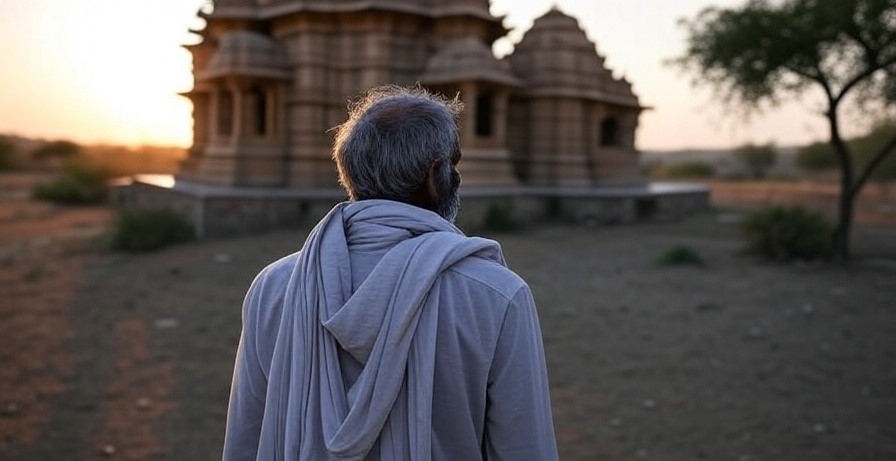
Similar demands have now spread to major pilgrimage centres. The Shri Gangotri Temple Committee announced that non-Hindus would not be allowed to enter Gangotri Dham, and the ban would also apply to Mukhba, the winter seat of the deity. Committee chairman Suresh Semwal said the decision was taken unanimously. Hemant Dwivedi, chairman of the Shri Badrinath-Kedarnath Temple Committee, said a proposal to extend the ban to all temples under the committee would be placed before its board. “It was a long-pending demand of the members of the temple management and the people. We have implemented it now and hope the administration will respect our emotions. We don’t want non-Hindus at our religious sites,” he said.
The Ganga Sabha and several seers have also urged the government to extend the ban to all 105 ghats of Haridwar, including Har-ki-Pauri, and to declare Haridwar and Rishikesh as “sanatan pavitra shehar.”

Reacting to these developments, Dhami said the government would first review existing laws related to ancient religious sites and consult all stakeholders. “The views of pilgrimage committees, the Ganga Sabha, temple bodies, saints and everyone involved in managing these sites will be considered,” he said.
Muslim organisations have strongly opposed the proposed bans, calling them discriminatory. Jamiat Ulama-i-Hind president Arshad Madani said such moves go against the spirit of the Constitution and social harmony. “We teach people to live with love and brotherhood. They think the country is theirs and they can take people in any direction, but times have changed,” Madani said. He linked the issue to what he described as a wider pattern of targeting Muslims, adding, “This is not just in Kedarnath. Entire colonies in Assam are being demolished and lakhs of Muslims are being called Bangladeshis.”
The Congress also accused the BJP of inventing new polarising issues due to a lack of real governance agendas. Former chief minister Harish Rawat said, “Other religions attract people to their places of worship, they do not prohibit them. Now a new tradition is being pushed, perhaps because there are no issues left on their election agenda.”