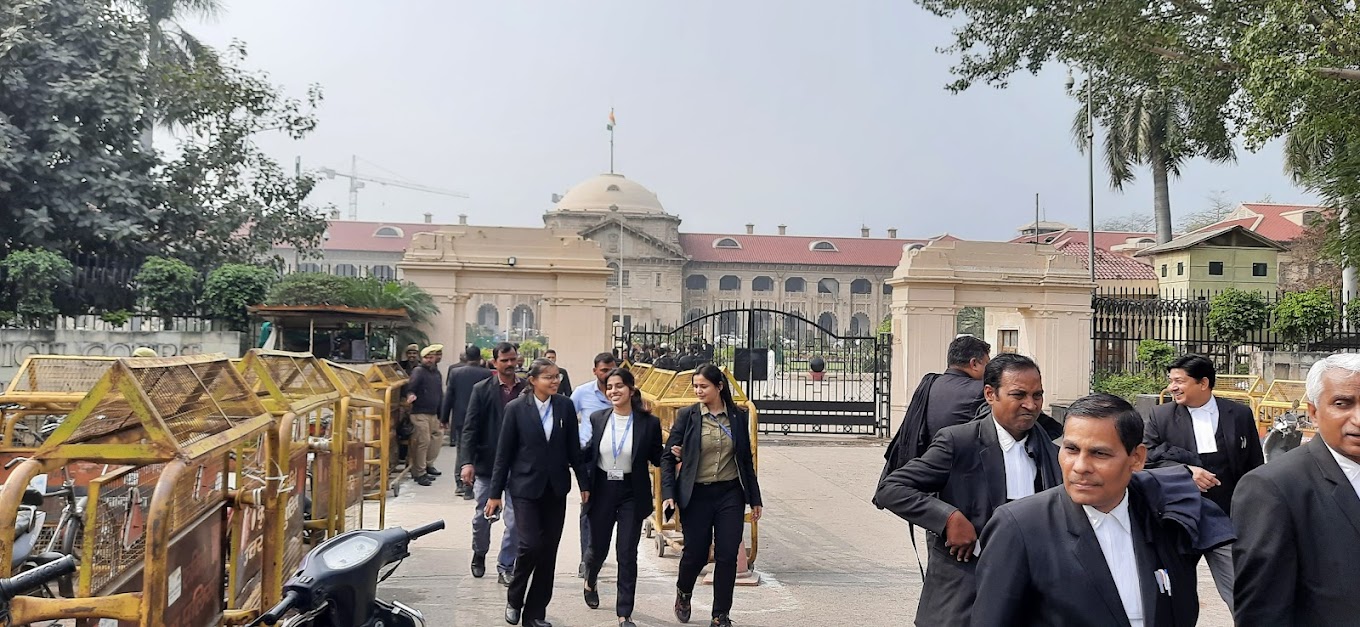
The Allahabad High Court has observed that it is wrong for any religion to claim that it is the “only true religion,” stating that such claims imply disrespect toward other faiths.
The court made the remark while dismissing a petition filed by Vineet Vincent Pereira, who had sought to quash criminal proceedings against him under Section 295A of the Indian Penal Code.
Section 295A deals with deliberate and malicious acts intended to outrage religious feelings by insulting a religion or its beliefs.
Allegations Over Statements in Prayer Meetings
The case relates to allegations that the Reverend, during Christian prayer meetings, repeatedly said that Christianity is the only true religion. A complaint was filed claiming that these statements hurt the religious sentiments of Hindus, following which an FIR was registered in Uttar Pradesh’s Mau district.
During the investigation, the police reportedly found no evidence of illegal religious conversions among marginalised groups. However, a chargesheet was filed on the grounds that he criticised other religions. A magistrate later took cognisance of the matter.
Challenging this, Pereira approached the High Court seeking to have the case dismissed.
“Such Claims Disparage Other Faiths”
Dismissing the plea, Justice Saurabh Srivastava said India is a secular country where people of different religions live together.
“It is wrong for any religion to claim that it is the only true religion as it implies a disparagement of other faiths,” the court observed.
The judge noted that Section 295A specifically addresses acts done with “deliberate and malicious” intent to hurt religious sentiments. The court said that, at this stage, the statements attributed to the petitioner appear to fall within the scope of the law.
No Mini Trial at Initial Stage
The High Court also clarified that at the stage of taking cognisance, a trial court only needs to determine whether a prima facie case exists. It is not required to conduct a detailed examination of evidence or consider the defence of the accused.

The court said the issues raised by the petitioner involve disputed questions of fact, which cannot be decided in proceedings seeking to quash the case.
Trial to Continue
Finding no merit in the petition, the High Court dismissed it, allowing the criminal case to proceed. The matter will now go to trial, where the accused will have the opportunity to present his defence, and the prosecution will be required to prove the allegations, including whether there was malicious intent.
The ruling highlights the court’s view on maintaining religious harmony in a secular country while dealing with cases involving alleged insults to religious beliefs.