In Maharashtra, the Anti-Terrorism Squad (ATS) has arrested a man from Nagpur for allegedly planting a “bomb-like device” inside a hospital in Pune’s Hadapsar area.
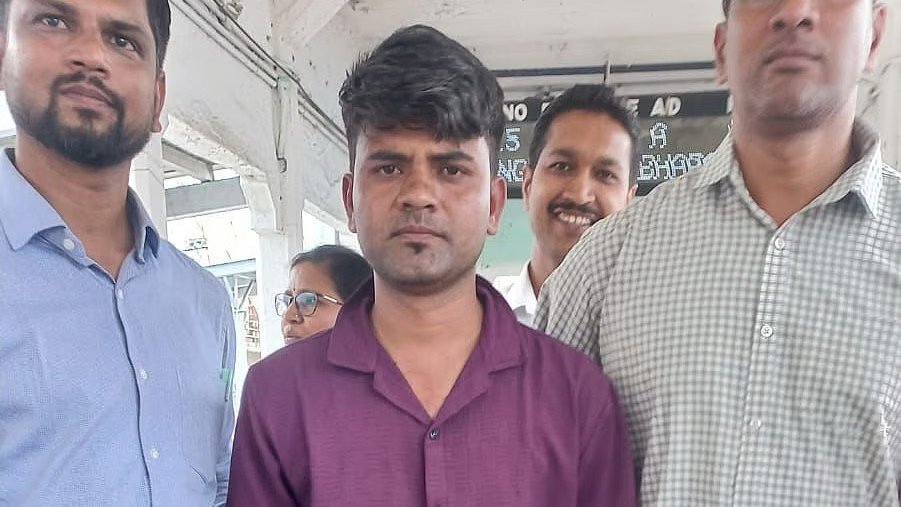
The accused has been identified as Shivaji Rathod, a resident of Solapur. Police said he was arrested at Nagpur railway station after an extensive technical investigation and statewide search operation.
According to officials, the object was found inside Usha Kiran Superspecialty Hospital and initially appeared to be a potential explosive device. However, after examination, authorities confirmed there were no explosives inside.
Accused Planned Extortion for Medical Treatment
Police investigations revealed that the accused was financially distressed and suffering from a medical ailment. Officials said Rathod had visited the same hospital earlier for treatment and was reportedly informed that his medical expenses could go up to ₹7 lakh.
A senior police officer said the accused planned the act to extort money from the hospital.

“The accused was under financial pressure and wanted money for his treatment. He created a fake bomb-like device to threaten the hospital management and demand money,” the officer said.
Police added that Rathod allegedly built the device using low-cost materials including a digital clock, pipes, wires, and adhesive tape.
₹400 Fake Bomb, ₹4 Lakh Security Operation
The case also highlighted a striking contrast between the low cost of the fake device and the massive police response it triggered. Officials said the accused spent around ₹400 to assemble the object, while the police deployed nearly 1,000 personnel for the investigation, costing over ₹4 lakh.
The device was found with a timer set to display a short countdown, further increasing panic before it was secured and later neutralised by the Bomb Detection and Disposal Squad (BDDS).
Authorities later clarified that no explosive material was present in the object and ruled out any terror angle.

“There was no explosive content. It was a dummy device made to create fear and pressure,” a senior officer said.
Digital Payment Trail Helped Police Track Accused
A key breakthrough in the case came from a small digital transaction. Police said Rathod had purchased adhesive tape worth just ₹15 using a UPI payment from a nearby shop while assembling the device.
That online payment helped investigators trace his mobile number and location, ultimately leading to his arrest.
Police said he also ordered other materials online, including a digital timer, which was used in the fake device.
Man Tried to Escape to Nepal, Say Police
Officials further revealed that after planting the object, Rathod attempted to flee. He reportedly planned to travel from Nagpur to Howrah and then escape to Nepal, where his sister resides.
However, ATS teams tracked his movements and arrested him before he could leave the state.
“He was trying to change locations frequently and evade arrest, but technical surveillance helped us locate him,” police said.
No Terror Link, Investigation Continues
Police have confirmed that the incident has no connection to terrorism. Instead, it is being treated as a case of attempted extortion and criminal intimidation.
During further searches, police also recovered cannabis from the accused’s residence, which is now part of a separate investigation.