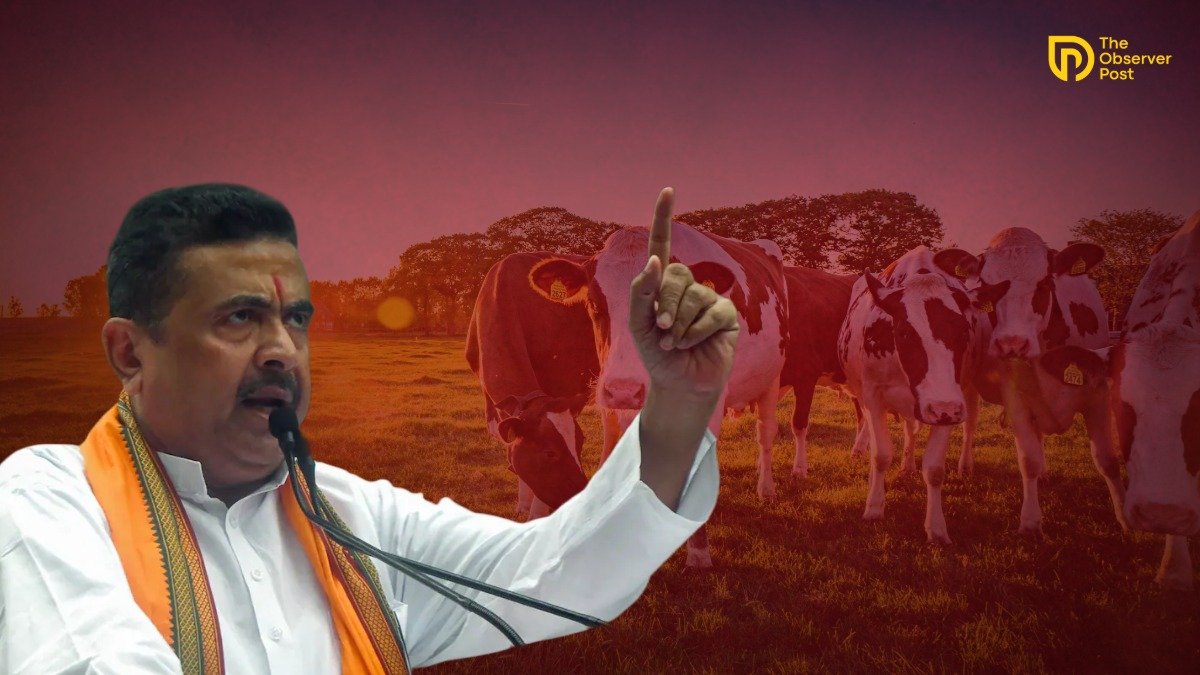
The cattle trade in West Bengal has come under strain ahead of Eid-ul-Adha 2026, with traders reporting uncertainty and reduced demand following stricter enforcement of rules related to animal slaughter and cattle movement. Many livestock traders say the changing situation has led to financial losses and instability in local markets.
According to reports, after tighter administrative checks on cattle trade and slaughter documentation, the purchase of cows has declined in several areas. In some localities of Kolkata, religious leaders and mosque committees have reportedly appealed to the Muslim community to avoid cow sacrifice this year and instead opt for goats or other permitted animals. This has further impacted demand in cattle markets.
“Business has almost stopped,” claims viral video
A video circulating on social media shows a Hindu woman associated with the cattle trade expressing serious financial distress. She claims her family, which has been involved in livestock business for years, is now facing a major economic crisis.
In the video, she says, “Because of the new rules, our cattle business has almost stopped. Our family has been doing this work for years, but now we are in deep financial trouble.”
She also adds, “We have taken loans worth lakhs of rupees, and now the situation is getting worse every day.”
The video has sparked discussion online, with several traders highlighting similar concerns about declining business and rising uncertainty in the sector.
“We will not survive if we don’t sell cows,” say traders
Traders in cattle markets say that small businesses and rural families are the worst affected by the current situation. Many depend entirely on livestock trade for their livelihood and are now facing heavy losses.
In the viral video, traders can also be heard expressing their distress. One of them says, “If we don’t sell cows, we cannot survive. This is our only livelihood.”
Another trader says, “We should be given poison instead. There is no way left for us to live.”

A third voice in the video says, “We have no option left except death. What will we do with the cows now?”
A fourth trader adds, “We mortgaged our jewelry to raise and feed these animals. Now what will we do if they don’t sell?”
Another trader says, “We will end up on the streets. Our children’s education will stop.”
Traders demand clarity and relief
Many traders argue that sudden strictness in enforcement has hit rural families and small-scale livestock sellers the hardest. They are demanding a return to stable market conditions and clearer guidelines so that business can continue without fear or disruption.
Some trader groups have also expressed dissatisfaction with the current situation and called for a review of the ground-level implementation of cattle trade regulations.

Government says no new law, only enforcement of existing rules
On the other hand, the administration has clarified that no new law has been introduced. Officials say the government is only enforcing existing rules and court directives related to cattle transport, slaughter certification, and regulated animal markets.
Authorities also stated that legal procedures must be followed for animal slaughter and that action against illegal cattle trade will continue. According to officials, these measures are aimed at ensuring compliance with the law and maintaining regulated market practices.