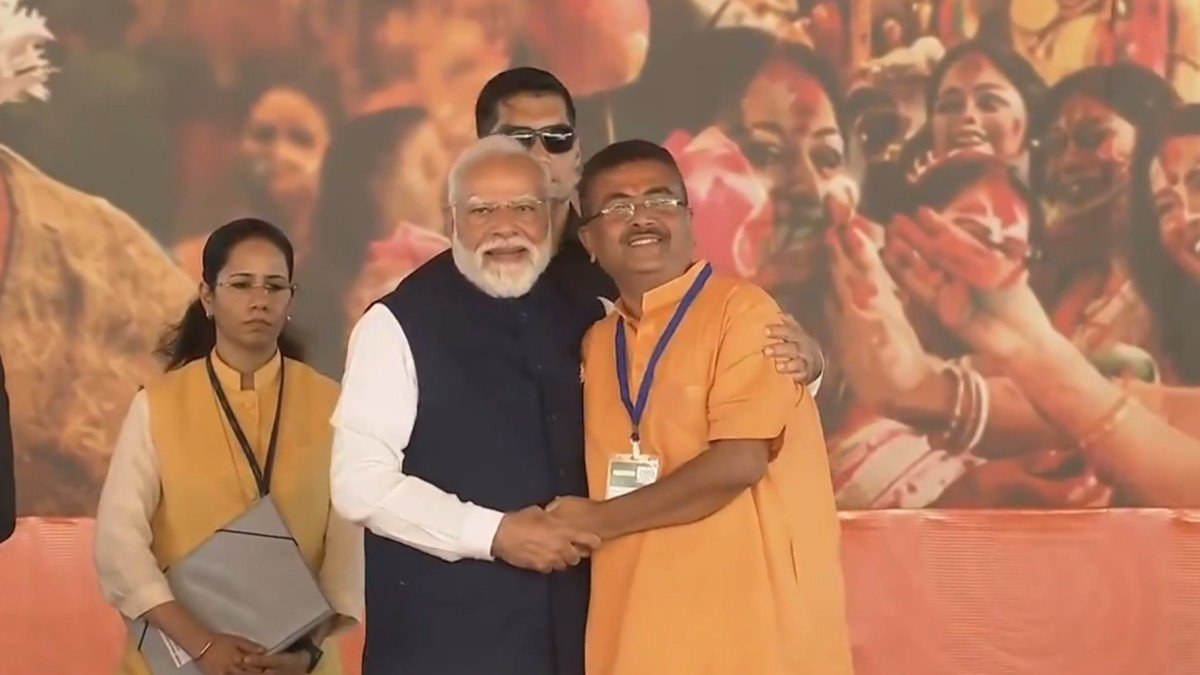
West Bengal Chief Minister Suvendu Adhikari has announced a new enforcement mechanism targeting “illegal infiltration” along the India–Bangladesh border, saying that individuals not covered under the Citizenship (Amendment) Act (CAA) will be arrested and handed over to the Border Security Force (BSF) for deportation.
Speaking at Nabanna during a land handover ceremony for border fencing work, Adhikari said the state government has begun implementing what he described as a “Detect, Delete and Deport” policy in coordination with central agencies.
He said, “We are now implementing this law in West Bengal. Those who are not covered under the CAA will be treated as illegal infiltrators.”
“Detect, Delete and Deport” Policy Announced
The Chief Minister said the new system will operate in border districts where police will identify suspected illegal entrants, arrest them, and hand them over to the BSF.
According to Adhikari, the BSF will then coordinate with the Border Guard Bangladesh (BGB) for deportation procedures.

He stated, “State police will detain them and hand them over to the BSF. The BSF will speak to the BGB and take necessary steps for deportation.”
He also claimed that the Union Home Ministry had issued guidelines on May 14 last year, but the previous state government did not implement them.
CAA-Based Classification of Migrants
Adhikari clarified that individuals belonging to seven minority communities covered under the CAA will not face detention if they entered India before the cut-off date of December 31, 2024.
He said, “Those covered under the Citizenship Amendment Act will not be harassed or detained.”
The communities included under the CAA are Hindus, Sikhs, Buddhists, Jains, Parsis, and Christians from Afghanistan, Pakistan, and Bangladesh who entered India before the specified deadline.

However, he added that anyone not covered under the CAA framework would be treated as an “illegal infiltrator” under the new policy.
Land Handed Over to BSF for Border Security
The announcement came alongside the formal handover of nearly 75 acres of land to the BSF for fencing a 27-kilometre stretch along the Indo-Bangladesh border.
The Chief Minister said the move was part of strengthening border infrastructure and improving coordination between state agencies and central forces.
He noted that West Bengal shares a 2,200 km international border with Bangladesh, of which about 1,600 km has already been fenced, while nearly 600 km remains uncovered.
Adhikari said, “This land transfer will strengthen border security and help complete pending fencing work.”
Coordination Between Police and BSF to Increase
The state government said the new mechanism will operate across all border police stations, with instructions already issued to senior administrative officials, including the Chief Secretary and Director General of Police.
Adhikari said, “We have instructed that this system be implemented in all border police stations in the interest of West Bengal and national security.”
He added that regular coordination meetings between the BSF, state police, and district administrations would now be revived to improve enforcement.
Political Debate Over Border Policy
The announcement is expected to intensify political debate in West Bengal, where border security and migration have been key issues in recent years.
The Chief Minister accused the previous administration of failing to implement central directives and blocking border fencing projects, saying delays had allowed infiltration to continue.
He said, “Had the land been provided earlier, hundreds of kilometres of fencing could have been completed.”
Implementation Begins Across Border Districts
Officials said the new enforcement model has already been activated in several border districts and will be expanded statewide in phases.
The policy marks a significant shift in West Bengal’s approach to border management, linking immigration enforcement directly with CAA eligibility criteria and BSF coordination.
As implementation begins, the “Detect, Delete and Deport” framework is likely to remain a major political and legal talking point in the state, especially regarding its impact on border communities and refugee protections under the Citizenship Amendment Act.