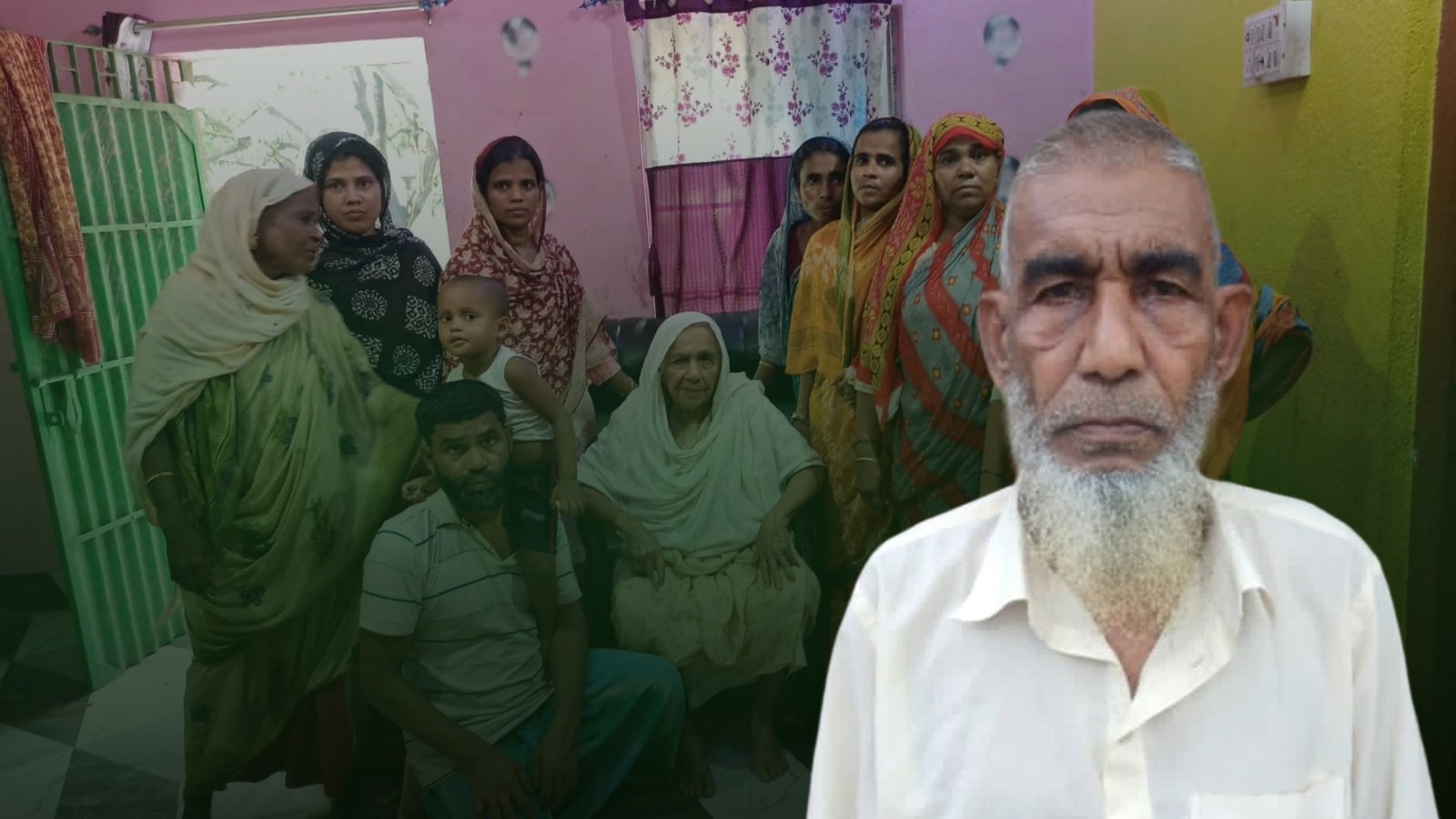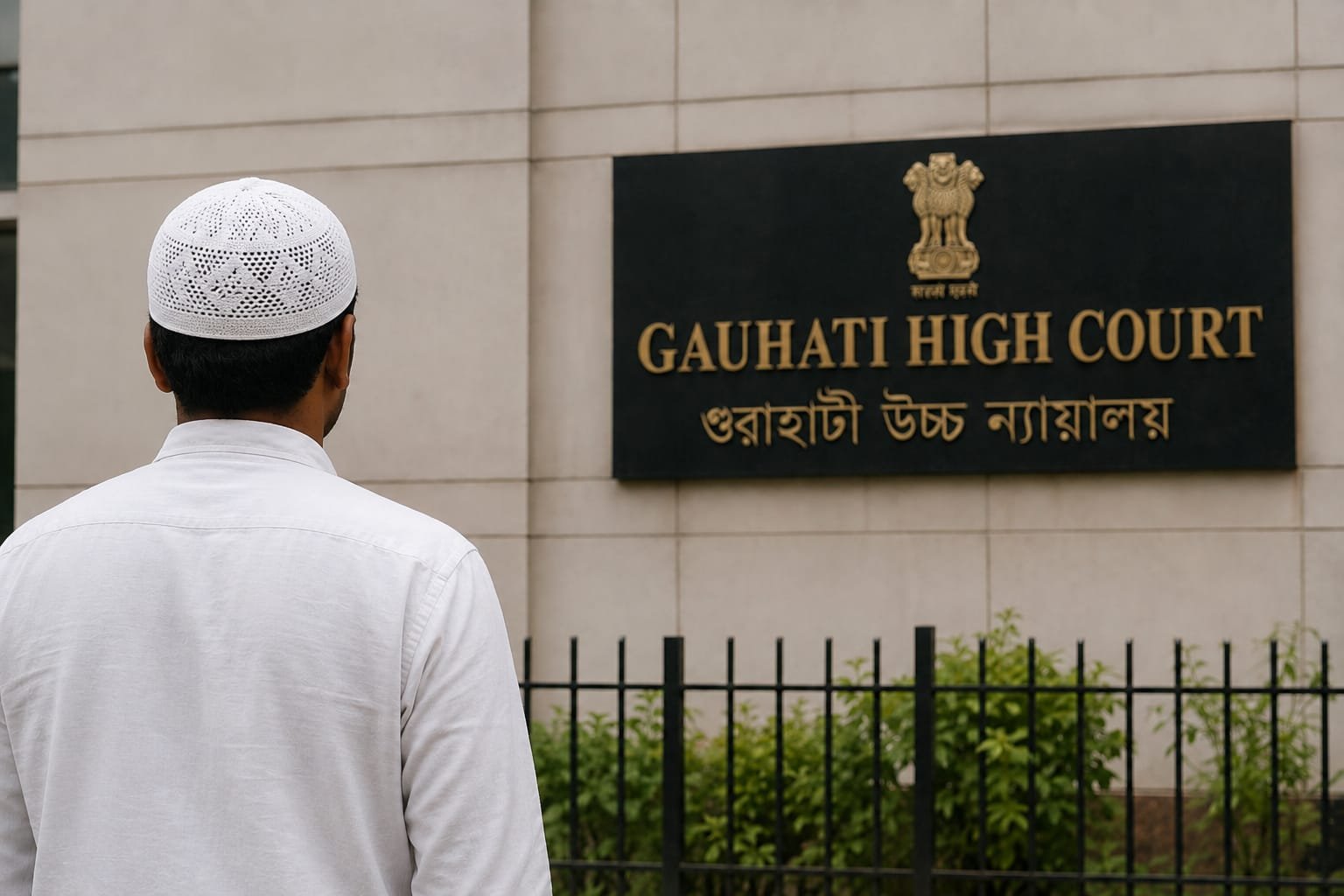
The Gauhati High Court has upheld a Foreigners’ Tribunal order declaring an Assam Muslim man a foreigner, ruling that the documents he submitted were not enough to prove that he is an Indian citizen.
A bench of Justices Kalyan Rai Surana and Shamima Jahan dismissed the petition filed by Aminul Hoque, a daily-wage labourer, and said he had failed to meet the legal requirement under Section 9 of the Foreigners Act, 1946, which places the burden of proving citizenship on the person facing the proceedings.
“Though the petitioner had exhibited 15 documents as exhibits, the same does not appear to help the petitioner to establish that he has been able to discharge his burden… to prove that he is not a foreigner but an Indian citizen,” the court said.
Hoque had challenged a February 2019 order of a Foreigners’ Tribunal, claiming that the investigation against him was unfair. He argued that he was an Indian citizen by birth and submitted several documents in support of his claim, including records from the 1951 National Register of Citizens (NRC), electoral rolls from different years, a 1973 land deed, a school certificate, his PAN card, and Elector’s Photo Identity Card (EPIC).
According to Hoque, his father’s, grandparents’, and other family members’ names appeared in the 1951 NRC in Goalpara district. He said the family later moved to different villages because of erosion caused by the Brahmaputra River, but their names continued to appear in electoral rolls over the years.

He also argued that small differences in the spelling of his family members’ names across official records were clerical errors and should not be treated as evidence against his citizenship. Before the tribunal, both Hoque and his father testified that the family had lived continuously in Assam and that he was an Indian citizen by birth.
His lawyer told the High Court that such spelling variations are common and, based on Supreme Court rulings, cannot be a valid reason to deny citizenship. The lawyer also argued that computer-generated NRC records should be accepted as reliable evidence.
However, the Foreigners’ Tribunal found inconsistencies in the records. It noted differences in ages listed in electoral rolls from different years and said some names could not be linked to the petitioner’s family. The tribunal also observed that the records related to three different villages, suggesting separate family units rather than one continuous lineage.
The High Court agreed with the tribunal’s findings, saying Hoque had failed to show any legal error in its assessment of the evidence. It held that there was no illegality or perversity in the tribunal’s decision and dismissed the petition, allowing the order declaring him a foreigner to stand.
The judgment comes amid continuing criticism of Assam’s Foreigners’ Tribunal system. A 2025 report by the National Law School of India University and Queen Mary University of London alleged that the tribunals often reject documentary and oral evidence without adequate safeguards. The report described the system as “a legally unsustainable regime that violates the most basic tenets of constitutional democracy and international human rights” and called for it to be replaced with “a framework grounded in law, fairness, and justice.”