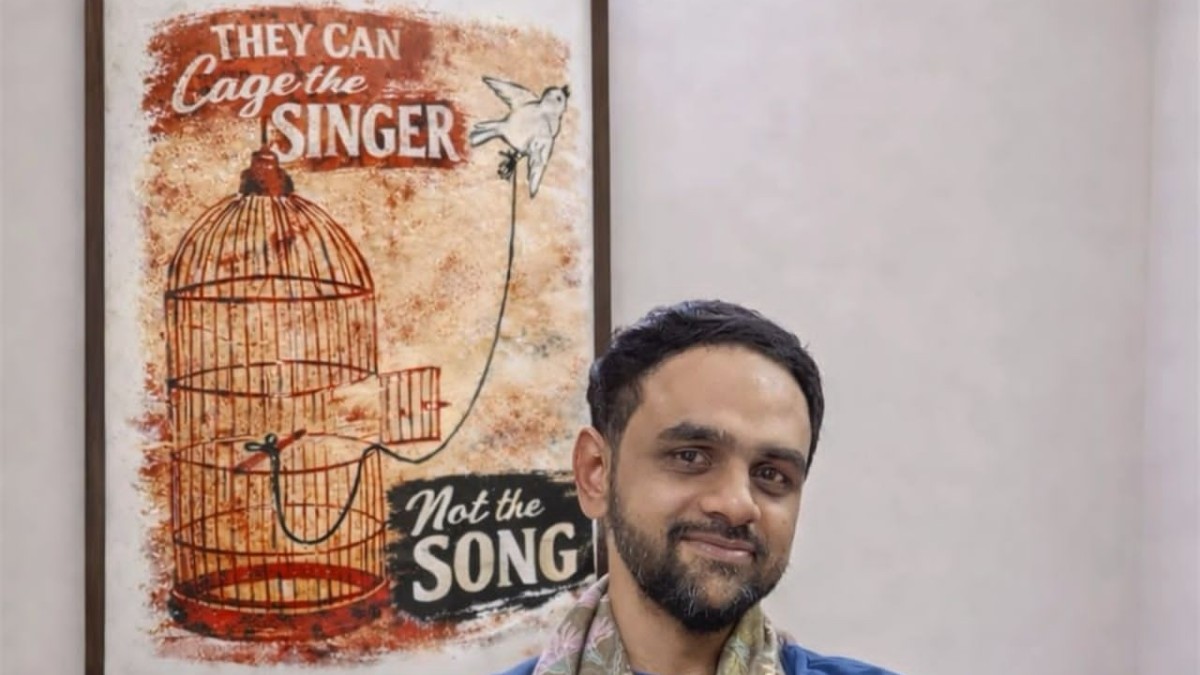
A Delhi court has allowed jailed activist Umar Khalid to resume two video meetings (e-mulakats) with his family every week, restoring a facility that had been reduced to one weekly session earlier this year.
Additional Sessions Judge Sameer Bajpai passed the order on July 13 while hearing an application filed by Khalid, who is an accused in the larger conspiracy case related to the 2020 northeast Delhi riots.
In its order, the court noted that Khalid had been using the two weekly e-mulakat facility for several years without violating any prison rules.
“Since the applicant has been using two e-mulakats in a week for the last six years and has not violated any rule of the Delhi Prisons Rules, the applicant is allowed to have two e-mulakats per week for the purpose of talking to his mother and other family members,” the court said.
Umar Khalid Challenged Reduction in Video Meetings
Counsel appearing for Khalid told the court that he had been permitted two video meetings with his family every week since he was sent to jail. However, from May 2026, the prison authorities reduced the facility to one weekly e-mulakat without assigning any reason, despite there being no violation of prison rules.
The jail authorities opposed the plea, arguing that under the Delhi Prison Rules, Khalid was entitled to only one e-mulakat every week.
After considering the submissions, the court observed that Khalid had been availing two weekly video meetings for the past six years without any breach of prison regulations and decided to restore the earlier arrangement.
Umar Khalid Faces Trial in Delhi Riots Conspiracy Case
Umar Khalid is among several accused, including Sharjeel Imam, facing trial in the larger conspiracy case linked to the February 2020 northeast Delhi riots.
The accused have been booked under the Unlawful Activities (Prevention) Act (UAPA) and various provisions of the Indian Penal Code (IPC). The prosecution alleges that they were among the “masterminds” behind the violence.
The riots took place during protests against the Citizenship (Amendment) Act (CAA) and the proposed National Register of Citizens (NRC). The violence claimed 53 lives and left more than 700 people injured.