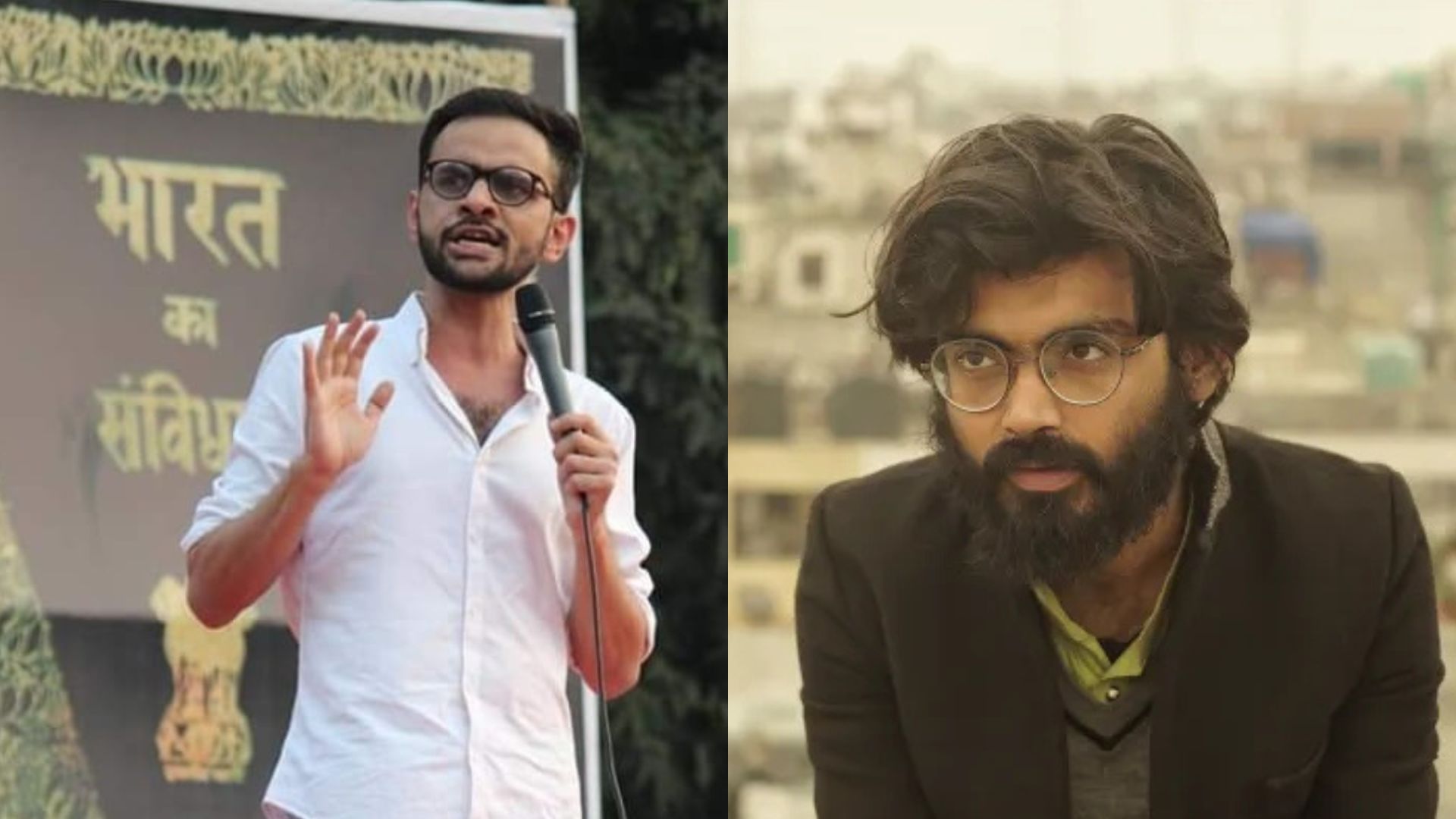
A group of concerned citizens, including writers, filmmakers, journalists, academics, activists and politicians, has written an open letter to the Chief Justice of India seeking the release of activists Umar Khalid and Sharjeel Imam, who have been in custody for nearly six years in the 2020 Delhi riots conspiracy case.
The signatories urged the Chief Justice to consider their prolonged incarceration in light of the Supreme Court’s 2021 judgment in K.A. Najeeb v. Union of India, which held that constitutional courts can grant bail when prolonged detention violates a person’s fundamental right to a speedy trial under Article 21.
The letter comes after the Supreme Court referred questions concerning bail under the Unlawful Activities (Prevention) Act (UAPA) to a larger bench.
Petitioners point to prolonged incarceration
The letter said Khalid and Imam continue to remain in jail as undertrial prisoners despite the trial not having started. It also noted that the prosecution has listed around 900 witnesses in the case.
The signatories argued that such prolonged detention raises serious questions about personal liberty and the right to a speedy trial.
The letter recalled the Supreme Court’s ruling in the K.A. Najeeb case, where the court said that statutory restrictions under UAPA cannot completely prevent constitutional courts from granting bail when continued incarceration becomes excessive.
The judgment had observed that the restrictions under UAPA can “melt down” when there is no reasonable possibility of the trial being completed within a reasonable period and the accused has already spent a substantial period in custody.
Letter questions earlier bail ruling
The group also referred to a January 2026 Supreme Court ruling in Gulfisha Fatima v. State, which denied bail to several accused in the Delhi riots case.
According to the letter, a later judgment in Syed Iftikhar Andrabi v. National Investigation Agency, delivered by Justices B.V. Nagarathna and Ujjal Bhuyan on May 18, criticised the approach taken by the earlier two-judge bench.
The later judgment stressed the importance of judicial discipline, noting that a smaller bench is bound by the decision of a larger bench.

It said, “Judicial discipline and certainty demands that Benches of smaller strength are mindful of the decisions rendered by larger Benches and are bound to follow the same.”
The signatories said the issue has now been placed before a larger bench, but Khalid and Imam remain incarcerated while the legal questions are being considered.
‘Bail is the rule, jail an exception’
The open letter argued that keeping accused persons behind bars for years before the conclusion of their trial risks undermining constitutional protections.
“Indeed, when so many years are already lost behind bars, an acquittal later becomes meaningless,” the letter said.
The group urged the Chief Justice to ensure that the principle that “bail is the rule, jail an exception” is applied in cases involving prolonged pre-trial detention.
The signatories also warned against what they described as the potential misuse of UAPA to keep critics and dissenters imprisoned without a timely trial.
‘Dissent breathes democracy’
The letter concluded by linking the issue of personal liberty with democratic rights.
“It is dissent that breathes democracy into a republic,” the signatories said, arguing that prolonged detention of people exercising dissent could weaken constitutional values.
The open letter was signed by several prominent public figures, including author Arundhati Roy, writer Amitav Ghosh, actor and filmmaker Prakash Raj, historian Ramachandra Guha, filmmaker Anand Patwardhan, MPs Manoj Kumar Jha and Raja Ram Singh, activist Aruna Roy, journalist Rana Ayyub, actor Swara Bhasker, filmmaker Anand Patwardhan, economist Jayati Ghosh, fact-checker Pratik Sinha and several academics, writers and civil society activists.