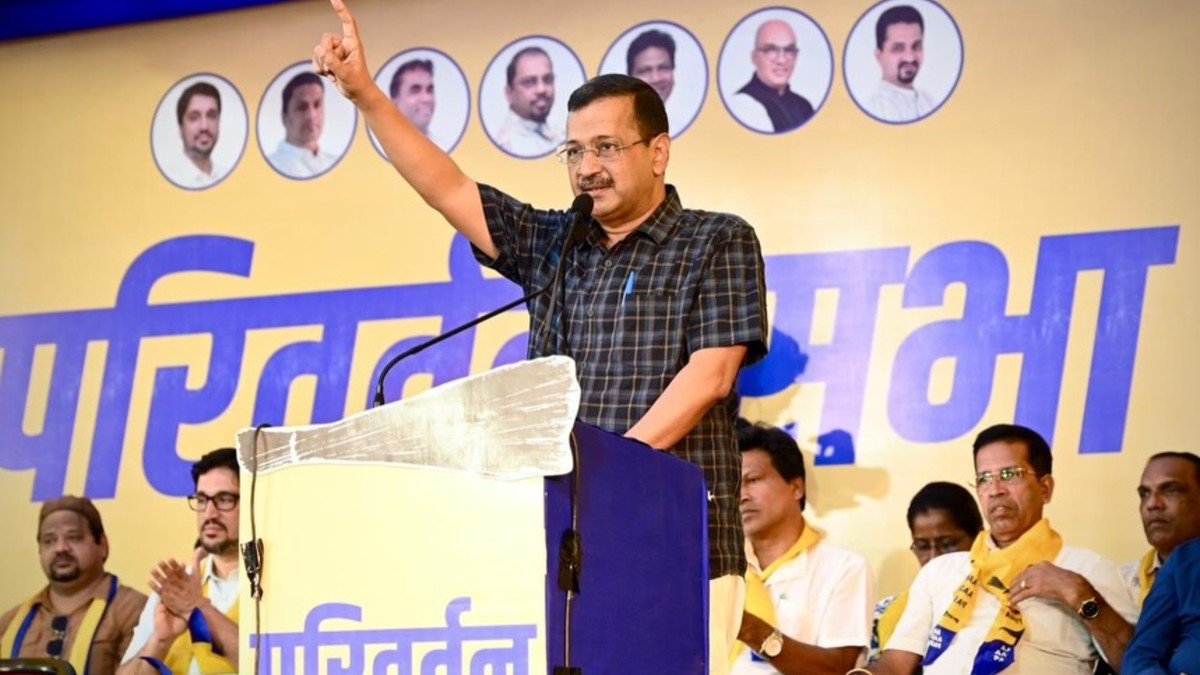
Arvind Kejriwal, chief of the Aam Aadmi Party and former Delhi Chief Minister, has informed the Delhi High Court that he will not appear before Justice Swarana Kanta Sharma in connection with the excise policy case.
In a letter to the judge, Kejriwal said he would neither appear in person nor be represented by a lawyer, citing concerns over the fairness of the proceedings.
“Justice Must Be Seen to Be Done”
Explaining his decision, Kejriwal wrote, “Pursuing Gandhian principles of Satyagraha, it won’t be possible for me to pursue this case in her court, either in person or through counsel.”
He added, “I have taken this difficult decision after coming to the clear conclusion that the proceedings being conducted in her court do not, in any manner, satisfy the fundamental principle that justice must not only be done but must also be seen to be done.”
Kejriwal said his decision was guided by his conscience and described it as a “painful” but necessary step.
Recusal Plea Rejected Earlier
The development comes days after Justice Sharma rejected Kejriwal’s request for her to step aside from the case. The judge had firmly dismissed allegations of bias and conflict of interest.
In her order, she stated, “My oath is to the Constitution… justice does not bend under pressure. I will decide and adjudicate fearlessly without any bias.”
She also warned against weakening trust in the judiciary, noting that recusal without valid grounds would amount to “abdication of duty.”
Allegations of Conflict of Interest
Kejriwal had earlier raised concerns about a possible conflict of interest. He pointed to the professional engagements of the judge’s children with the central government and their links to Solicitor General Tushar Mehta, who is appearing in the case.
He also referred to the judge’s alleged association with certain organisations, claiming it created a “reasonable apprehension” of bias. However, the court found no concrete evidence supporting these claims.
Legal Risks of Non-Appearance
Legal experts say Kejriwal’s refusal to appear could have consequences. Senior advocate Satish Tamta noted that in such cases, courts can issue warrants if an accused fails to comply with appearance requirements.
This could begin with a bailable warrant and escalate further if non-compliance continues.
Option to Move Supreme Court
Kejriwal has said he will explore legal options and may approach the Supreme Court of India to challenge the High Court’s decision.
“I reserve the right to approach the Supreme Court,” he stated, indicating that the legal battle is likely to continue.
Case Background
The matter relates to a plea challenging Kejriwal’s earlier acquittal in the Delhi excise policy case. The case was revived after concerns were raised over the trial court’s findings.
Kejriwal has consistently maintained that the case is politically motivated and has questioned the fairness of the process.