The Delhi High Court has granted bail to Mohammad Saqib alias Saqib Iftekar, who has been in custody for nearly eight years in a National Investigation Agency case involving alleged links with the pro-ISIS group Harkat ul Harb E Islam.
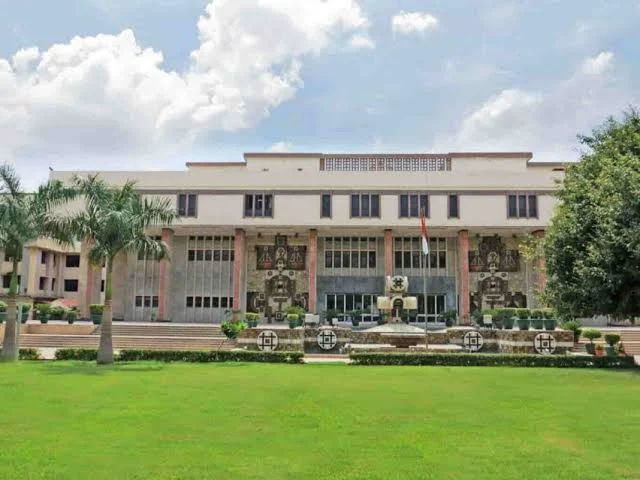
A Division Bench of Justice Navin Chawla and Justice Ravinder Dudeja passed the order on September 14, setting aside the Patiala House Court order that had rejected Saqib’s bail plea.
The High Court noted that the trial was unlikely to end soon. The prosecution had listed 120 witnesses, but only 40 had been examined so far. The court said that even after the NIA agreed to drop 39 witnesses, the proceedings were “not likely to end any time soon.”
NIA Allegations Against Saqib
Saqib was arrested on December 26, 2018. The case was registered under provisions of the Indian Penal Code, the Unlawful Activities (Prevention) Act and the Explosive Substances Act.
According to the NIA, Saqib was allegedly associated with Harkat ul Harb E Islam, propagated ISIS ideology and supported the ideology of Jaish e Muhammad.
The agency alleged that he helped establish contacts with militants in Jammu and Kashmir and was involved in arranging weapons through contacts in western Uttar Pradesh.
The prosecution also alleged that Saqib travelled to Jammu and Kashmir with co accused Muhammad Absar in July 2017 and July 2018 to establish contact with militants for training and procurement of weapons.
The NIA relied on witness statements, call records, electronic evidence and material allegedly recovered from Saqib’s residence and phone.
Court Examines Long Incarceration
Saqib’s lawyer argued that he was not part of the alleged core terror module and was, at most, a peripheral participant.
The defence also questioned the statements of witnesses regarding Saqib’s alleged visits to Kashmir and his role in facilitating contact with militants.
The NIA opposed bail, arguing that the seriousness of the allegations and Saqib’s alleged role in connecting members of the module justified his continued custody.
The High Court considered the long period of incarceration while also examining the restrictions imposed by Section 43D(5) of the UAPA.
The Bench said constitutional courts can consider an accused’s right to life and personal liberty under Article 21 when prolonged detention and delays in trial raise constitutional concerns. However, it also clarified that delay by itself does not automatically justify bail.
After examining the statements of three key witnesses, the court said it did not find them “grave enough” to prolong Saqib’s detention during the trial.
The court also noted that the chats allegedly recovered from his phone were serious in nature. However, considering the length of his incarceration, it held that the electronic material did not justify keeping him in custody indefinitely.

“Having considered the statements of the witnesses and the allegations against the appellant, and being moved particularly by the long period of incarceration of the appellant, we are of the opinion that the appellant has been able to make out a case for being released on bail,” the court said.
Strict Conditions Imposed
The court directed Saqib to furnish a personal bond of ₹50,000 along with two sureties of the same amount.
He has been directed to surrender his passport and cannot leave the country without permission. He must remain within Hapur except when travelling to Delhi for the trial or for reporting to the NIA.
Saqib must also report to the NIA’s Lucknow office once every fortnight.
The court barred him from contacting or influencing prosecution or protected witnesses, tampering with evidence, or making public statements about the merits of the case. He has also been directed not to circulate “anti national material” on social media.
The High Court made it clear that its observations were made only for deciding the bail plea and should not be treated as findings on the merits of the case.
Advocate Sarim Naved appeared for Saqib, while Rahul Tyagi, Priya Rai, Avinash Kumar Singh, Priyansh Raj Singh and Amit Rohila appeared for the NIA.