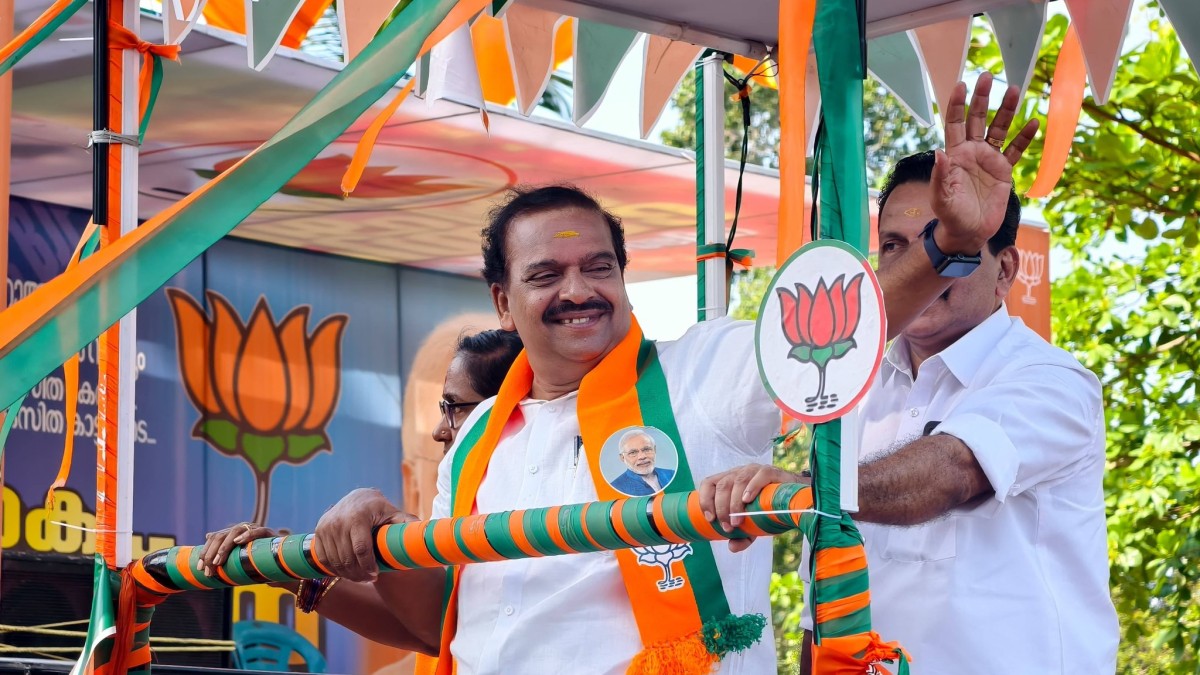
The Election Commission of India on Monday sought a report from the Thiruvananthapuram district collector regarding controversial remarks made by PK Krishnadas, a Bharatiya Janata Party candidate in Kerala, who claimed that a victory for rival alliances could lead to incidents of “love jihad” in the state.
According to officials, the poll body has also asked for legal opinion on whether the remarks violate election rules, particularly provisions related to hate speech and maintaining communal harmony during elections.
What the BJP candidate said
Krishnadas, who is contesting from Kattakada, made the remarks during a rally on Sunday. He alleged that if the Left Democratic Front or the United Democratic Front comes to power, organisations like the Social Democratic Party of India and Jamaat-e-Islami would influence governance.
He further claimed that girls from Hindu and Christian communities could be targeted and “recruited under the guise of ‘love jihad’ for anti-national activities.”
The term “love jihad” is widely regarded as a conspiracy theory promoted by Hindutva groups. The Union government has previously clarified in Parliament that Indian law does not recognise such a concept.

EC begins examination of alleged hate speech
Kerala Chief Electoral Officer Rathan U Kelkar said that the matter is under examination and appropriate action will be taken after reviewing the report. The Election Commission’s move comes amid heightened scrutiny of campaign speeches as the state heads into polls.
The rally where the remarks were made was attended by Union Home Minister Amit Shah, though Krishnadas reportedly delivered the speech after Shah had left the venue.
BJP distances itself from remarks
Following the controversy, Krishnadas defended his statement, saying it was not directed against any religion and that he stood by his remarks. He added that he would respond legally to any queries raised by the Election Commission.
However, Rajeev Chandrasekhar, the BJP’s Kerala state chief, distanced the party from the statement, saying the party does not endorse such views.