Muslims account for fewer than four percent of the total workforce at the Zoological Survey of India — a figure revealing sharp disparity at one of the country’s most prestigious scientific bodies, even as Muslims constitute approximately 14 percent of the national population.
According to Mohammed Abdul Mannan’s newly released book, At the Bottom of the Ladder: State of the Indian Muslims, which maps Muslim representation across 150 key government organisations, only 23 of ZSI’s 591 officers, scientists, and field staff belong to the Muslim community. Among the 82 scientists on ZSI’s rolls, just two are Muslim.
The numbers are striking even by the standards of India’s historically low minority representation in public institutions. Of the two Muslim scientists in ZSI’s scientific cadre, one is Dr M E Hassan, a Scientist ‘E’ posted at the Gangetic Plains Regional Centre in Patna, and the other is S R Sultana, an Assistant Zoologist at the Freshwater Biology Regional Centre in Hyderabad.
Across ZSI’s 15 Regional Centres — which collectively employ 98 officials — eight are Muslims. Among those is Dr Anjum Nasreen Rizvi, a scientist specialising in Nematology, Helminthology and Molecular Systematics at the Dehradun centre, who also serves as Managing Editor of the Journal of Indian Zoology. Dr Muhamed Jafer Palot, attached to the Western Regional Centre in Pune, is noted for his research in animal taxonomy, with a specific focus on birds, reptiles, and butterflies. Seven Muslims serve as Field Assistants across the organisation.
The data arrives against a well-documented backdrop of Muslim exclusion from India’s government services. The landmark Sachar Committee Report, submitted to Parliament in 2006, revealed that while Muslims constitute approximately 14 percent of India’s population, they account for only 2.5 percent of the Indian bureaucracy.
The committee’s findings — which documented conditions that were, in several indicators, worse than those of Scheduled Castes and Scheduled Tribes — showed Muslim representation at just three percent in the IAS and four percent in the IPS at the time of the report.
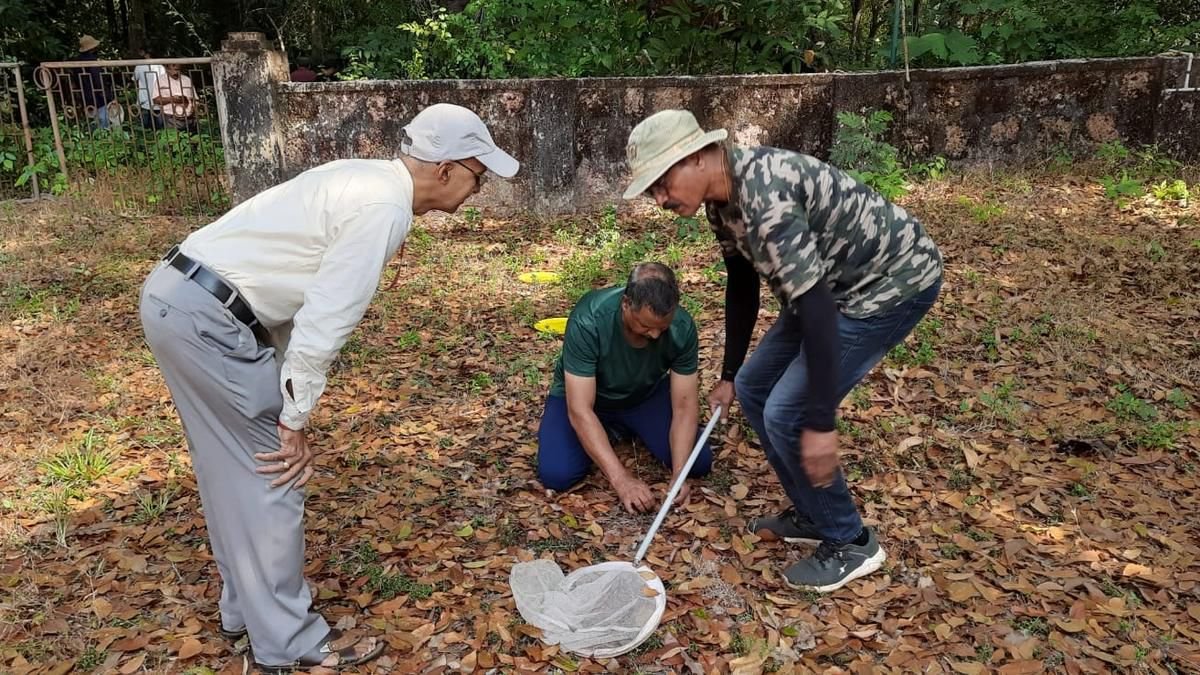
Two decades on, the ZSI data suggests little has changed in the scientific establishment. The Zoological Survey of India, which was founded in July 1916 and operates under the Union Ministry of Environment, Forest and Climate Change, is the country’s nodal body for exploring, cataloguing, and documenting animal species. It conducts surveys and taxonomic research across India’s four biodiversity hotspots and has formally described 1,02,718 animal species to date. Its mandate spans environmental impact assessments, wildlife monitoring, and compliance with India’s Biological Diversity Act, 2002.
The organisation’s scientific scope is vast. In 2024, ZSI launched a pilot project using environmental DNA — a cutting-edge technique for detecting species through genetic traces left in soil and water — to monitor wildlife. Globally, an estimated 15 million animal species remain yet to be formally identified and described, underscoring the scale and importance of the body’s long-term work.
Research tracing Muslim underrepresentation in elite government services and prestigious academic institutions points to a combination of structural and historical factors that have compounded over decades. The Sachar Committee had recommended improving Muslim representation across government departments; of its 76 recommendations, the government accepted 72 — yet follow-up audits have repeatedly found implementation falling short, with Muslim representation in state police forces, for example, declining between 2016 and 2017.
The ZSI figures, along with data on other institutions presented in Mannan’s book, are likely to intensify calls for a renewed audit of minority representation in India’s scientific and administrative bodies. With the government’s own biodiversity commitments under international frameworks such as the UN Convention on Biological Diversity requiring sustained and broad-based institutional capacity, the question of who gets to do the science — and who is left out — is increasingly difficult to separate from the question of how well that science gets done.