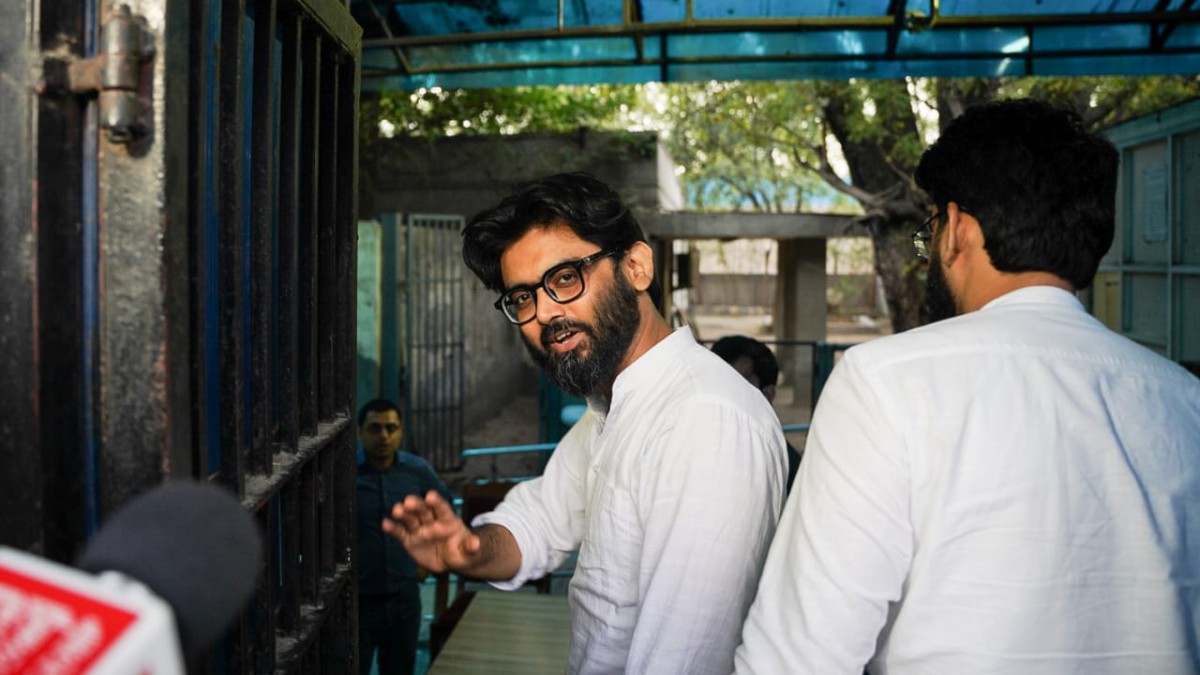
India’s Ambassador to the United States, Vinay Mohan Kwatra, has criticised the US Commission on International Religious Freedom (USCIRF) after it described jailed activist Sharjeel Imam as a prisoner detained for his religious freedom advocacy.
In a strongly worded post on X, Kwatra said the commission had “no locus standi” to judge the constitutional rights of Indian citizens. He also accused it of making partisan, ill-informed and biased assessments of India’s commitment to religious freedom.
“USCIRF has no locus standi to sit in judgment over the constitutional rights of Indian citizens. Its habitual partisan, ill-informed, and jaundiced assessments cannot diminish India’s constitutional commitment to religious freedom and equal rights for all faiths,” he wrote.
Taking a swipe at the commission, Kwatra added, “Taking the same liberty that USCIRF so readily assumes, a word of advice: introspect on your own prejudices and stop lecturing others.”
USCIRF Describes Sharjeel Imam as Religious Freedom Prisoner
Kwatra’s response came after USCIRF shared a profile of Sharjeel Imam on X, describing him as “a prisoner detained for his religious freedom advocacy”.
The commission’s website lists several charges against Imam, including criminal conspiracy, hate speech, murder and attempted murder, terrorism, treason and sedition. However, it classifies his detention as persecution linked to religious freedom advocacy.
Its profile also describes Imam’s participation in protests against the Citizenship (Amendment) Act (CAA) in December 2019 and January 2020 as peaceful. The commission characterises the legislation as religiously discriminatory.
The post triggered angry reactions on social media, with several users questioning the commission’s assessment and referring to allegations against Imam.
One user wrote, “There’s a literal video of that man saying he wants to cut my country into pieces! And you guys have the audacity to call it religious freedom?”
Another questioned whether the US was supporting radical groups, asking how someone accused of threatening India’s territorial integrity could receive such support.

What Is the Case Against Sharjeel Imam?
Sharjeel Imam, a former Jawaharlal Nehru University (JNU) research scholar, was arrested in January 2020 in connection with protests against the CAA. He was later charged in the case relating to the alleged larger conspiracy behind the February 2020 North-East Delhi riots.
The Delhi Police has accused Imam and former JNU student Umar Khalid of being involved in an alleged conspiracy behind the violence. The riots left more than 40 people dead and displaced hundreds.
Imam faces charges under several provisions of the Indian Penal Code and the Unlawful Activities (Prevention) Act (UAPA), including allegations of promoting enmity, rioting and terrorist activities.
The case has remained under legal proceedings for years, with Imam repeatedly seeking bail. He has also approached the Supreme Court in connection with his continued detention.
India and USCIRF Have Clashed Before
The latest exchange adds to the ongoing differences between India and USCIRF over the commission’s assessment of religious freedom in the country.

Earlier, USCIRF recommended targeted sanctions against India’s external intelligence agency, the Research and Analysis Wing (RAW), and the Rashtriya Swayamsevak Sangh (RSS). It also recommended designating India as a Country of Particular Concern.
India’s Ministry of External Affairs rejected the recommendations, describing the commission’s assessment as motivated and biased.
USCIRF is an independent, bipartisan body established by the US Congress in 1998. Its recommendations are not binding on the US government.