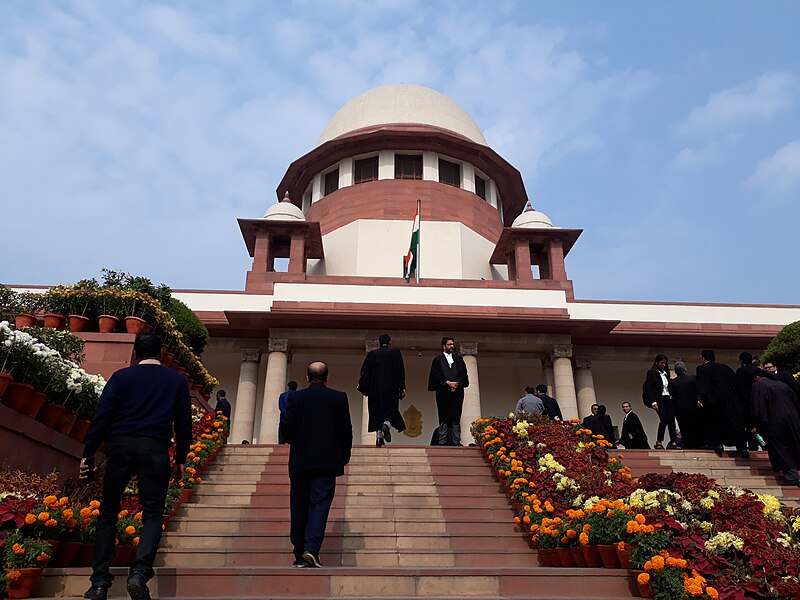
During the ongoing hearing in the Sabarimala reference case, the Supreme Court on Wednesday, April 15, made an important observation on how far social reform laws can go when they affect religious practices.
A nine-judge Constitution bench is currently examining how Articles 25 and 26 of the Constitution should be interpreted, particularly in balancing religious freedom with the State’s power to introduce social reform.
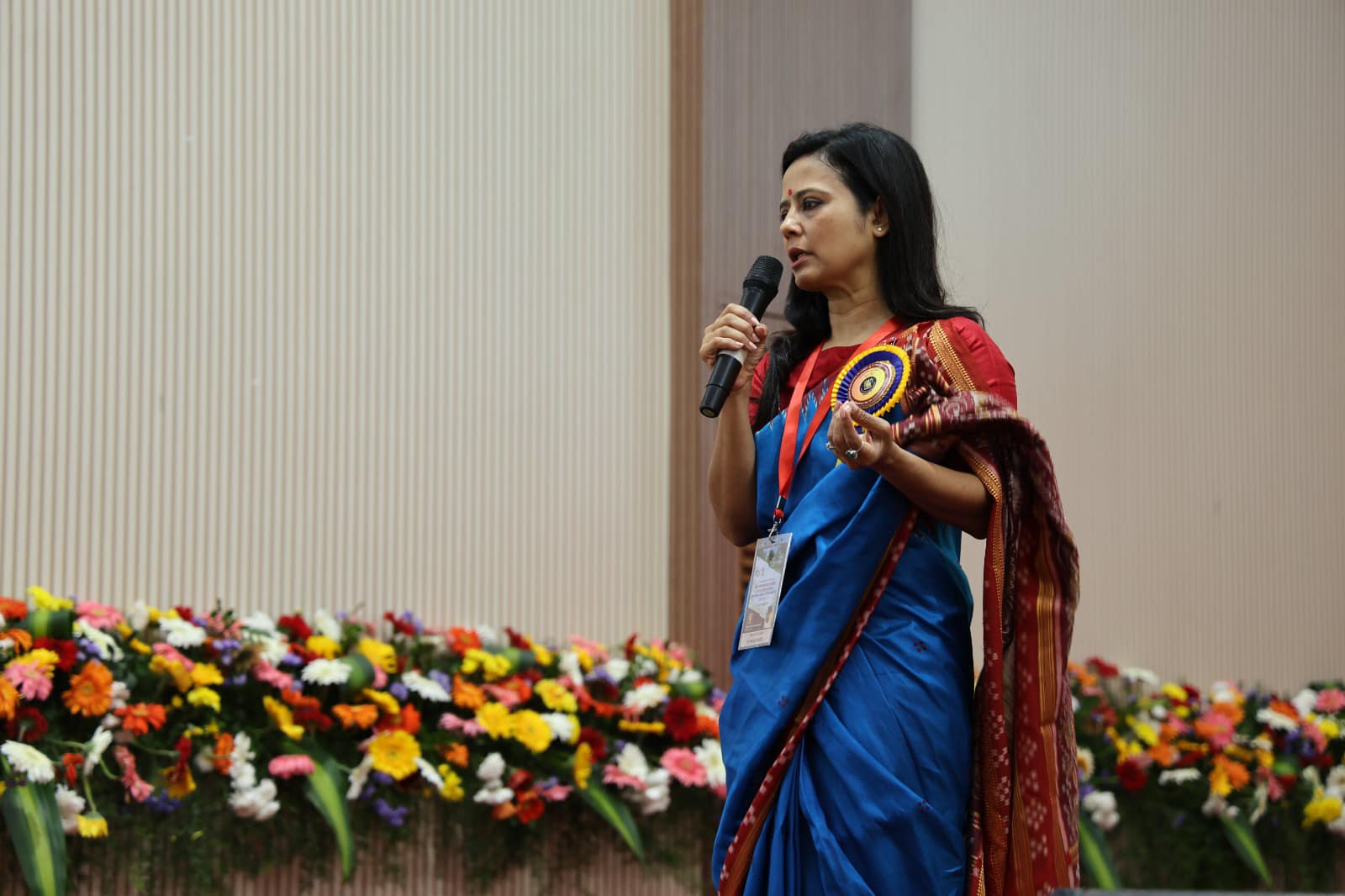
Justice B V Nagarathna said that reform cannot be used to weaken the core of a religion itself. She observed, “In the name of social welfare and reform, you can’t hollow out the religion.”
The observation came during arguments over whether courts and lawmakers can interfere with religious practices in the name of equality and reform.
Debate on Articles 25 and 26 of the Constitution
The case revolves around two key constitutional provisions. Article 25 guarantees freedom of religion, while Article 25(2)(b) allows the State to introduce laws for social reform, including opening Hindu religious institutions to all sections of society.
At the same time, Article 26 gives religious denominations the right to manage their own affairs, especially in matters related to rituals and internal religious practices.
Senior Advocate Abhishek Manu Singhvi, appearing for the Travancore Devaswom Board, argued that both rights must be read together in a balanced manner.
He said that while entry into temples can be regulated to ensure equality, the management of rituals must remain with the religious denomination. According to him, “both rights should coexist without one overriding the other.”
Court questions limits of PILs in religious disputes
During the hearing, the judges also discussed whether Public Interest Litigations (PILs) should be allowed in cases involving religious practices when the petitioner is not part of the concerned faith.
Singhvi argued that courts should apply a “very high threshold” before entertaining such petitions, warning that traditions followed for centuries should not be challenged lightly by outsiders.
At one point, Justice Joymalya Bagchi asked whether courts should remain inactive even in extreme situations. He gave an example of a hypothetical religious practice that could cause harm, suggesting that judicial intervention may still be necessary in rare cases.
Chief Justice Surya Kant also observed that in extreme circumstances, courts could even act on their own (suo motu), without waiting for a PIL.
“Belief of millions cannot be lightly questioned”
Justice B V Nagarathna said that courts should not allow outsiders to challenge religious practices easily. She noted that PILs filed by non-believers or third parties should generally be dismissed.
“The Court will decline a PIL questioning a religious practice on the simple ground that the aggrieved person has not come before it. It will be dismissed as an interloper,” she said.
Singhvi also argued that courts cannot decide religious issues without hearing the community concerned, adding, “Religion is a faith of millions, a third party should not be allowed to find direct access to Article 32 to change it.”
Sabarimala context and ongoing arguments
The case stems from the 2018 Supreme Court judgment that struck down restrictions on women of menstruating age entering the Sabarimala temple. The current Constitution bench is re-examining broader constitutional questions related to that ruling.
Singhvi argued that the Sabarimala temple has a unique religious identity as it worships Lord Ayyappa as a “Naisthika Brahmachari” (eternal celibate), and its traditions must be understood in that context.
He also said that restrictions are not absolute exclusion since women outside the restricted age group are allowed entry, and women can also worship Lord Ayyappa in other temples.
Hearing continues before nine-judge bench
The matter is being heard by a nine-judge bench led by Chief Justice Surya Kant, with Justices M M Sundresh, Ahsanuddin Amanullah, Aravind Kumar, Augustine George Masih, Prasanna B Varale, R Mahadevan, Joymalya Bagchi, and B V Nagarathna.