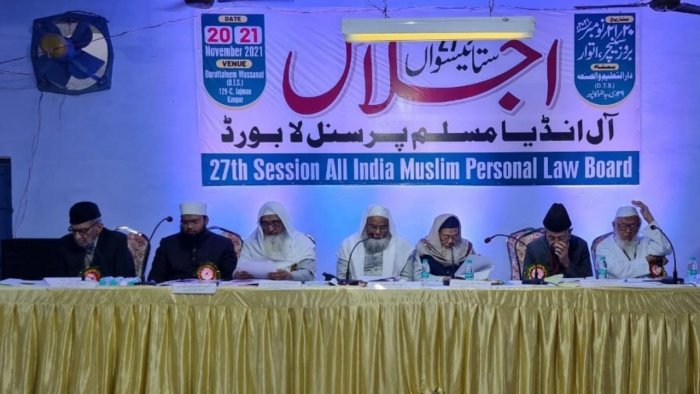
The All India Muslim Personal Law Board (AIMPLB) has strongly opposed the Madhya Pradesh High Court verdict on the Bhojshala-Kamal Maula Masjid dispute and announced that it will challenge the decision in the Supreme Court.
The Board described the judgment as “unacceptable” and claimed it goes against historical records, government documents, archaeological findings, and earlier positions of the Archaeological Survey of India (ASI).
The ruling was delivered by the Indore bench of the Madhya Pradesh High Court on May 15, which held that the disputed Bhojshala complex in Dhar district is a temple dedicated to Goddess Saraswati (Vagdevi) and set aside parts of the ASI’s 2003 arrangement that allowed both communities to worship at different times.
‘Verdict Ignores Historical and Constitutional Facts’
AIMPLB spokesperson Dr. Syed Qasim Rasool Ilyas said the court decision ignored important historical evidence and official revenue records.
He stated that the judgment goes against the spirit of the Constitution and the Places of Worship (Special Provisions) Act, 1991, which freezes the religious character of places of worship as they existed on August 15, 1947.
“The High Court has ignored historical documents, revenue records and constitutional principles,” he said, adding that the Board would extend full legal support to the Kamal Maula Masjid Committee in the Supreme Court.
‘Shared Religious Character Ignored’
The AIMPLB further argued that the court did not properly consider the long-standing usage and official records of the site.
Dr. Ilyas said that the use of old architectural materials in medieval Islamic structures is common and cannot be used to question the religious identity of a mosque.
He added, “The religious character of a mosque cannot be erased merely because of pillars or carvings found in the structure.”
The Board also claimed that ASI records had earlier reflected a “shared religious character” of the site. It pointed out that for years, official signage and documents referred to the site as “Bhojshala/Kamal Maula Masjid,” indicating its disputed status.
Reference to Earlier ASI Arrangement
The Board highlighted the 2003 administrative arrangement under which Hindus were allowed to offer prayers on Tuesdays while Muslims were permitted to offer Friday namaz at the site.
It said that the High Court failed to give due importance to these long-standing arrangements and official records.
“The Court did not give proper weight to authentic historical and administrative evidence,” Dr. Ilyas said.
Background of the Verdict
The High Court’s 242-page judgment ruled that the Bhojshala-Kamal Maula complex is a Saraswati temple and allowed Hindu worship rights while setting aside earlier ASI restrictions that permitted shared usage.
Following the verdict, Hindu devotees began offering prayers at the site, while Muslim organisations have announced plans to move the Supreme Court challenging the decision.