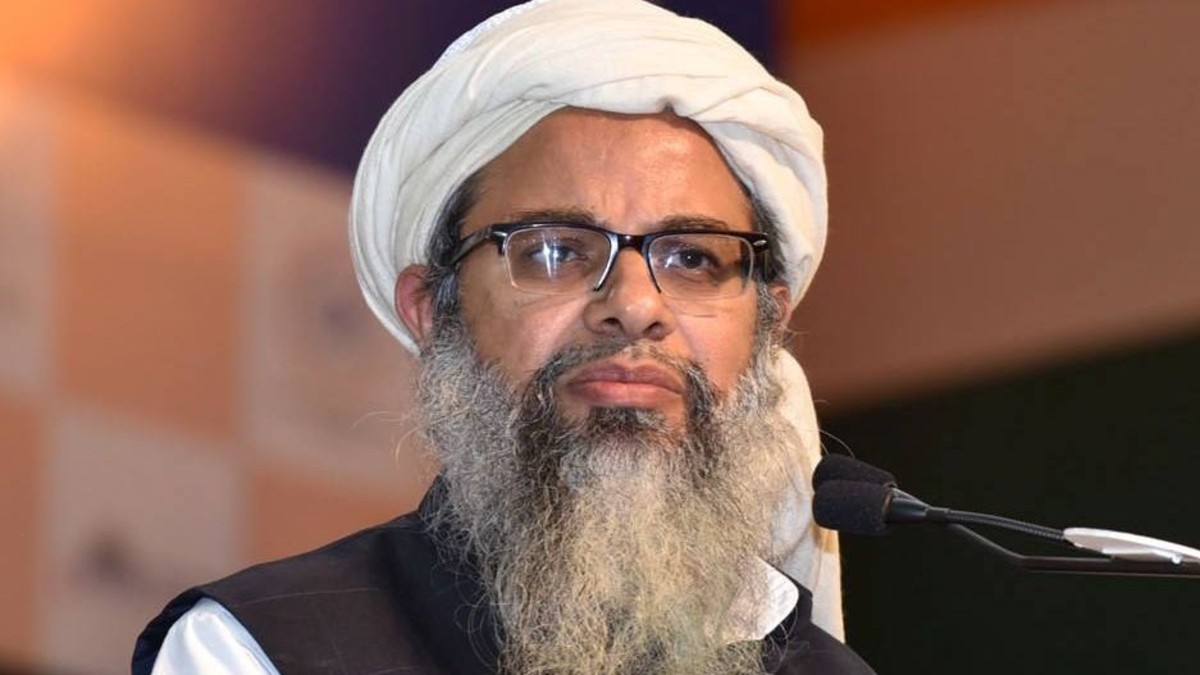
Mahmood Madani, president of Jamiat Ulama-i-Hind, has said that while Muslims accepted the Babri Masjid verdict in the interest of peace, fresh disputes over religious sites have raised serious concerns about the future of the Places of Worship Act, 1991.
Speaking at a seminar organised by Jamiat Ulama-i-Hind with the support of the Society for Awareness and Legal Aid (SAMLA) at the Constitution Club of India in New Delhi, Madani said the Babri Masjid judgment became “historic” because Muslims accepted it despite disagreements.
“The Babri Masjid verdict was a historic judgment, and Muslims accepted it, which also made it historic,” Madani said.
He added that before the Ayodhya verdict, attempts had been made to resolve the issue outside court and assurances were given that no further religious disputes would be raised after Babri Masjid.
“But immediately after that, many cases started emerging through courts,” he said.

Questions Raised Over Places of Worship Act
Madani questioned the continued relevance of the Places of Worship (Special Provisions) Act, 1991, if courts continue hearing disputes involving religious sites.
The law freezes the religious status of places of worship as they existed on August 15, 1947, except for the Ayodhya dispute.
“If disputed matters are being raised in courts despite the Places of Worship Act, then what is the need for this law?” Madani asked.
His remarks came on the same day the Madhya Pradesh High Court declared the disputed Bhojshala-Kamal Maula Mosque complex in Dhar a temple dedicated to Goddess Saraswati, ending the arrangement that allowed Friday namaz at the site.
Madani said the report released during the seminar would serve as an important historical document for future generations.
“We have prepared this report so people remember that a judgment came and there was also a detailed analysis of it,” he said.
JUH Report Criticises Judicial Interpretation
During the event, Jamiat Ulama-i-Hind released a report titled “A Critical Analysis of Babri Masjid Judgement and the Case of the Places of Worship (Special Provisions) Act 1991.”
The report examined key Supreme Court rulings, including the Ayodhya verdict and the Ismail Faruqui case, arguing that judicial interpretations had weakened constitutional protections for religious places.
The report stated that recent rulings have allowed fresh claims against mosques in places such as Varanasi and Mathura despite the intent of the Places of Worship Act.
“As the judiciary increasingly accommodates Hindutva majoritarianism, Muslim sacred spaces have become legally vulnerable, culturally contested, and politically targeted,” the report said.
The organisation said the timing of the report’s release alongside the Bhojshala verdict was coincidental.
Salman Khurshid, Legal Experts React
Former Union minister Salman Khurshid also addressed the gathering and said parts of the Babri Masjid verdict provided a legal foundation for the Muslim side.
“I believe the Babri Masjid verdict was in favour of Muslims in many ways because several observations in it became a foundation for the Muslim side,” Khurshid said.
Meanwhile, legal scholar Faizan Mustafa said the Bhojshala verdict resembled aspects of the Babri Masjid judgment, though he noted that the Bhojshala case was not a title suit.
He said the matter would likely face further legal scrutiny in higher courts.
Jamiat Ulama-i-Hind recommended that courts strictly uphold the Places of Worship Act and ensure that historical disputes are not turned into instruments for fresh legal battles over religious sites.