India’s oldest Muslim organisations must demonstrate that their historical legacy is matched by institutional accountability, representative leadership and the capacity to address contemporary challenges.
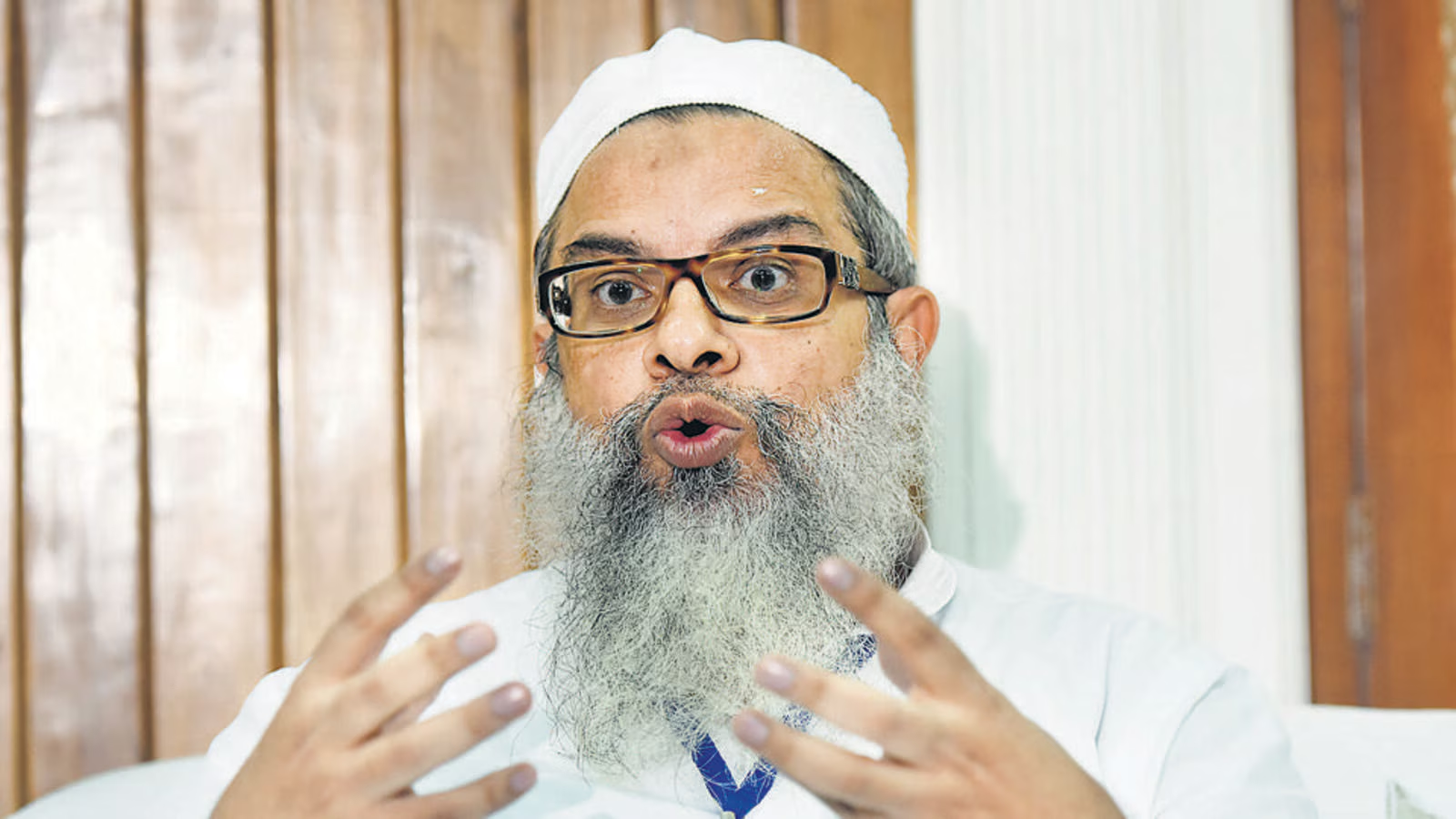
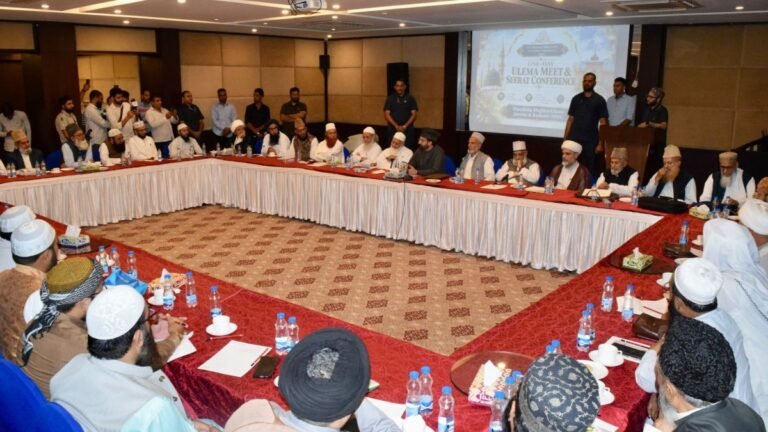
When Maulana Mahmood Madani, president of Jamiat Ulama-i-Hind, spoke to journalist Bushra Khanum on Nous Network, he discussed the political and social challenges facing Indian Muslims. His remarks raised a larger question about the institutions that claim to represent the community: Who speaks for Indian Muslims, how are their interests represented, and who is accountable when their concerns remain inadequately addressed?
The question has become increasingly relevant as Muslims face political marginalisation, communal violence, economic insecurity and concerns about the erosion of constitutional protections.
The problem is frequently described as a leadership vacuum. But this description can obscure a more important issue: Is there a shortage of Muslim leaders, or have established institutions failed to develop the capacity and accountability required to represent a changing community?
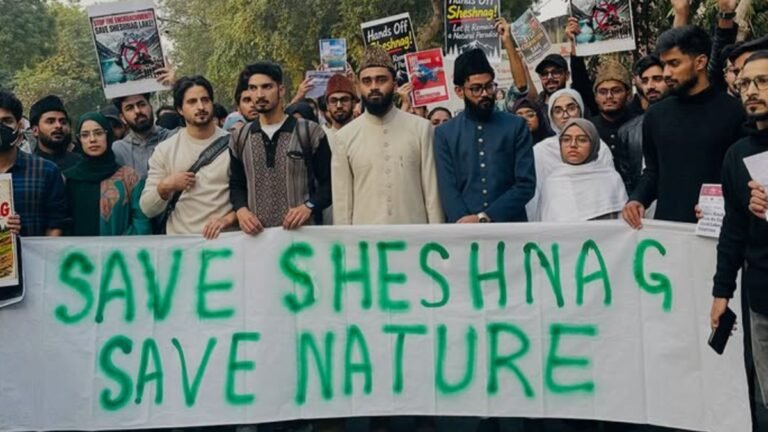
Jamiat Ulama-i-Hind deserves particular scrutiny. Founded in 1919, it is among India’s oldest Muslim organisations. Its role in the freedom movement, opposition to the two-nation theory and subsequent work on minority rights, legal assistance and relief have given it considerable historical standing.
That legacy deserves recognition. But historical legitimacy cannot indefinitely substitute for institutional performance.
The question is not whether Jamiat has made contributions. It has. The question is whether it has evolved sufficiently to address the political, economic and social challenges facing Indian Muslims today.
A legacy that must be matched by performance
Jamiat has maintained an active presence in matters concerning minority rights, religious freedoms and communal violence. Its legal cell has assisted Muslims facing criminal prosecution, including those accused in terrorism-related cases. The organisation has also undertaken relief and rehabilitation work following communal violence and natural disasters.
These interventions are important, particularly for families who lack the financial resources to access legal assistance or rebuild their lives after displacement.
But the scale and effectiveness of such work require closer examination. How many families receive sustained support beyond immediate relief? How many legal cases have resulted in acquittals? What happens to beneficiaries after rehabilitation programmes end? Are the outcomes independently assessed?
The organisation’s public communication frequently highlights its activities. It needs to provide more comprehensive information about its long-term impact.
This is not an argument against its work. It is an argument for measuring it.
An organisation with Jamiat’s history and reach should be able to demonstrate not only what it does but also what its interventions achieve.
The question of institutional accountability
Jamiat’s constitution provides a framework for membership, organisational structures, leadership appointments and financial oversight. It prescribes a three-year presidential tenure and establishes managing and working committees at different levels.
The document also provides for a 21-member central working committee nominated by the president. The president selects the general secretary in consultation with the working committee, while other organisational positions are filled through procedures specified in the constitution.
These provisions raise questions about the balance between elected representation and nomination, the concentration of authority and the extent to which ordinary members can influence organisational decisions.
How frequently are internal elections contested? How accessible are membership records? How much autonomy do state and district units exercise? What mechanisms exist for members to challenge decisions taken by senior office-bearers?
These questions do not establish that the organisation has violated its own rules. They concern the effectiveness of its governance arrangements.
The distinction is important. Constitutional provisions can establish procedures, but they cannot, by themselves, demonstrate that those procedures are implemented transparently.
Financial accountability requires similar scrutiny. Jamiat’s constitution identifies several sources of income, including membership fees, donations, religious contributions and income from property. It also provides for budgets, financial reporting and scrutiny of accounts.
The organisation should make consolidated annual financial statements, programme-wise expenditure and independently audited accounts accessible to the public. Such disclosures would allow members and supporters to understand how resources are collected and spent.
For an organisation seeking public trust, transparency should be an established practice rather than an occasional response to criticism.
The 2008 split and its institutional consequences
Jamiat’s 2008 division remains one of the most significant episodes in its recent history.
The split followed disagreements within its leadership over how the organisation functioned under then-president Maulana Arshad Madani. It eventually produced two factions, both maintaining separate organisational structures and claiming the Jamiat legacy.
The disagreement was not merely a dispute between prominent individuals. It divided an organisation with an extensive network of religious scholars and grassroots workers.

In 2022, both factions initiated a reconciliation process after years of separation. The Mahmood Madani faction’s working committee approved steps towards a merger, while the Arshad Madani faction had also indicated support for reconciliation.
The process, however, did not result in a completed merger at that stage.
The episode raises questions about the institutional mechanisms available to resolve internal disagreements. Why were existing procedures unable to prevent the division? What were its consequences for local units and members? What safeguards have been introduced to prevent similar disputes?
The reconciliation process also deserves a transparent assessment.
If Jamiat seeks to represent a politically vulnerable minority, its institutional stability cannot depend primarily on personal relationships between senior leaders. It requires clear procedures for resolving disputes and ensuring continuity of organisational work.

Leadership succession and representation
Another question concerns leadership renewal.
Maulana Mahmood Madani served as Jamiat’s general secretary before becoming its president. His long association with the organisation provides continuity, but it also makes generational renewal an important institutional question.
How does Jamiat identify and prepare future leaders? What opportunities exist for younger scholars, lawyers, educators, professionals and community organisers to participate in decision-making?
The question extends to representation within the organisation.
India’s Muslim population is diverse in terms of caste, class, region, language and economic circumstances. The experiences of Pasmanda Muslims, women, young people and economically marginalised communities cannot always be represented through a single institutional or religious perspective.
Jamiat’s constitution allows both men and women to become members. But formal membership does not necessarily translate into meaningful participation in leadership.
How many women occupy decision-making positions? What representation do Pasmanda Muslims have within its organisational hierarchy? Are younger members involved in determining policy priorities?
There is a difference between speaking on behalf of marginalised communities and allowing them to participate in decisions that affect their lives.
An organisation seeking to stay relevant must address that distinction.
Beyond legal assistance and emergency relief
Legal intervention is essential when Muslims face arbitrary arrests, communal violence, demolition drives or restrictions on their constitutional rights. But legal assistance and emergency relief cannot constitute an entire programme of community empowerment.
There is also a need for sustained investment in education, employment, economic opportunity and research.
Jamiat could develop a dedicated research programme examining Muslim representation in public employment, access to higher education, school dropout rates, housing discrimination and the implementation of government welfare schemes.
It could publish regular reports identifying regional disparities and evaluating the effectiveness of public policies.
Its educational programmes could be assessed not only by enrolment figures but also by students’ progression into higher education and employment. Rehabilitation initiatives could similarly be evaluated through long-term outcomes rather than the immediate distribution of assistance.
Such an approach would help move the organisation from responding to individual crises towards addressing the conditions that repeatedly produce them.

Jamiat already has educational, legal and social welfare initiatives. The question is whether these can be developed into a coordinated programme with measurable objectives and publicly accessible assessments.
The missing research and policy infrastructure
One of the weaknesses of Muslim institutional life in India is the limited availability of sustained, independent research on the community’s social and economic conditions.
Public discussion frequently centres on political statements and immediate controversies. Less attention is devoted to collecting data, examining structural inequalities and developing policy proposals.
Organisations with Jamiat’s reach could help address this gap.
It could establish research partnerships with universities, economists, lawyers and social scientists to examine education, employment, discrimination, urban poverty and access to justice.
A publicly accessible repository of research, legal developments, policy submissions and government data would also benefit journalists, researchers and civil society organisations.
Without such intellectual infrastructure, institutional interventions risk remaining reactive. Organisations respond to individual incidents but struggle to develop sustained policy alternatives.
The challenge is to move beyond issuing statements after every crisis and build the capacity to prevent, document, and address recurring problems.
Muslim representation cannot rest on one institution
The Muslim public sphere has changed considerably. Independent media organisations, legal collectives, student groups, civil society organisations and local community initiatives have emerged as important platforms for articulating concerns that established institutions may not adequately address.
This should not necessarily be viewed as a challenge to religious leadership. A large and diverse community requires different forms of representation.
Religious scholars, lawyers, researchers, journalists and community organisers bring different expertise to public life. No single organisation can perform all these functions.
The problem arises when established institutions treat alternative voices as competitors rather than potential partners. The same criticism applies to newer organisations that mistake public visibility for institutional capacity.
Greater cooperation is needed among religious bodies, independent media, academic institutions, legal organisations and grassroots movements.
Jamiat could facilitate such engagement by creating platforms for consultation, sharing research and allowing critical voices to participate in discussions about its work.
An organisation that expects accountability from the government must also be prepared to accept scrutiny itself.
Who is accountable?
It would be unfair to hold Jamiat solely responsible for the leadership vacuum among Indian Muslims. Political marginalisation, economic insecurity and fragmented representation have multiple causes. Political parties, educational institutions, religious establishments and civil society organisations all have responsibilities.
Nor should criticism of Jamiat obscure the work it has undertaken or the circumstances in which it operates.
But historical contributions cannot exempt an organisation from contemporary scrutiny.
The greater its public influence and institutional reach, the greater its responsibility to demonstrate how it functions and what it delivers.
In his conversation with Bushra Khanum, Mahmood Madani spoke about the challenges facing Indian Muslims. Those concerns deserve serious engagement, but they also invite questions about the organisation he leads.
Will Jamiat publish comprehensive annual reports and financial statements? Will it make its programme outcomes publicly accessible? Will it strengthen the participation of women, young people and marginalised Muslim communities? Will it establish transparent mechanisms for leadership renewal and internal accountability?
These are practical questions, not rhetorical demands.
The Muslim leadership question cannot be resolved simply by finding another charismatic figure or establishing another organisation. It requires institutions capable of producing knowledge, developing leadership, defending constitutional rights and remaining accountable to the communities they serve.
Jamiat has the historical standing and organisational experience to contribute to that process. Its own website lists a presence across 22 states and claims 1.14 crore primary members. Such figures indicate the scale of its stated organisational reach, but membership numbers alone cannot establish the depth of representation or the effectiveness of its work.
The organisation must demonstrate what that capacity produces.
Its historical legacy should encourage institutional reform, not provide immunity from criticism. Its religious authority should strengthen public trust, not discourage questions about accountability.
Indian Muslims need institutions that can respond to present realities and prepare the community for future challenges. Jamiat Ulama-i-Hind must answer not simply for the leadership vacuum, but for the kind of institution it intends to become.