Mohd Fahad
A university’s role extends far beyond imparting knowledge and awarding degrees. Beyond imparting knowledge, it should teach independent thought, inspire people to question social norms, and prepare them to engage in public affairs on equal terms. However, education is not necessarily an instrument that undermines existing hierarchies. It might lead to professional success without challenging social hierarchies rooted in cultural traditions and inherited assumptions about gender roles in society.
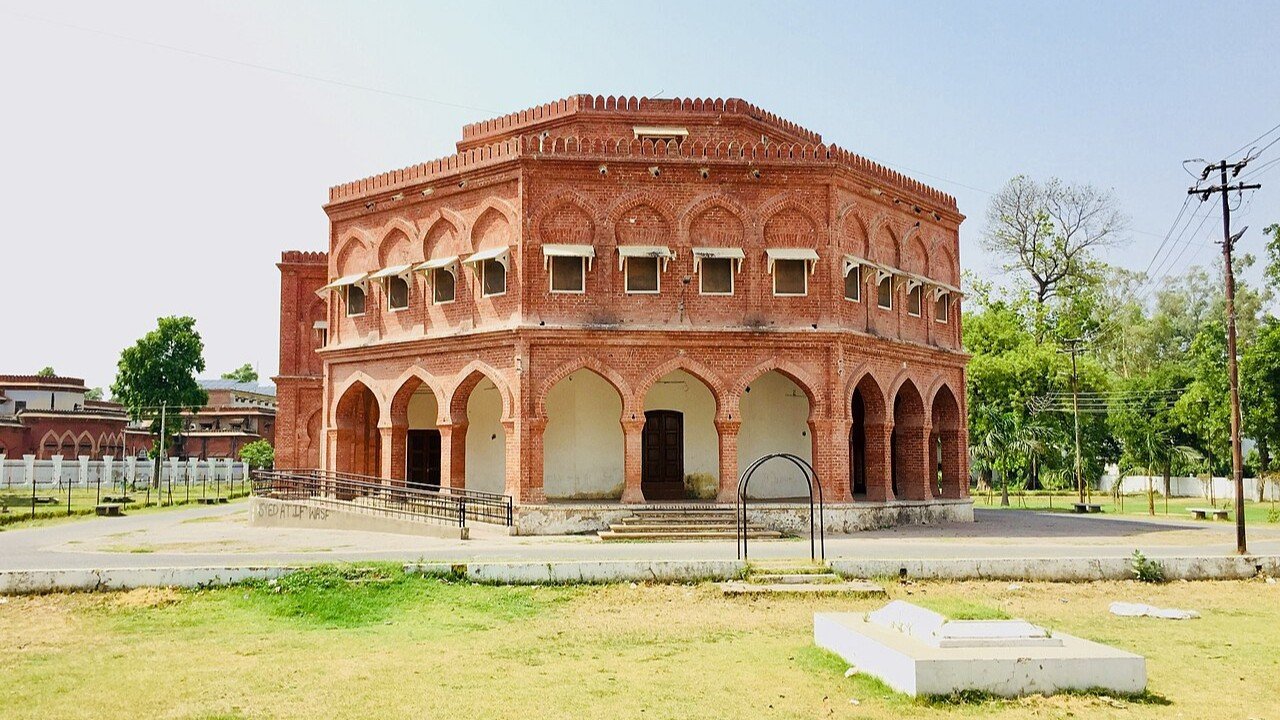
It would be appropriate to examine this paradox in the case of Aligarh Muslim University (AMU), which is witnessing the revival of student-union elections after a hiatus of eight years. The AMU Students’ Union (AMUSU) elections are scheduled to take place on November 5, 2026. Elections for the Women’s College Undergraduate Students’ Union (WCSU) are also scheduled to take place. This development creates an interesting opportunity to analyse whether women’s voices will be heard in the university’s main representative body or whether women’s affairs will continue to be confined to a separate institution. The question that concerns us now is not whether women should have a union of their own.
Representation Is Not Equivalent to Participation
The system of student representation at AMU raises several questions that require careful analysis. AMUSU has three principal elected office-bearers: the President, Vice-President, and Honorary Secretary, in addition to ten cabinet members and faculty representatives. According to students, the electoral system allows female undergraduates in the first three years of their studies to participate in WCSU elections, while women in the fourth year of undergraduate programmes and those pursuing postgraduate or doctoral studies can participate in AMUSU elections, provided they meet the eligibility criteria.
This eligibility framework needs to be analysed in relation to the university’s existing electoral policies. Nonetheless, it raises an important question: does the existence of two electoral structures through which women can participate affect their ability to influence the university’s main student body?
An independent union can offer women opportunities to become leaders, voice their concerns, and organise around issues related to their college. However, its existence does not guarantee their involvement in the politics of the university as a whole, especially when eligibility depends on the programme or year of study. This distinction is crucial. Having a representative structure is not the same as having an equal opportunity to compete for leadership positions, set common priorities, or have a voice in matters concerning the entire university.

Moreover, for a law student, this raises questions about constitutional provisions. Article 14 guarantees equality before the law and equal protection of the laws, while Article 15 prohibits discrimination on certain grounds, including sex. However, whether any given electoral system violates the Constitution depends on the relevant regulations, the institution’s conduct, and the applicable legal criteria.
The issue, therefore, is not whether a union of women students exists, but whether there is a structure through which women can participate meaningfully in university democracy.
Separate Representation: The Paradox
The controversy over women’s representation at AMU has been ongoing for several years. In 2012, the institution decided to hold separate union elections for undergraduate women at Women’s College. This sparked a controversy over institutional identity, safety, and women’s participation in the main union.
There are valid justifications for having a separate union for women. It may offer them a forum to raise specific concerns, participate in politics, and develop their leadership capabilities. Its mere existence does not make the institution discriminatory.
However, the problem arises when separate representation becomes an alternative to participation in common institutions. A woman may hold an elected position in WCSU but may not have sufficient opportunities to contest for a position in the main AMUSU body. This is where formal equality and substantive equality differ. While formal equality concerns individual rights and regulations, substantive equality takes into account the conditions under which those rights can be exercised.
Safety is one of the issues institutions must address. The university should ensure that students are not subjected to harassment or intimidation. However, safety measures, like any other measures implemented by the university in the name of safety, must be scrutinised. The institution must determine whether such restrictions are necessary, whether they are effective, and whether the same objectives could be achieved through less restrictive means. The goal must be to make participation safe, not to use safety as an excuse for restricting it.
A Possible Solution to the Problem: Reserved Representation for Female Candidates in AMUSU’s Principal Positions
One possible solution is to reserve positions in AMUSU’s principal leadership for women. In mid-October 2026, students at Women’s College reportedly demanded that one of the main union positions be reserved for female candidates. The proposal was to reserve one of the three principal positions, President, Vice-President, or Honorary Secretary, as well as four of the ten cabinet seats, for women.
The reasoning behind this idea is simple: even when elections are officially open to everyone, this does not always ensure representation. Access to existing political connections, campaign resources, and student groups might influence electoral competition. Whether these factors disadvantage women at AMU is something that needs to be assessed through election data and candidates’ experiences. Reserving one of the three principal positions would ensure women’s presence at the highest level of leadership in the union. This step would also recognise that inclusion in a separate women’s union does not necessarily translate into equal representation in the university’s main political body.
This proposal should not be perceived as compensation for women or as proof that they cannot get elected without reservations. The idea is to help overcome potential barriers to women’s participation in student governance. The university must discuss the issue with students and analyse the existing election regulations. There should also be a clear mechanism for implementing such a reservation. Moreover, it would be reasonable to consider the need for additional representation for women in the cabinet. Reservation will not solve the problem of gender inequality on its own. Much will depend on the ability of women in office to make decisions and act independently.
Beyond the Gates of the University
However, there are further implications to consider, extending beyond the sphere of campus politics. Educated women may become aware of their rights and gain access to resources such as knowledge, networks, and political participation. Yet women whose education is interrupted for various reasons may face additional obstacles on their path to university, even as discrimination against women persists.
This is not solely a question of Muslim identity. Rather, it is a question of gender discrimination, poverty, and lack of access to resources, which affect women from different communities, although their experiences vary according to their socioeconomic circumstances. The central issue is that inequality can operate on multiple levels. Restrictions within the family can hinder education; a lack of education can limit access to jobs; and economic dependence can constrain personal decision-making.
The role of women at AMU must therefore be viewed in the broader context of women’s autonomy and participation in public life. Unless educational institutions reflect on the obstacles to autonomy within their own systems, they may overlook the difficulties faced by less-educated and poorer women. An important aim of higher education is not simply to help people assume positions of power, but also to teach them to evaluate critically how power is distributed and whether people are treated fairly.
Measuring Democracy at AMU
Student elections offer AMU an opportunity to revive the democratic spirit on its campus. However, such a process will not necessarily ensure equal participation for all students. It is necessary to clarify the eligibility criteria for participation in AMUSU and WCSU, establish the relationship between the two bodies, and ensure that women have equal opportunities to compete for key positions. Moreover, it may be useful to consider a reservation policy for women’s participation in AMUSU without undermining WCSU’s independence.
Such a solution requires negotiations, clear criteria, and institutional accountability. There should not be only two options to choose from: separate representation for women or a unified association. AMU’s case raises an important question for universities beyond Aligarh: can an institution fulfil its academic role when the structures representing its students do not offer equal opportunities for participation?
Women’s representation cannot be defined solely by the existence of a separate union. The real question is whether women can play an active role in the decision-making processes of the institutions that shape their lives at the university. A democratic university should do more than give women a separate platform to voice their concerns. Women should have the opportunity to participate actively in decision-making across the entire institution.

The information presented in this article represents the personal viewpoints of the author and does not necessarily reflect the opinions of The Observer Post.